
15 Best First Person Shooter Games
First-person shooters have evolved from simple corridor crawlers to complex, narrative-driven experiences that push gaming hardware to its limits. The best FPS games combine tight mechanics, immersive worlds, and that special something that keeps players coming back for thousands of hours. Whether you’re looking for tactical team-based gameplay, heart-pounding battle royales, or rich single-player campaigns, this countdown of the 15 best first person shooter games has something for every trigger finger.
We’ve ranked these titles based on their innovation, impact on the genre, gameplay mechanics, and lasting appeal. From genre-defining classics to modern masterpieces, these shooters represent the pinnacle of first-person action. Let’s lock and load as we count down the absolute best that the FPS genre has to offer.
1. Counter-Strike 2
Counter-Strike 2 represents the evolution of the world’s most influential tactical shooter. Building on the foundation that made the original Counter-Strike a phenomenon, CS2 refines rather than reinvents, focusing on what matters most: precise gunplay, strategic depth, and moment-to-moment tension that few games can match.
The core experience remains unchanged—Terrorists and Counter-Terrorists face off in round-based combat where a single bullet can end your run. What sets Counter-Strike 2 apart is its commitment to competitive integrity. Every weapon has a distinct recoil pattern to master, every map has countless angles to memorize, and every economy decision can ripple through multiple rounds. It’s a game where experience and skill are rewarded above all else.
Valve’s updated Source 2 engine brings significant visual improvements while maintaining the series’ characteristic responsiveness. The new dynamic smoke grenades that interact with the environment and improved lighting effects add tactical depth without sacrificing the clean, readable visual style that competitive players demand.
Key Features:
- Refined tactical gameplay with an emphasis on precision and strategy
- Overhauled smoke grenade system with dynamic volumetric effects
- Upgraded Source 2 engine with improved physics and lighting
- Tick-rate independent server architecture for more consistent online play
- Extensive weapon economy system that creates strategic depth
Standout Reason: Counter-Strike 2 stands as the definitive competitive FPS experience, where raw skill, map knowledge, and team coordination create a nearly infinite skill ceiling. Its longevity and influence on esports cement its place as one of the most important shooters ever made.
2. Half-Life 2
Half-Life 2 isn’t just a great first-person shooter—it’s a masterclass in game design that continues to influence developers nearly two decades after its release. Valve’s sequel to their groundbreaking original drops players back into the HEV suit of Gordon Freeman as he navigates the dystopian City 17 and battles the alien Combine forces that have conquered Earth.
What makes Half-Life 2 special is how seamlessly it blends storytelling, physics-based puzzles, and combat into a cohesive whole. The game never wrests control from the player for cutscenes, instead letting the story unfold naturally through the environment and characters you meet. This approach to narrative was revolutionary at the time and still feels fresh today.
The introduction of the Gravity Gun fundamentally changed how players interact with the game world. Suddenly, everything from saw blades to toilets became potential weapons, creating emergent gameplay moments that felt uniquely personal. Combined with the game’s advanced physics system, it allowed for creative problem-solving that few shooters have matched since.
Key Features:
- Groundbreaking physics system that allows for creative combat and puzzle solutions
- The iconic Gravity Gun that revolutionized environmental interaction
- Seamless narrative that never breaks immersion with cutscenes
- Diverse environments from the urban City 17 to the zombie-infested Ravenholm
- AI companions that feel genuinely helpful and emotionally resonant
Standout Reason: Half-Life 2’s greatest achievement is how it advanced interactive storytelling in first-person games. By trusting players to absorb the narrative through the environment and character interactions, it created an immersive experience that still feels modern years later.
3. VALORANT
VALORANT represents Riot Games’ successful fusion of tactical shooter mechanics with hero-based abilities. Taking the precision gunplay of Counter-Strike and combining it with character-specific powers, VALORANT creates a unique competitive experience that rewards both mechanical skill and strategic creativity.
Each match pits two teams of five against each other in objective-based rounds where attackers attempt to plant a bomb (called the Spike) while defenders work to prevent it. What elevates VALORANT beyond being a mere Counter-Strike clone is its roster of Agents, each with unique abilities that can block sightlines, gather information, or control areas of the map.
The game’s commitment to competitive integrity is evident in its technical design. VALORANT runs smoothly on modest hardware, features 128-tick servers for responsive gameplay, and employs one of the most sophisticated anti-cheat systems in the industry. These elements combine to create an experience where players can trust that their skill—not their hardware or external factors—determines the outcome.
Key Features:
- Diverse roster of Agents with unique abilities that complement gunplay
- Precise shooting mechanics with predictable recoil patterns
- 128-tick servers for responsive competitive play
- Maps designed specifically for strategic depth and ability usage
- Regular updates with new Agents, maps, and balance changes
Standout Reason: VALORANT’s greatest achievement is how it balances abilities with gunplay. Unlike other hero shooters where powers dominate, VALORANT ensures that precise shooting remains the core mechanic while abilities serve as tactical tools that enhance rather than replace fundamental FPS skills.
4. DOOM Eternal
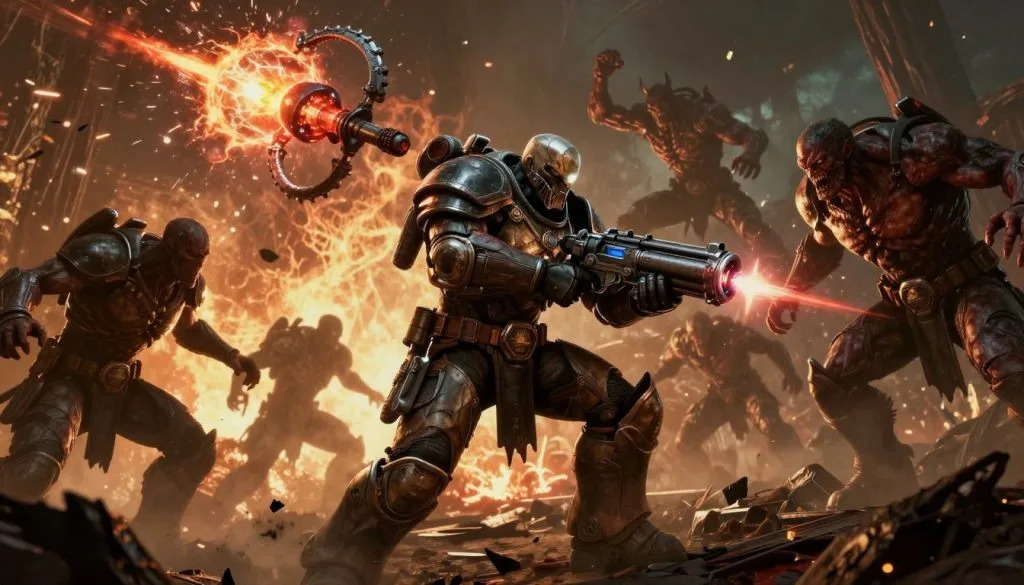
DOOM Eternal takes the “push-forward combat” philosophy of its 2016 predecessor and cranks everything to eleven. id Software’s sequel puts players back in the boots of the Doom Slayer for an even more frantic, demanding, and ultimately rewarding demon-slaying experience that elevates the FPS genre to new heights of intensity.
What makes DOOM Eternal special is its combat loop, which transforms the game into a violent ballet of resource management. Low on health? You’ll need to perform a glory kill. Running out of armor? Time to torch demons with your flamethrower. Low on ammo? Get up close with your chainsaw. This constant push and pull forces players to stay aggressive and engage with every system the game offers.
The expanded movement options—including a dash, double jump, and meat hook that pulls you toward enemies—make the Doom Slayer more mobile than ever. Combined with larger, more vertical arenas, these mechanics create combat puzzles where positioning and prioritization are just as important as aim. The result is a shooter that feels like a high-speed chess match played at 200 miles per hour.
Key Features:
- “Push-forward combat” that rewards aggression and resource management
- Expanded mobility options including dash, double jump, and meat hook
- Weapon mods that significantly alter gameplay strategies
- Visually distinct demons with specific weaknesses to exploit
- Mick Gordon’s pulse-pounding heavy metal soundtrack that perfectly complements the action
Standout Reason: DOOM Eternal’s greatest achievement is transforming FPS combat into a strategic rhythm game. By forcing players to constantly cycle between weapons and abilities to survive, it creates a flow state of violence that feels endlessly satisfying and uniquely engaging.
5. Titanfall 2
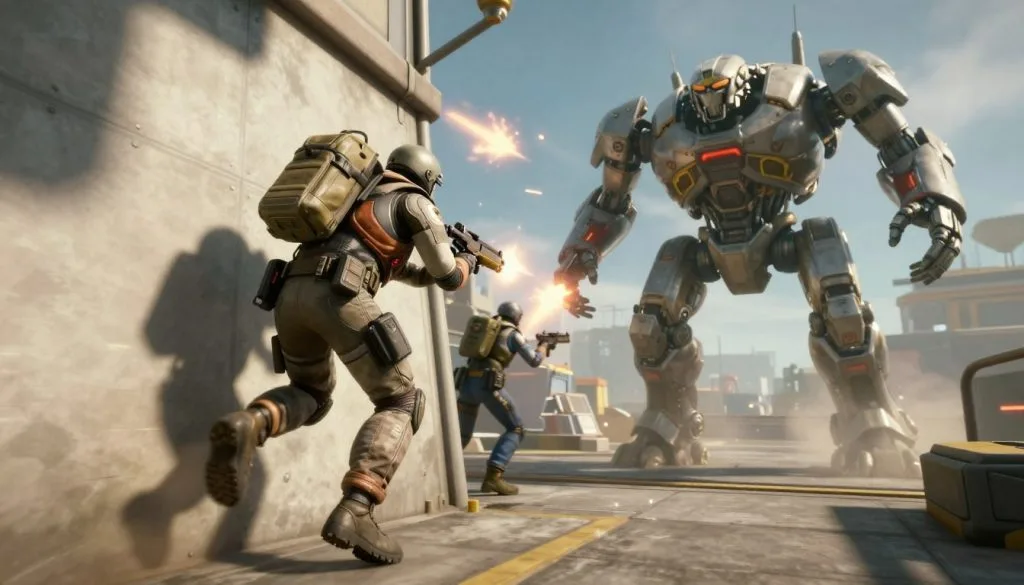
Titanfall 2 represents one of gaming’s greatest tragedies: a near-perfect FPS that never received the commercial success it deserved. Respawn Entertainment’s sequel builds on the foundation of the original by adding a stellar single-player campaign while refining the already excellent multiplayer that seamlessly blends pilot and mech combat.
The campaign follows pilot Jack Cooper and his Titan BT-7274 as they fight behind enemy lines. What could have been a generic military story instead becomes one of gaming’s most creative and heartfelt narratives. The “Effect and Cause” level, which has players instantly switching between two different time periods, stands as one of the most innovative FPS missions ever designed.
Titanfall 2’s movement system remains unmatched in the genre. Wall-running, sliding, double-jumping, and grappling hooks combine to create a fluid parkour system that makes simply traversing the environment a joy. This mobility, paired with the tactical options provided by calling down your Titan, creates a dynamic battlefield where the pace and scale of combat can shift in an instant.
Key Features:
- Fluid movement system with wall-running, sliding, and grappling
- Seamless transitions between nimble pilot gameplay and powerful Titan combat
- Innovative campaign with unique mechanics for each level
- Diverse Titan classes with distinct playstyles
- Balanced multiplayer that rewards both skill and strategy
Standout Reason: Titanfall 2’s greatest achievement is its perfect balance of scale. Few games have successfully combined such different gameplay styles—the nimble, precise pilot combat and the weighty, powerful Titan battles—into a cohesive whole that feels balanced and rewarding regardless of which mode you’re currently playing.
6. BioShock
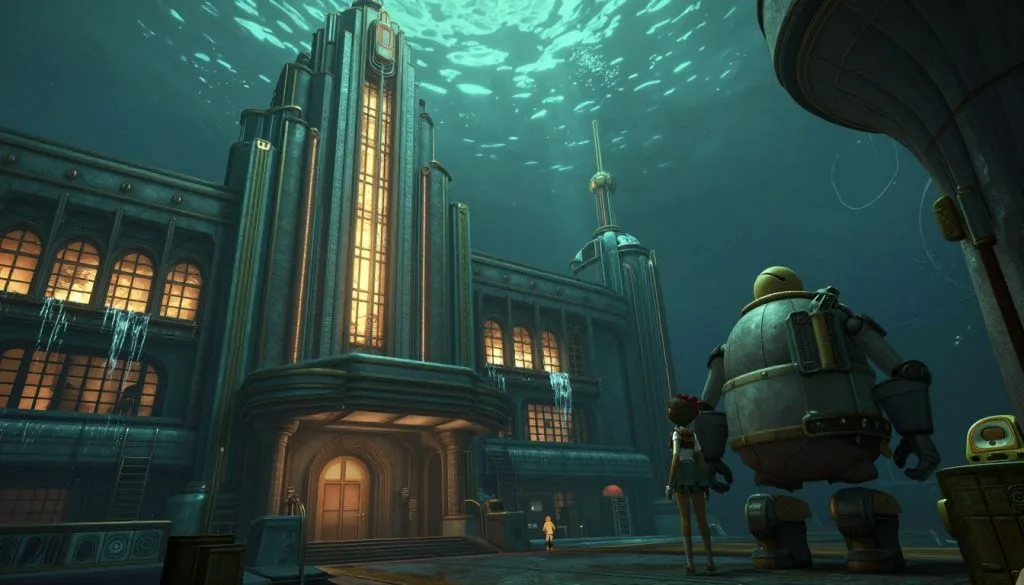
BioShock isn’t just a first-person shooter—it’s a masterpiece of environmental storytelling and thematic depth that forever changed what players expect from video game narratives. Irrational Games’ underwater dystopia of Rapture remains one of gaming’s most memorable settings, a failed objectivist utopia whose spectacular collapse is documented in every leaking corridor and blood-stained wall.
While its shooting mechanics might feel dated by modern standards, BioShock’s combat system was revolutionary for its time. The combination of conventional weapons with plasmid powers—genetic modifications that grant abilities like telekinesis and electricity manipulation—created a sandbox of creative combat possibilities. Players could electrify water to shock multiple enemies, use telekinesis to catch and return grenades, or hypnotize Big Daddies to fight on their behalf.
What truly elevates BioShock is how it integrates its themes into every aspect of the experience. The game’s exploration of free will, objectivism, and the dark side of unfettered scientific progress isn’t just window dressing—it’s fundamental to the gameplay, level design, and the game’s unforgettable twist. Few shooters before or since have managed to marry their philosophical concerns so seamlessly with their mechanics.
Key Features:
- The immersive underwater city of Rapture with its distinct Art Deco aesthetic
- Plasmid powers that can be combined with weapons for creative combat solutions
- Moral choices centered around the Little Sisters that affect the game’s outcome
- Audio logs that build the world’s narrative without interrupting gameplay
- Iconic enemies like Big Daddies that require strategy to defeat
Standout Reason: BioShock’s greatest achievement is its narrative integration. By making its philosophical themes central to both story and gameplay, it created an experience where the message and medium were perfectly aligned, proving that first-person shooters could be intellectually stimulating as well as viscerally satisfying.
7. Halo: Combat Evolved
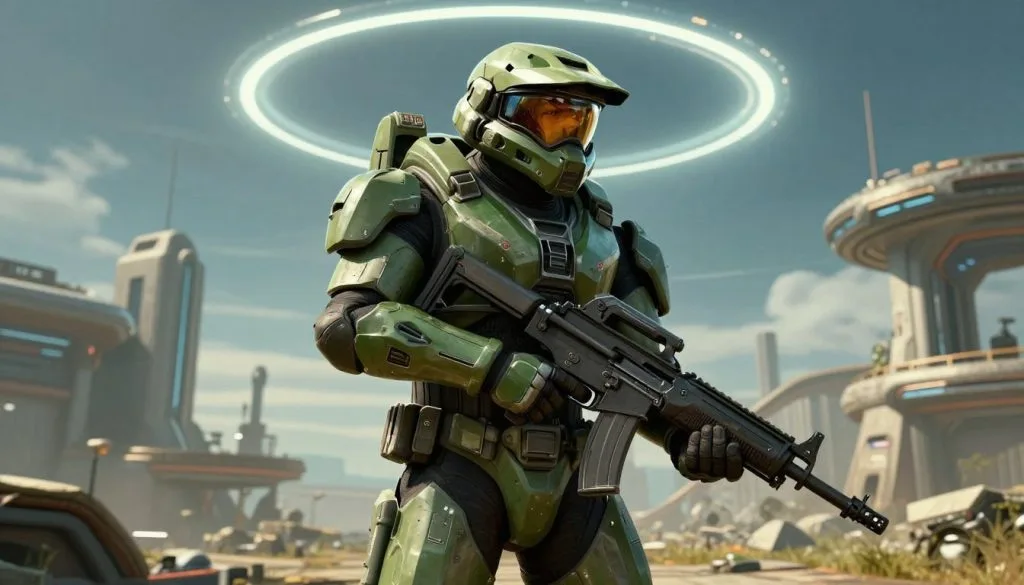
Halo: Combat Evolved didn’t just launch the Xbox—it revolutionized console first-person shooters forever. Bungie’s sci-fi epic introduced Master Chief, one of gaming’s most iconic protagonists, and placed him in a mysterious alien ringworld that combined tight corridors with expansive outdoor environments in a way that console FPS games had never achieved before.
What made Halo truly special was its combat sandbox. The game limited players to carrying just two weapons at a time, forcing strategic decisions about loadout. Vehicles added another dimension to battles, with the Warthog’s physics-based handling creating memorable moments of both triumph and hilarious failure. Enemy AI was remarkably advanced for its time, with the alien Covenant forces flanking, retreating, and coordinating in ways that made each encounter feel dynamic.
The game’s influence extends far beyond its campaign. Halo’s multiplayer, initially limited to local split-screen and LAN parties, laid the groundwork for console online gaming. Its perfectly balanced weapons, vehicles, and maps created an ecosystem where casual and competitive players could thrive, establishing a blueprint that shooters follow to this day.
Key Features:
- Regenerating shield system that changed how FPS health mechanics worked
- Seamless transitions between vehicle and on-foot combat
- Advanced enemy AI that created dynamic combat scenarios
- Two-weapon limit that forced strategic loadout decisions
- Iconic multiplayer maps like Blood Gulch that defined console FPS design
Standout Reason: Halo’s greatest achievement was proving that first-person shooters could work brilliantly on consoles. By designing specifically for controller input rather than porting keyboard-and-mouse mechanics, it created a fluid, accessible experience that opened the genre to millions of new players.
8. Call of Duty: Warzone
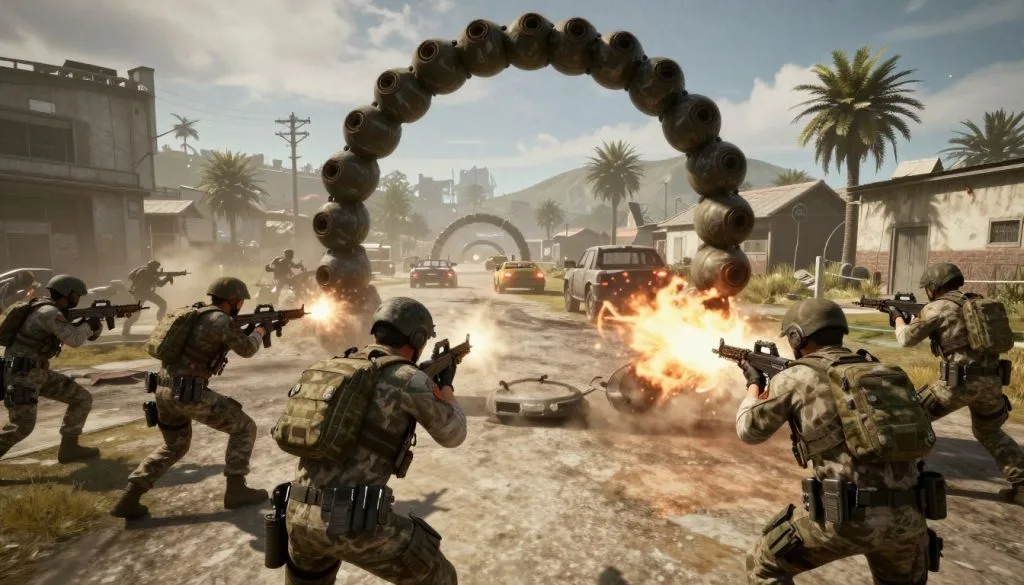
Call of Duty: Warzone represents Activision’s triumphant entry into the battle royale genre, combining the series’ signature gunplay with innovative mechanics that set it apart from competitors. Launching as a free-to-play companion to Modern Warfare, Warzone quickly established itself as one of the most popular battle royale games on the market.
What makes Warzone special is how it reduces the frustration inherent to the battle royale format. The Gulag gives eliminated players a chance to fight their way back into the match in a tense 1v1 showdown. Loadout drops allow players to use their preferred weapons rather than relying solely on random loot. Contracts provide objectives beyond simple survival, encouraging engagement rather than passive play.
The game’s map design deserves special mention. Verdansk (and later Caldera and Al Mazrah) features diverse environments that support different playstyles, from the close-quarters combat of downtown buildings to the open sight lines of the airport. This variety, combined with Call of Duty’s refined gunplay, creates a battle royale experience that feels both accessible to newcomers and deep enough for veterans.
Key Features:
- The Gulag system that gives eliminated players a second chance
- Loadout drops that allow players to use custom weapon setups
- Contract system that provides objectives and rewards beyond survival
- Cash economy that enables strategic purchases during matches
- Cross-platform play that unites the player base across all systems
Standout Reason: Warzone’s greatest achievement is how it streamlined the battle royale experience without sacrificing depth. By addressing common frustrations of the genre while maintaining the high-stakes tension that makes battle royales exciting, it created an accessible yet challenging experience that appeals to both casual and competitive players.
9. Apex Legends
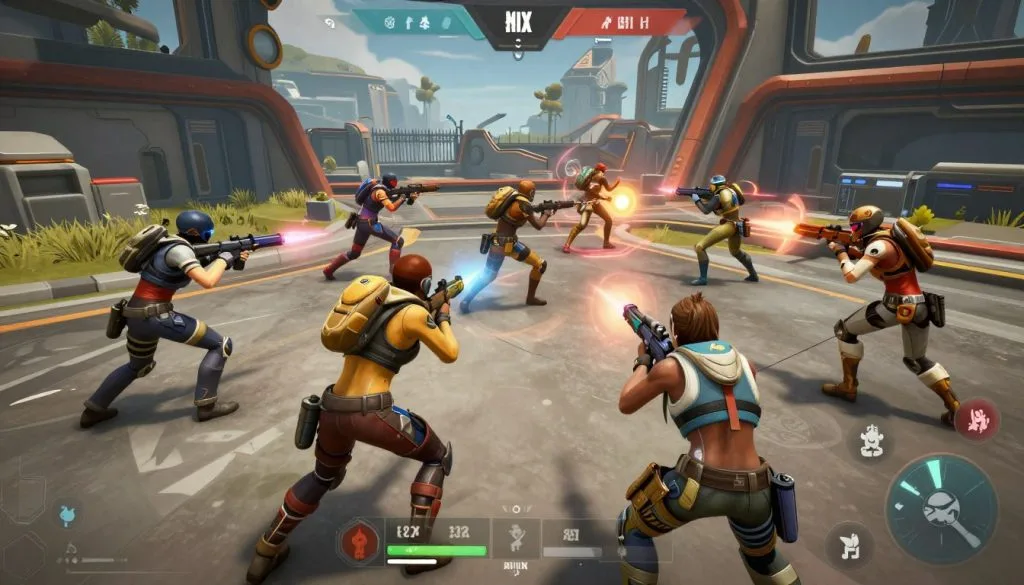
Apex Legends burst onto the scene in 2019 with a surprise launch that quickly established it as one of the most refined battle royale experiences available. Respawn Entertainment leveraged their expertise from Titanfall to create a movement-focused BR that emphasizes team play and character abilities without sacrificing the core gunplay that makes FPS games satisfying.
What sets Apex apart is its movement system. Sliding down hills, climbing walls, and using ziplines creates a fluid traversal experience that raises the skill ceiling while remaining accessible. This mobility, combined with each Legend’s unique abilities, allows for creative plays that simply aren’t possible in more grounded battle royales.
The game’s communication innovations deserve special recognition. The ping system allows for detailed, contextual communication without requiring a microphone, making team coordination possible even with random squadmates. This feature was so effective that it’s been adopted by numerous other games since Apex’s release.
Key Features:
- Diverse roster of Legends with unique abilities that support different playstyles
- Revolutionary ping system that enables detailed non-verbal communication
- Fluid movement mechanics including sliding, climbing, and ziplines
- Respawn beacons that allow teams to bring back eliminated squadmates
- Evolving maps that change with seasonal updates
Standout Reason: Apex Legends’ greatest achievement is how it balances individual skill with team play. By creating systems that encourage cooperation without forcing dependency, it found the sweet spot between solo performance and team tactics that many competitive games struggle to achieve.
10. Escape from Tarkov
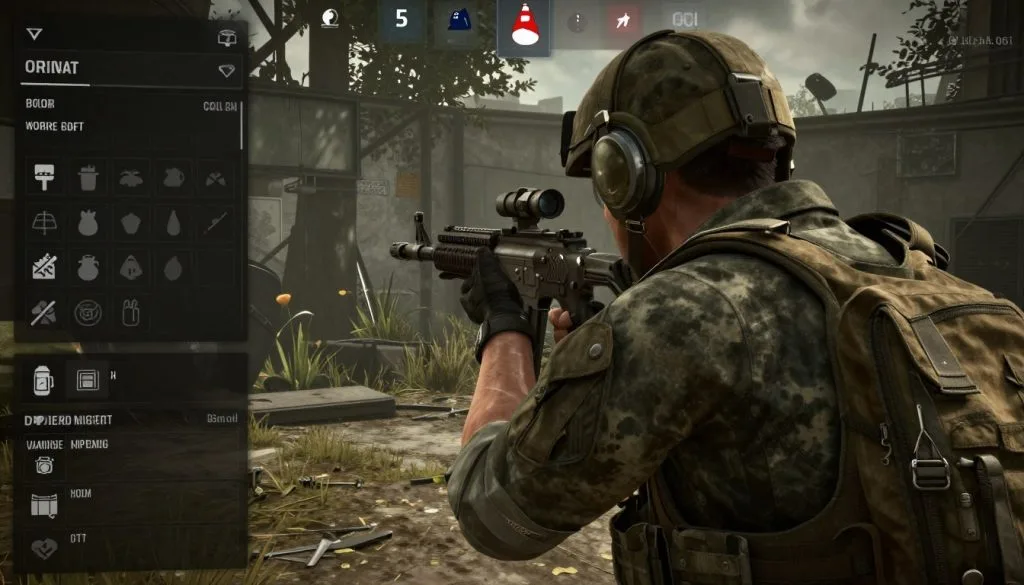
Escape from Tarkov represents perhaps the most hardcore first-person shooter experience available today. Battlestate Games’ uncompromising extraction shooter combines military simulation, survival elements, and RPG progression into a uniquely tense package that has spawned an entire subgenre of imitators.
What makes Tarkov special is its commitment to realism and consequences. Players enter raids to scavenge for loot and complete objectives, but anything they’re carrying can be lost permanently if they’re killed before extracting. This high-stakes approach creates an intensity few other games can match, where every footstep and distant gunshot triggers a fight-or-flight response.
The game’s weapon customization system is unparalleled in its depth. Players can modify virtually every component of their firearms, from barrels and stocks to individual gas blocks and buffer tubes. These modifications affect weapon performance in realistic ways, creating a meta-game of optimization that rewards knowledge and attention to detail.
Key Features:
- Permanent item loss on death creates high-stakes gameplay
- Incredibly detailed weapon customization system
- Realistic ballistics including bullet penetration and fragmentation
- Complex health system with limb-specific injuries and treatments
- Player-driven economy through the Flea Market
Standout Reason: Escape from Tarkov’s greatest achievement is how it creates genuine tension through mechanical systems rather than artificial scares. The knowledge that you could lose hours of progress in an instant creates a psychological pressure that transforms even routine encounters into heart-pounding experiences.
11. Tom Clancy's Rainbow Six Siege
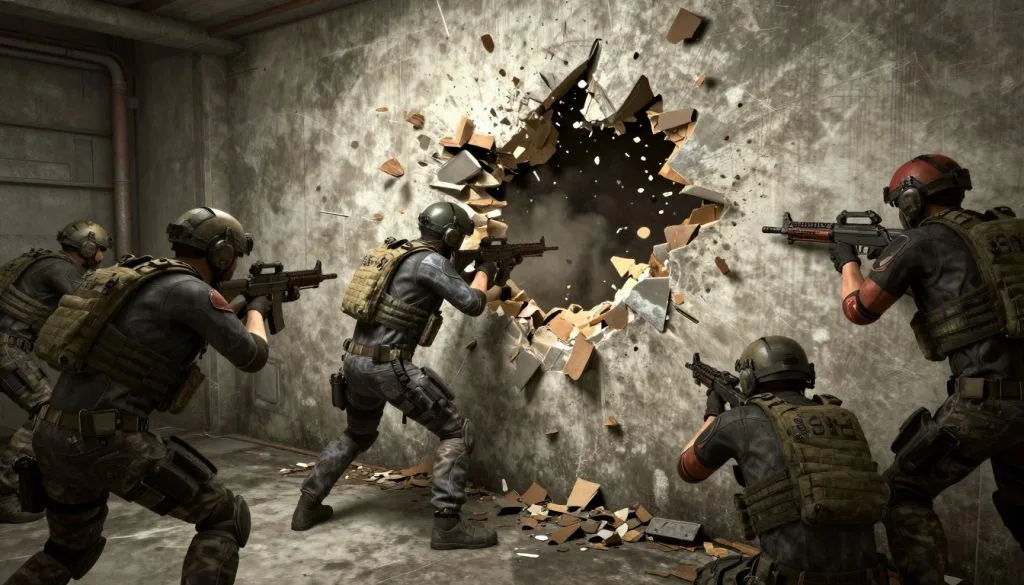
Rainbow Six Siege represents one of gaming’s greatest comeback stories. Launching in a somewhat rough state in 2015, Ubisoft’s tactical shooter has evolved through years of updates into one of the most sophisticated competitive FPS experiences available. Its unique blend of destruction, gadget-based operators, and one-life gameplay creates matches where strategy and coordination are just as important as aim.
What makes Siege special is its destruction system. Nearly every wall, floor, and ceiling can be breached, creating dynamic battlefields that change throughout each round. This destructibility forces defenders to anticipate attack vectors while giving attackers creative options for approaching objectives. A single well-placed breach can completely change the flow of a round.
The game’s operator system provides depth without sacrificing balance. Each character brings unique gadgets to the fight—from breach charges and EMP grenades to heartbeat sensors and reinforced walls. These abilities create a meta-game of counters and synergies that keeps the experience fresh even after thousands of hours of play.
Key Features:
- Unparalleled destruction system that creates dynamic environments
- Diverse roster of operators with unique gadgets and abilities
- One-life round structure that emphasizes caution and coordination
- Intricate map design with multiple layers and destructible elements
- Regular updates with new operators, maps, and balance changes
Standout Reason: Rainbow Six Siege’s greatest achievement is how it transformed the tactical shooter genre for the modern era. By combining the methodical pace and high stakes of classic tactical FPS games with destructible environments and hero-based abilities, it created a fresh experience that rewards both mechanical skill and strategic thinking.
12. Battlefield 1
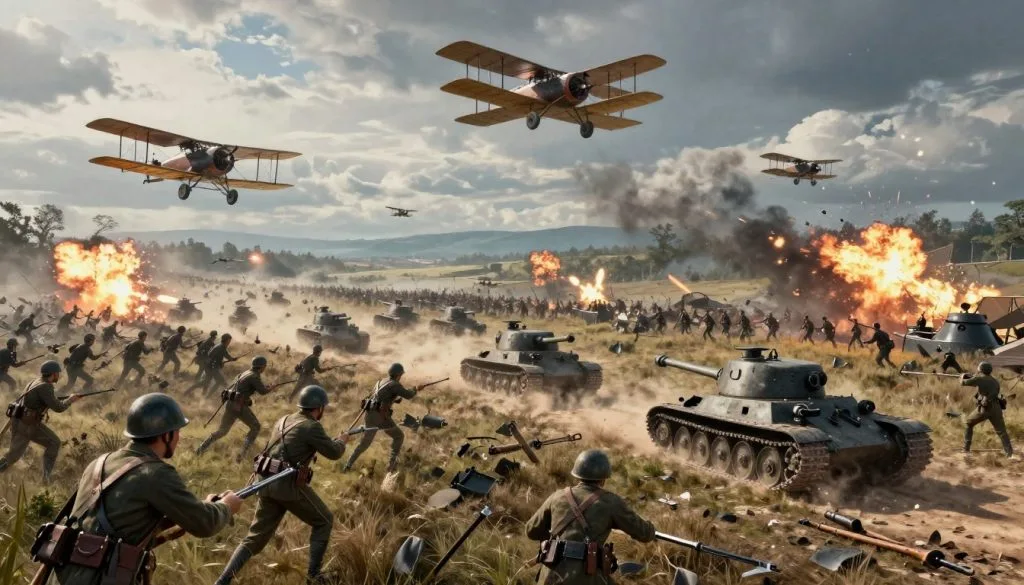
Battlefield 1 stands as DICE’s masterpiece, a bold decision to set a major FPS in the underexplored World War I era that paid off spectacularly. The game captures the brutal transition from old-world warfare to modern combat, where cavalry charges and bolt-action rifles exist alongside tanks, biplanes, and automatic weapons.
What makes Battlefield 1 special is its atmosphere. The game doesn’t glorify war but instead captures its chaos and tragedy. Operations mode, which recreates historical offensives across multiple maps with contextual narration, creates a sense of participating in history rather than just playing a game. The haunting opening sequence, where players embody doomed soldiers in a futile advance, sets a tone that carries throughout the experience.
The game’s sound design deserves special recognition. From the distinctive ping of an M1903 Springfield ejecting its clip to the terrifying whistle of an incoming artillery barrage, Battlefield 1 creates an audio landscape that contributes immensely to its immersion. These sounds, combined with the game’s stunning visuals, create moments of both beauty and horror that few shooters can match.
Key Features:
- Operations mode that recreates historical battles across multiple maps
- Behemoths that can turn the tide of losing battles
- Diverse combat roles from infantry to pilots to tank commanders
- Weather effects that dynamically change battlefield conditions
- Anthology campaign that explores different perspectives of the war
Standout Reason: Battlefield 1’s greatest achievement is how it balances spectacle with respect. By creating an experience that’s both entertaining as a game and educational about a pivotal historical period, it demonstrates how the medium can tackle serious subjects without losing its fundamental appeal as interactive entertainment.
13. PUBG: BATTLEGROUNDS
PUBG: BATTLEGROUNDS (originally PlayerUnknown’s Battlegrounds) didn’t invent the battle royale concept, but it undeniably popularized it and established the framework that countless games would follow. Brendan “PlayerUnknown” Greene’s vision of 100 players parachuting onto an island to scavenge for weapons and fight to be the last one standing created a phenomenon that changed the gaming industry forever.
What makes PUBG special is its commitment to tension and realism. Unlike more arcade-style battle royales that followed, PUBG emphasizes positioning, patience, and precision. Weapons have realistic ballistics with bullet drop and travel time. Footsteps carry over long distances, making sound awareness crucial. The relatively slow pace creates extended periods of nerve-wracking silence punctuated by sudden, often lethal encounters.
The game’s map design deserves special recognition. Erangel, the original map, balances open fields, dense forests, urban areas, and military installations to create diverse engagement scenarios. This variety, combined with the randomly shrinking play zone, ensures that no two matches play out the same way, giving PUBG extraordinary longevity.
Key Features:
- Realistic ballistics system with bullet drop and travel time
- Diverse maps with varied terrain and building types
- Vehicle combat that adds another dimension to engagements
- Inventory management that forces strategic equipment decisions
- Red zones and bombing areas that add unpredictable hazards
Standout Reason: PUBG’s greatest achievement is how it created genuine tension through mechanical systems rather than artificial pressure. The combination of high stakes (one life per match), limited information, and lethal combat creates a psychological experience where simply surviving feels like an accomplishment.
14. Borderlands 2
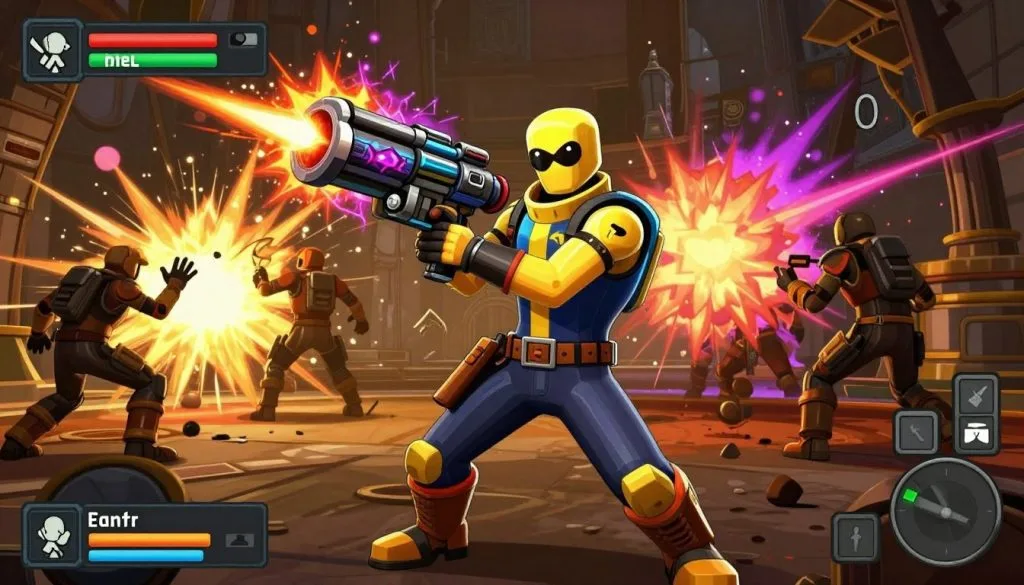
Borderlands 2 perfected the formula that its predecessor established, creating the definitive looter-shooter experience that competitors are still trying to match. Gearbox Software’s sequel combines frenetic first-person shooting with RPG progression and literally millions of procedurally generated weapons, all wrapped in a distinctive cel-shaded art style and irreverent humor.
What makes Borderlands 2 special is its loot system. The game showers players with weapons, shields, and class mods of increasing rarity, each with unique stats and special effects. Finding a legendary weapon with the perfect combination of elements and bonuses creates a dopamine rush that few games can match. This constant progression keeps the experience fresh even after multiple playthroughs.
The game’s writing and characters deserve special recognition. Handsome Jack stands as one of gaming’s most memorable villains—charismatic, hilarious, and genuinely threatening. The diverse cast of NPCs, from the robot Claptrap to the explosive-loving Tiny Tina, provide both comic relief and surprising emotional depth. Their quests and dialogue turn what could have been a mindless shooter into a world worth investing in.
Key Features:
- Procedurally generated weapons with millions of possible combinations
- Four unique character classes with distinct skill trees
- Cooperative gameplay that scales difficulty with player count
- Distinctive cel-shaded art style that remains visually appealing
- Memorable characters and writing with genuine humor
Standout Reason: Borderlands 2’s greatest achievement is how it created a perfect gameplay loop that keeps players engaged for hundreds of hours. By combining the immediate satisfaction of shooting with the long-term rewards of loot progression, it created an experience that’s both instantly gratifying and endlessly replayable.
15. Far Cry 3
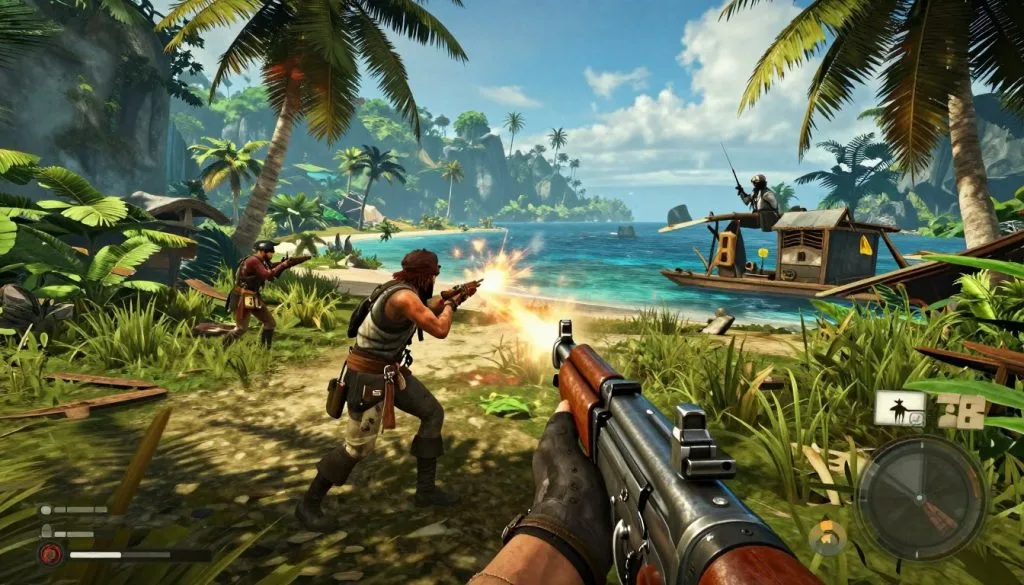
Far Cry 3 represents the moment when Ubisoft’s open-world FPS series truly found its identity. Set on the fictional Rook Islands, the game follows Jason Brody, a tourist who must rescue his friends from pirates and mercenaries while gradually transforming from a frightened civilian into a skilled warrior. This journey, combined with one of gaming’s most memorable villains in Vaas Montenegro, created a narrative that elevated the entire experience.
What makes Far Cry 3 special is how it balances structure and freedom. The game provides clear objectives and progression paths, but it’s the unscripted moments that create the most memorable experiences. Hunting a deer only to be attacked by a tiger, infiltrating an outpost only to have your stealth approach ruined by a random patrol, or gliding from a mountaintop to ambush an enemy convoy—these emergent gameplay moments make each player’s experience unique.
The game’s setting deserves special recognition. The Rook Islands combine beautiful beaches, dense jungles, and rugged mountains into a paradise corrupted by violence. This environment isn’t just visually stunning—it’s a playground filled with wildlife to hunt, outposts to liberate, and hidden treasures to discover. Far Cry 3 created a world that players genuinely wanted to explore rather than simply complete.
Key Features:
- Captivating narrative with one of gaming’s most iconic villains
- Dynamic open world with wildlife, weather, and enemy patrols
- RPG-like progression system with skill trees and crafting
- Outpost liberation that allows for multiple tactical approaches
- Diverse arsenal of weapons with customization options
Standout Reason: Far Cry 3’s greatest achievement is how it created a perfect synthesis of narrative and gameplay freedom. By telling a compelling story about a character’s transformation while giving players the agency to approach challenges in their own way, it created an experience that feels both authored and personal—the best of both worlds in open-world design.
The Evolution of First-Person Shooters
The 15 best first person shooter games on this list represent the incredible diversity and evolution of the genre. From the tactical precision of Counter-Strike 2 to the narrative depth of BioShock, from the competitive intensity of Rainbow Six Siege to the emergent chaos of Far Cry 3, these games demonstrate how the simple concept of viewing the world through a character’s eyes can lead to vastly different experiences.
What unites these titles is their commitment to excellence in their respective niches. Whether focusing on multiplayer competition, single-player storytelling, or open-world exploration, each game pushed the boundaries of what first-person shooters could achieve. They didn’t just iterate on established formulas—they redefined them, creating new expectations and possibilities for the genre.
As technology continues to advance and developers find new ways to innovate, the first-person shooter genre will undoubtedly continue to evolve. But these 15 games will always stand as landmarks—the titles that shaped the way we think about and play FPS games. Whether you’re a veteran of the genre or just picking up your first virtual weapon, these experiences represent the very best that first-person shooters have to offer.