
The Best Arcade Shooter Games
Few gaming experiences match the pure adrenaline rush of arcade shooter games. These action-packed titles have dominated arcades for decades. Players worldwide have pumped countless quarters into machines featuring light guns, joysticks, and rapid-fire buttons. The genre continues to evolve while maintaining its core appeal.
From the early days of simple shooting galleries to today’s complex bullet-hell masterpieces, shooters remain a cornerstone of arcade culture. The tactile feedback of physical controls combined with intense on-screen action creates an experience that home gaming struggles to replicate. This guide explores everything you need to know about these thrilling games.
Whether you’re a seasoned veteran or newcomer to the genre, understanding the rich history and diverse subgenres will enhance your appreciation. The world of arcade shooters offers something for everyone. Let’s dive into this exciting realm of gaming excellence.
What Are Arcade Shooter Games?
Arcade shooter games represent a broad category of video games focused on combat through projectile weapons. The primary objective involves eliminating enemies, dodging attacks, and progressing through increasingly challenging stages. These games prioritize reflexes, hand-eye coordination, and quick decision-making over complex strategy.
The term encompasses multiple distinct subgenres. Each offers unique gameplay mechanics and control schemes. Light gun games require physical shooting peripherals. Vertical and horizontal scrolling shooters demand precise movement patterns. Run-and-gun titles blend shooting with platforming elements.
What unites all arcade shooters is their emphasis on immediate action. Unlike story-driven games, these titles drop players directly into combat situations. The learning curve is intentionally steep but rewarding. Mastery comes through repeated practice and pattern recognition.
Core Characteristics
Every arcade shooter shares fundamental design principles that define the genre experience.
- Fast-paced gameplay requiring constant attention
- Score-based progression systems encouraging competition
- Limited continues or lives adding tension
- Increasingly difficult enemy waves and patterns
- Immediate restart capability after game over
- Simple controls masking deep mechanical complexity
Evolution Over Time
The genre has transformed significantly since its inception while maintaining core principles.
- Early games featured static screens with simple sprites
- Technology advances enabled scrolling backgrounds and detailed graphics
- Modern titles incorporate 3D graphics with traditional gameplay
- Online leaderboards replaced local high score tables
- Home ports now rival or exceed arcade versions
- Digital distribution makes classic titles accessible everywhere
Light Gun Shooters: The Original Arcade Experience
Light gun games defined arcade shooting for an entire generation. These titles used specialized gun-shaped controllers that detected on-screen targets. Players physically aimed and pulled triggers to eliminate enemies. The tactile nature created unmatched immersion that standard controllers couldn’t replicate.
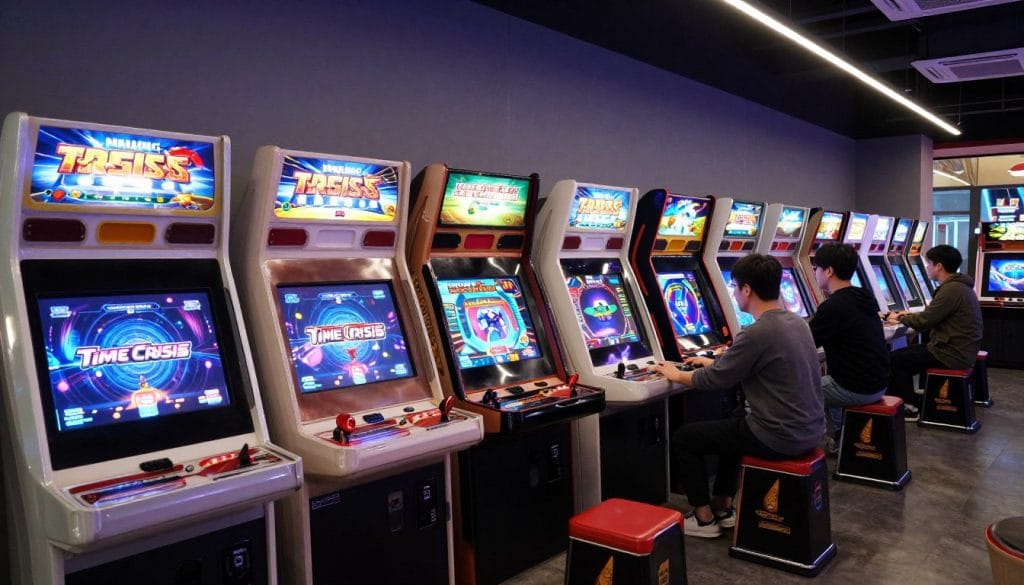
The genre peaked during the 1990s when virtually every arcade featured multiple gun game cabinets. Titles like Time Crisis revolutionized the format with cover mechanics and pedal controls. Others focused on horror themes or hunting simulations. The variety ensured something for every taste.
Technology limited home versions for years. CRT television compatibility requirements and expensive peripherals kept the experience primarily arcade-exclusive. Modern flat-screen displays rendered traditional light guns obsolete. Recent innovations using sensor bars and motion controls attempt to recapture the magic.
Time Crisis Series
Time Crisis
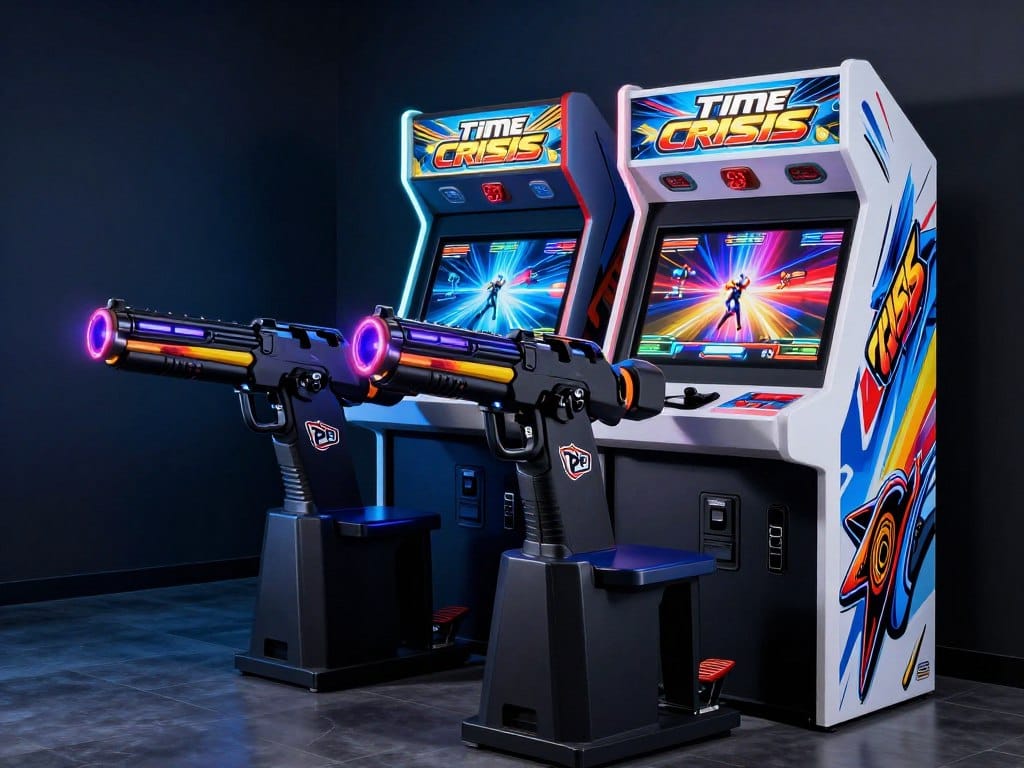
The original Time Crisis introduced revolutionary pedal-based cover mechanics. Players ducked behind barriers by releasing the pedal, then emerged to shoot enemies. This innovative system added strategic depth to light gun gameplay.
The game’s timed stages created constant urgency. Each area required completion within strict time limits. Bonus time rewards encouraged aggressive play. The combination of defensive positioning and offensive timing mastery defined the experience.
Time Crisis 2
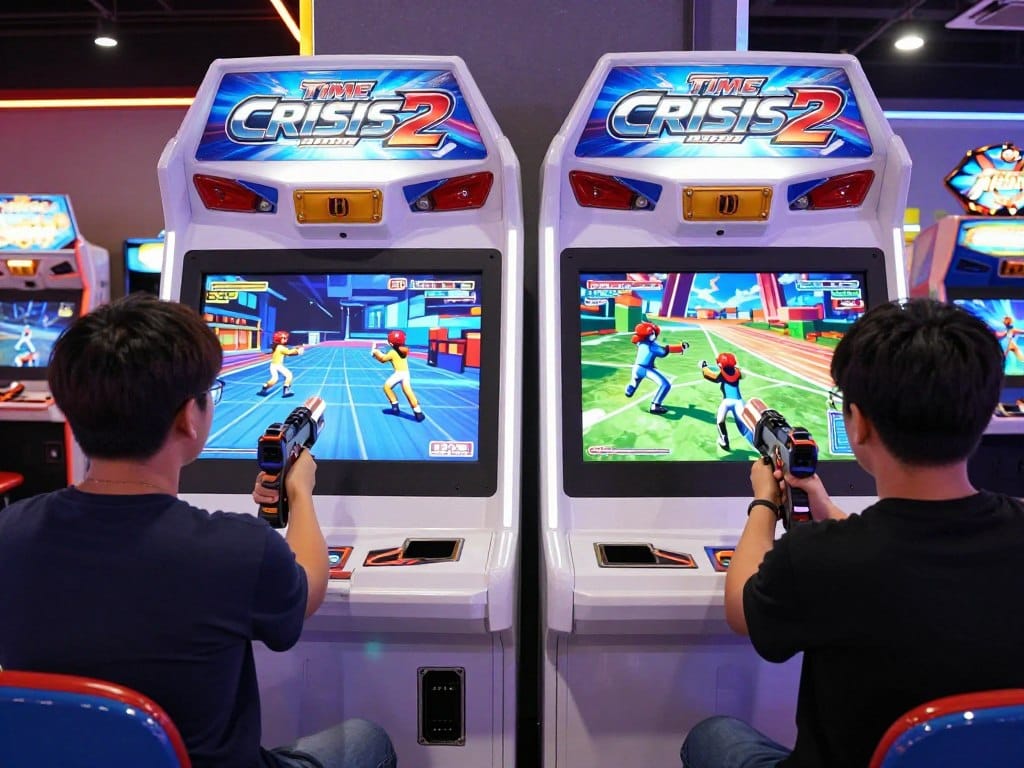
The sequel expanded on the original formula with two-player cooperative gameplay. Team play mechanics required coordination between players. The weapon system diversified with machine guns, shotguns, and grenades adding tactical variety.
Improved graphics showcased the hardware’s capabilities. Detailed environments and character models enhanced immersion. The branching path system offered replay value. Each playthrough could take different routes through stages.
Time Crisis 3
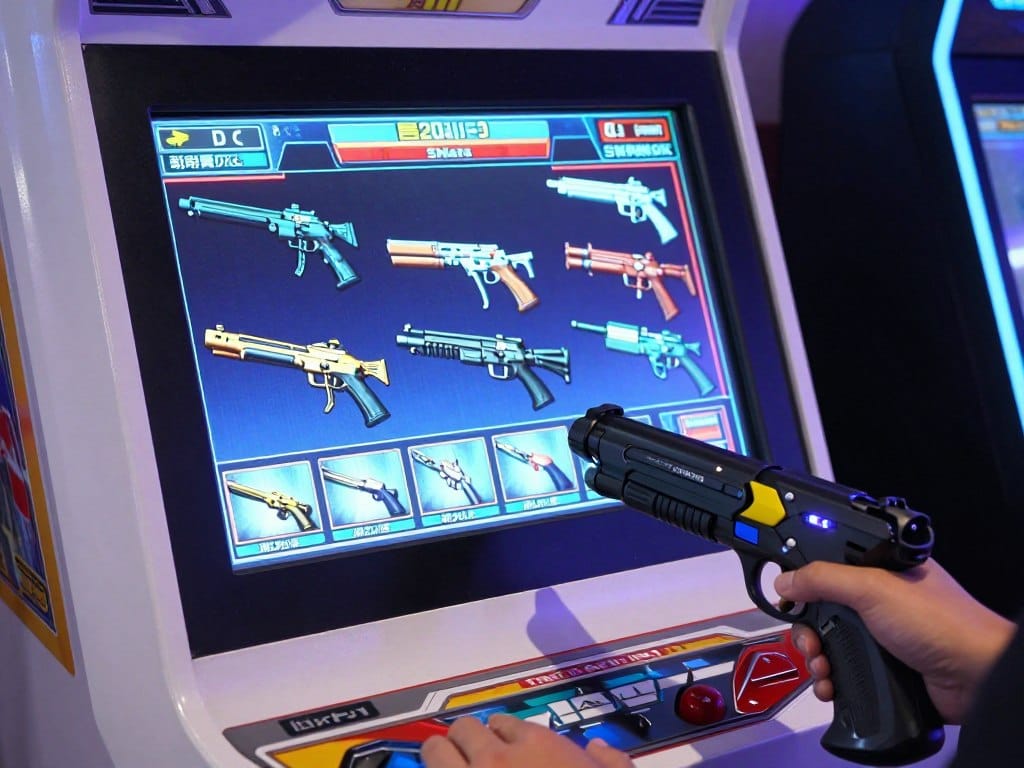
The third installment introduced selectable weapons and a more complex cover system. Players switched between handguns, machine guns, shotguns, and grenade launchers. Each weapon suited different tactical situations and enemy types.
The story campaign featured more elaborate set pieces and boss encounters. Destructible environments added another layer of interactivity. The difficulty curve remained challenging but fair, rewarding skill development and memorization.
The House of the Dead Series
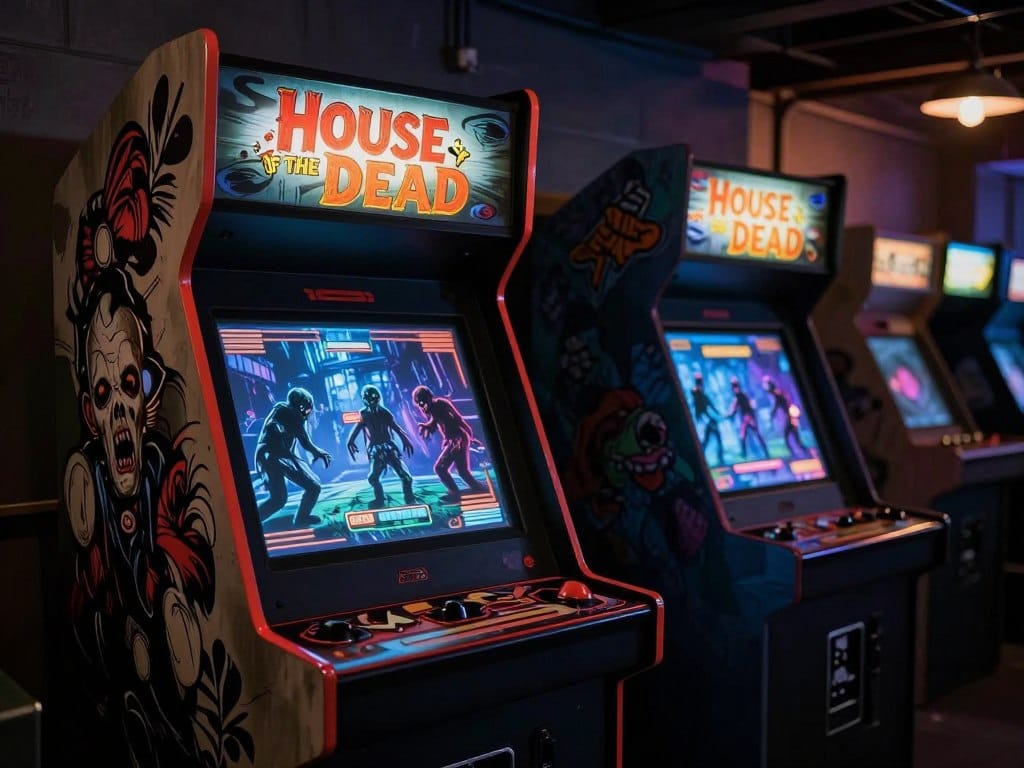
The House of the Dead
This horror-themed light gun game pioneered the zombie shooter subgenre in arcades. Players battled through mansion environments filled with undead creatures. The game balanced scares with action-packed shooting sequences.
Branching paths based on player performance added replayability. Saving civilians unlocked alternate routes and endings. The challenge came from precise shooting under pressure. Headshots dealt critical damage but required accuracy.
Strengths
- Atmospheric horror setting
- Multiple endings encourage replays
- Satisfying headshot mechanics
- Memorable boss encounters
Considerations
- Shorter campaign length
- Dated voice acting
- Limited enemy variety
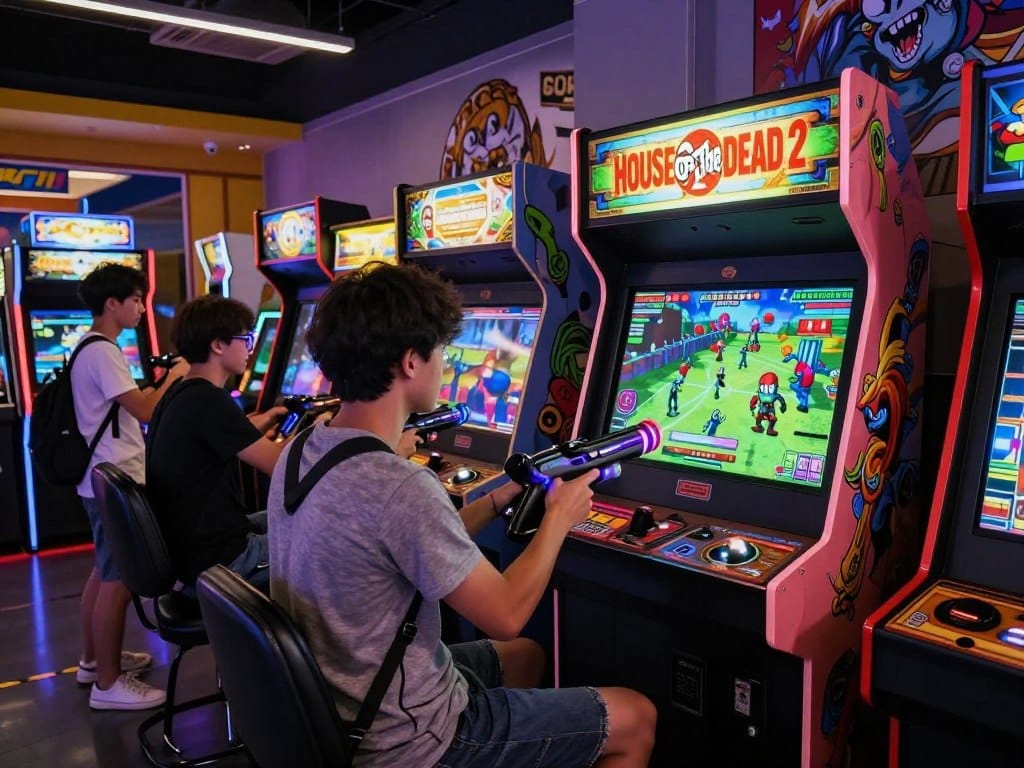
The House of the Dead 2
The sequel refined every aspect of the original. Improved graphics brought more detailed zombie models and environments. The weapon system expanded with reload mechanics adding tension. Players managed ammunition carefully during intense sequences.
The story took players through city streets, laboratories, and underground facilities. Each location introduced new enemy types with unique behaviors. Boss battles became more elaborate puzzle-like encounters requiring pattern recognition and quick reflexes.
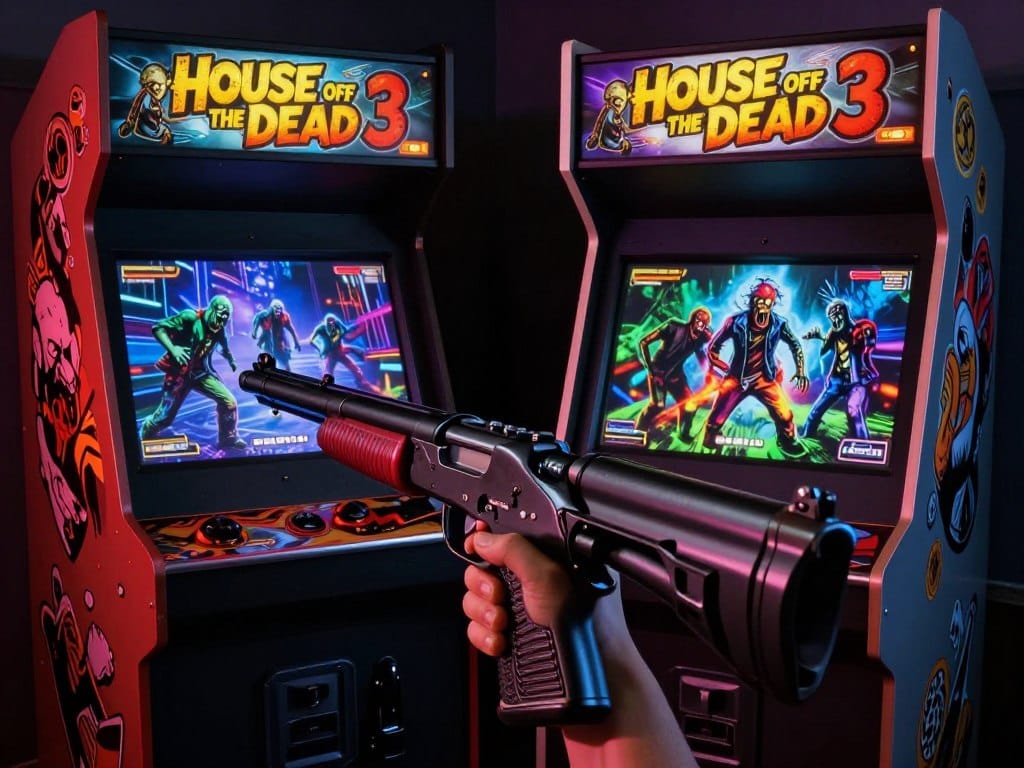
The House of the Dead 3
This installment introduced shotgun-style light guns with pump-action reload mechanisms. The physical reload action enhanced immersion significantly. The weapon spread made precision less critical but ammunition management more important.
The game’s darker visual aesthetic matched the grim post-apocalyptic setting. Sixteen years after the previous game’s events, the world had changed dramatically. The narrative explored the long-term consequences of earlier events.
Classic Light Gun Titles
Virtua Cop Series
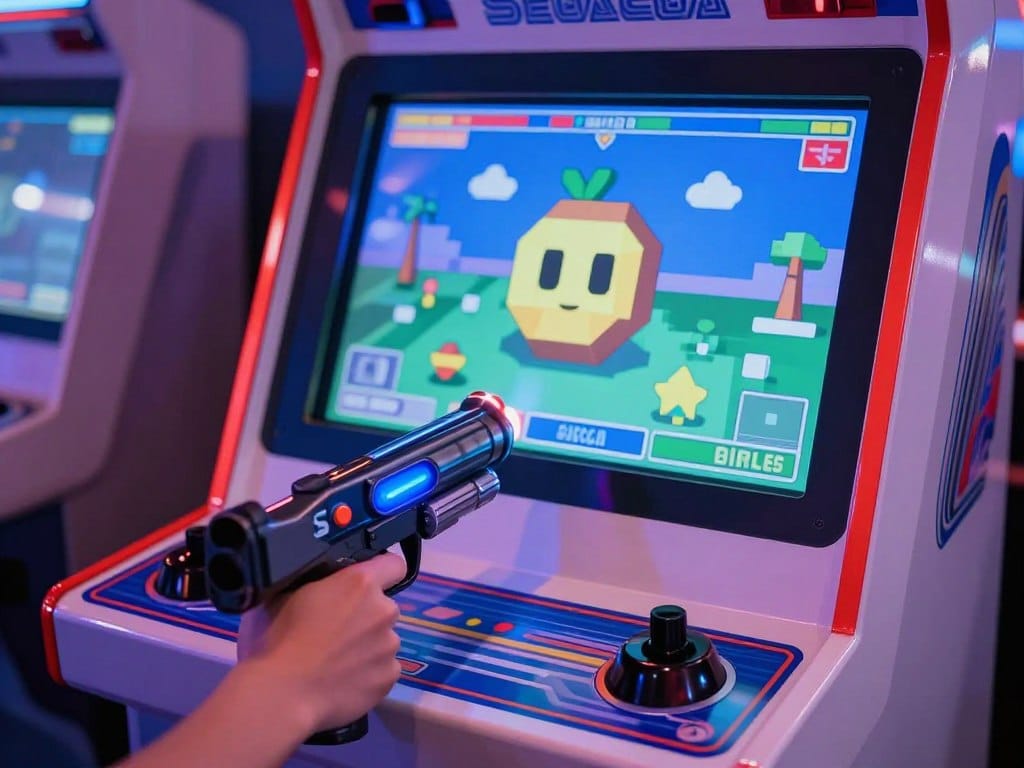
Sega’s Virtua Cop pioneered 3D polygonal graphics in light gun games. The series followed police officers battling criminal organizations. Each game featured branching paths based on shooting accuracy and hostage rescue success.
The franchise introduced automatic movement between cover positions. Players focused purely on shooting without navigation concerns. This streamlined approach kept action constant. The three-game series progressively improved graphics and mechanics.
Operation Wolf
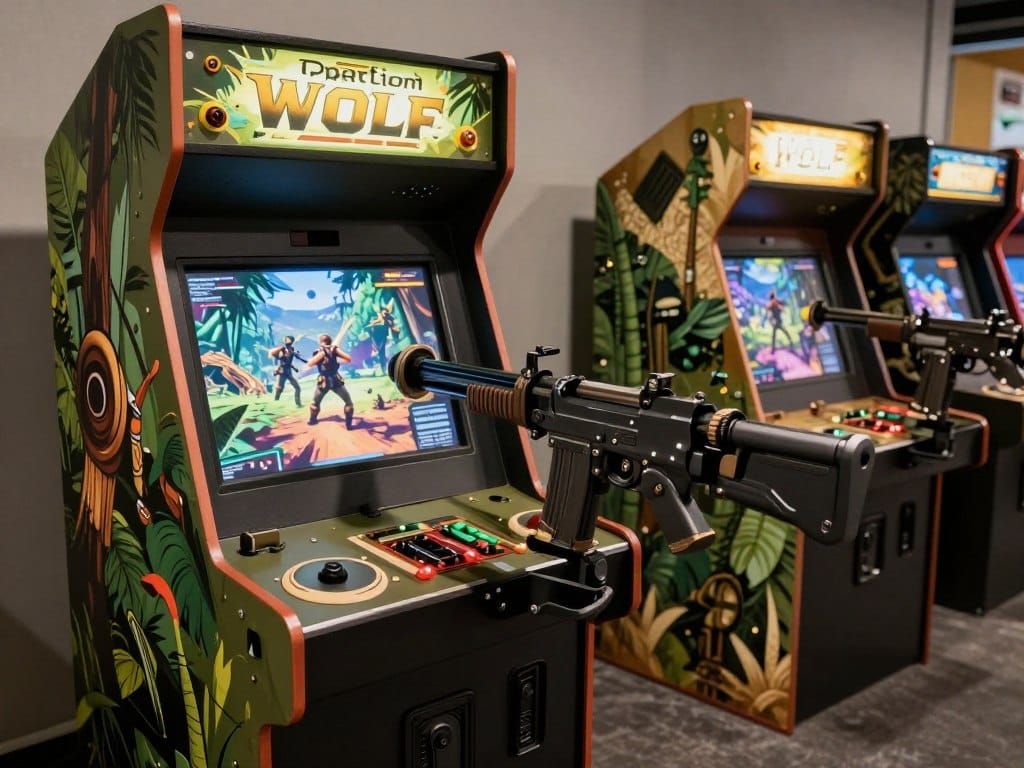
This 1987 classic defined the military shooter arcade experience. The mounted machine gun controller featured realistic recoil feedback. Players fought through six missions rescuing hostages from enemy forces.
Limited ammunition and grenade supplies created strategic depth. Players chose when to use powerful grenades versus conserving for later stages. The game balanced action with resource management effectively.
Lethal Enforcers
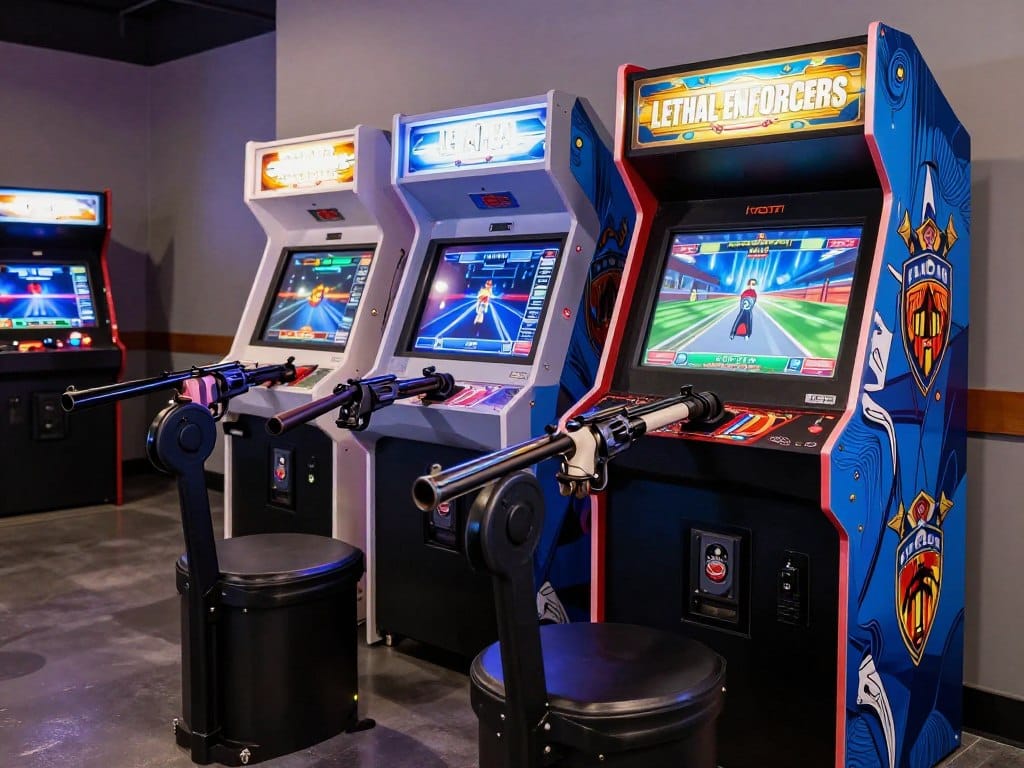
Konami’s Lethal Enforcers used digitized graphics showing real actors and locations. Players assumed law enforcement roles across multiple crime scenarios. The game emphasized quick target identification between criminals and civilians.
Revolver-style light guns enhanced the police theme. The sequel, Lethal Enforcers II, transported action to the Wild West setting. Both games offered intense shooting action with moral judgment elements.
Build Your Light Gun Collection
Discover classic and modern light gun games available for home play and arcade collecting.
Hunting and Outdoor Shooting Games
Hunting simulators carved their own niche in arcade shooter territory. These games appealed to a different demographic than military or horror titles. The focus on wildlife and outdoor environments created relaxing yet challenging gameplay experiences.
Realistic animal behaviors and scoring systems rewarded patience and accuracy. Unlike action shooters, hunting games penalized wasteful shooting. Players learned to wait for optimal shot opportunities. The genre peaked in popularity during the late 1990s.
Big Buck Hunter Series
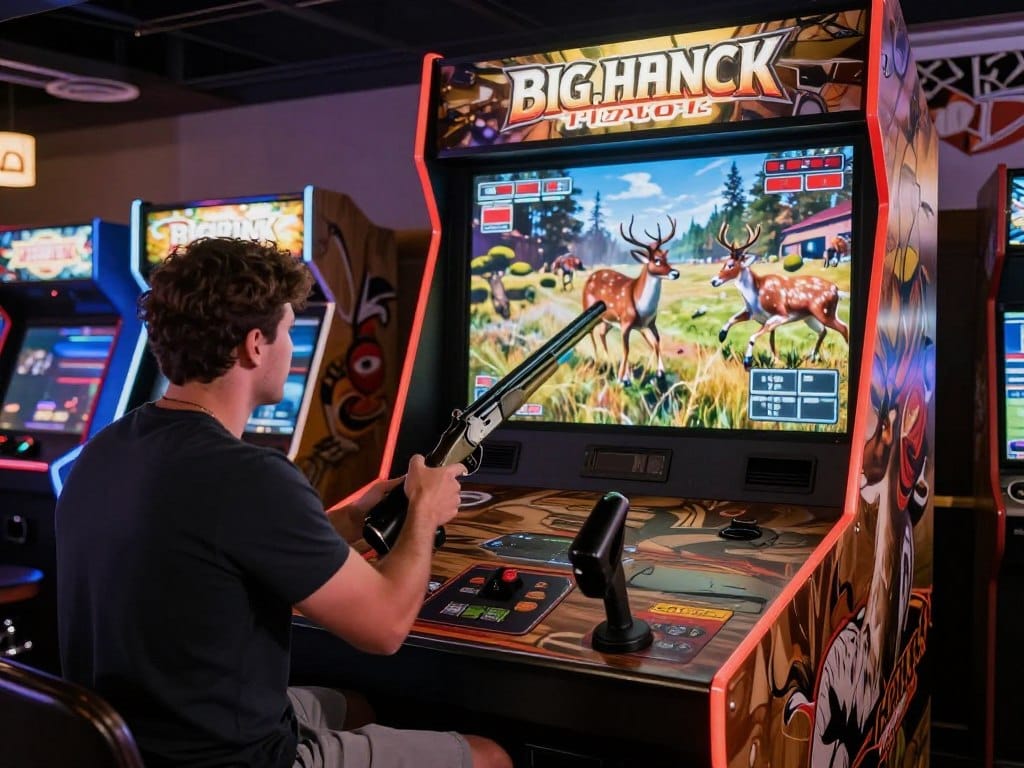
Big Buck Hunter
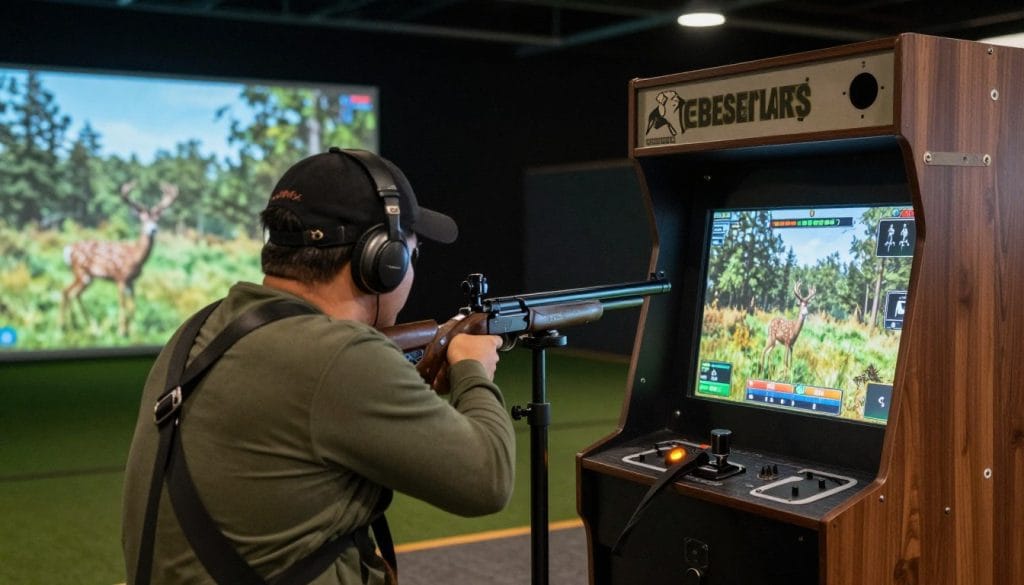
This franchise became synonymous with bar and restaurant arcade gaming. The accessible gameplay attracted casual players while offering depth for enthusiasts. Players hunted various game animals across North American landscapes.
The shotgun controller interface proved intuitive for newcomers. Bonus stages and mini-games added variety. Multiplayer competition turned hunting into social entertainment. The series spawned numerous sequels and updates.
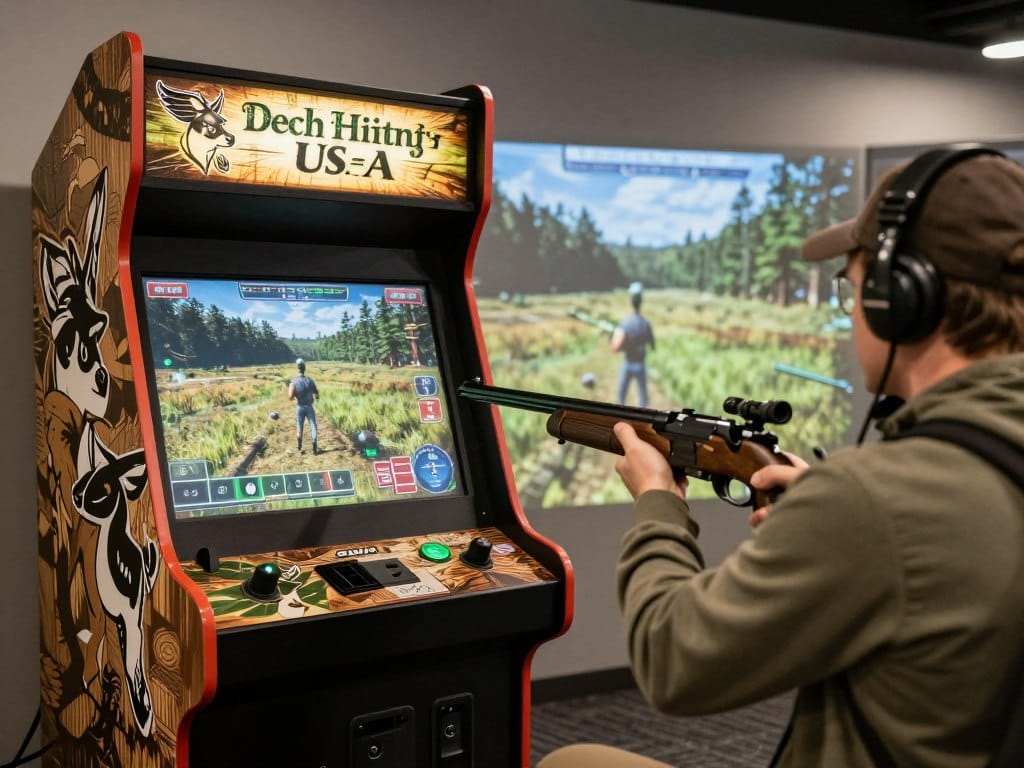
Deer Hunting USA
Sega’s Deer Hunting USA offered more simulation-focused gameplay. Realistic deer behaviors required patience and strategy. Wind direction, distance, and shot placement all affected success rates.
Multiple hunting locations showcased different terrains and challenges. The scoring system rewarded clean kills and trophy animals. Time limits added urgency without sacrificing the hunting atmosphere.
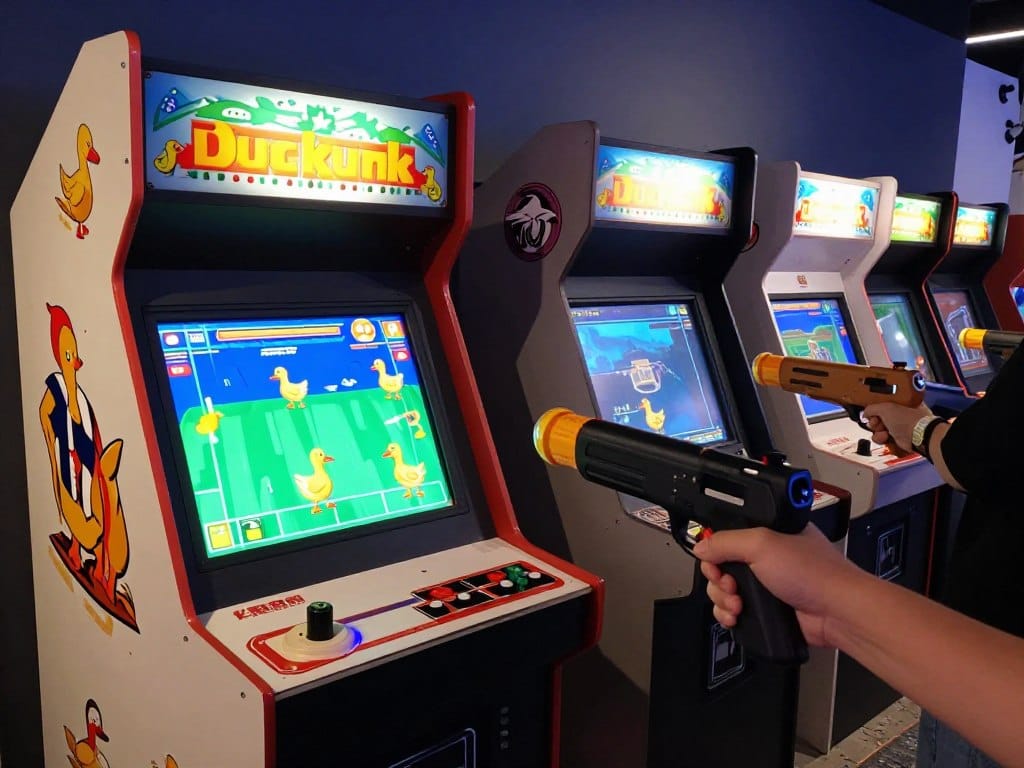
Duck Hunt
While primarily known as a home console game, Duck Hunt had arcade presence. The simple gameplay involved shooting clay pigeons and ducks. The infamous laughing dog mocked missed shots, adding memorable personality.
The game’s straightforward mechanics made it perfect for quick arcade sessions. Three gameplay modes offered variety. The difficulty progression kept experienced players engaged while welcoming newcomers.
Specialty Shooting Games
Silent Scope Series
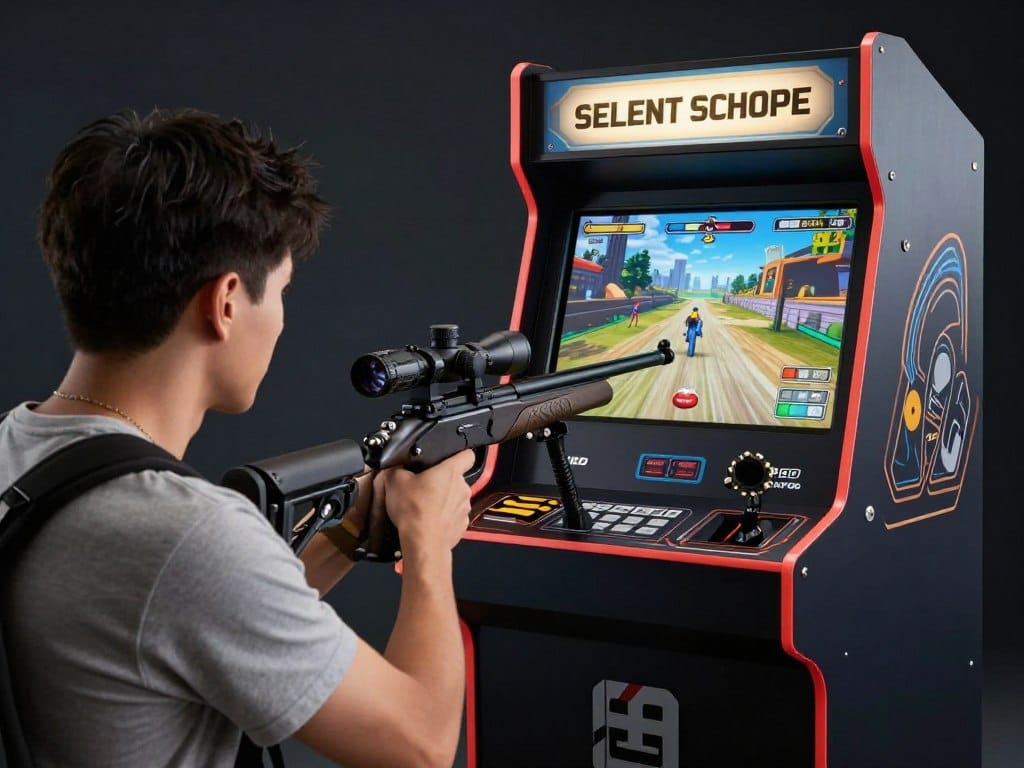
Silent Scope revolutionized arcade sniping with its innovative scope interface. Players peered through an actual scope viewfinder mounted on the rifle controller. The scope displayed zoomed views while the main screen showed the full environment.
This dual-screen setup created unprecedented immersion. Long-range precision shots felt genuinely satisfying. The series spanned five main entries, each improving graphics and mechanics. Locations ranged from urban to exotic international settings.
Police Trainer

This unique title simulated police firearms training. Players completed various shooting challenges testing accuracy and judgment. Scenarios included target ranges, hostage situations, and reactive shooting drills.
The game scored performance based on accuracy, speed, and civilian safety. Multiple weapon choices affected gameplay. Police Trainer found homes in both entertainment venues and actual training facilities.
Rail Shooters and On-Rails Action Games
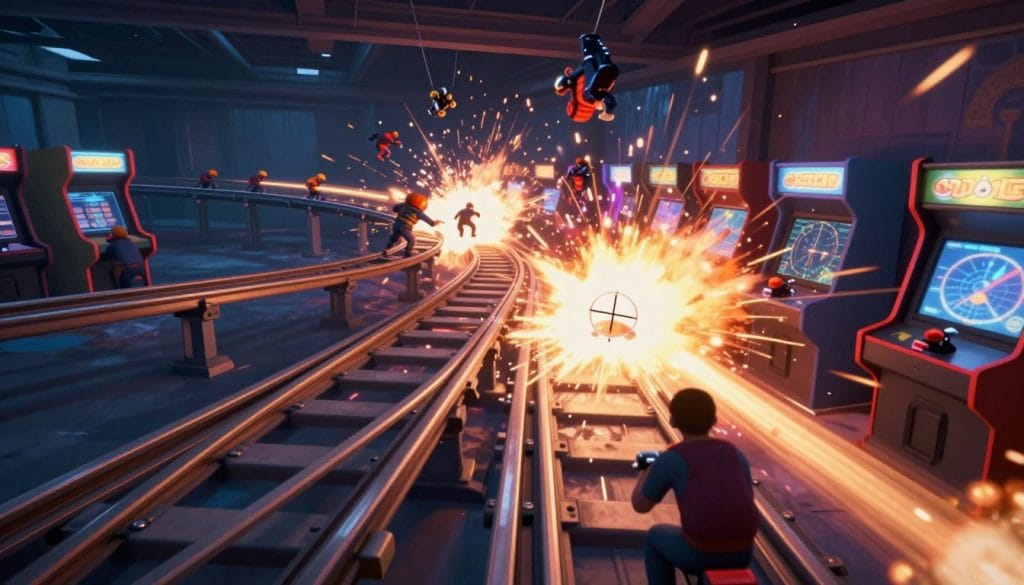
Rail shooters remove movement control from players, focusing entirely on aiming and shooting. The game automatically moves players along predetermined paths. This design choice allows developers to craft perfectly paced action sequences and spectacular set pieces.
The format excels at creating cinematic experiences. Players experience carefully choreographed scenarios without navigation concerns. Boss battles become elaborate spectacles with specific weak points and attack patterns to memorize.
Panzer Dragoon Series
Panzer Dragoon
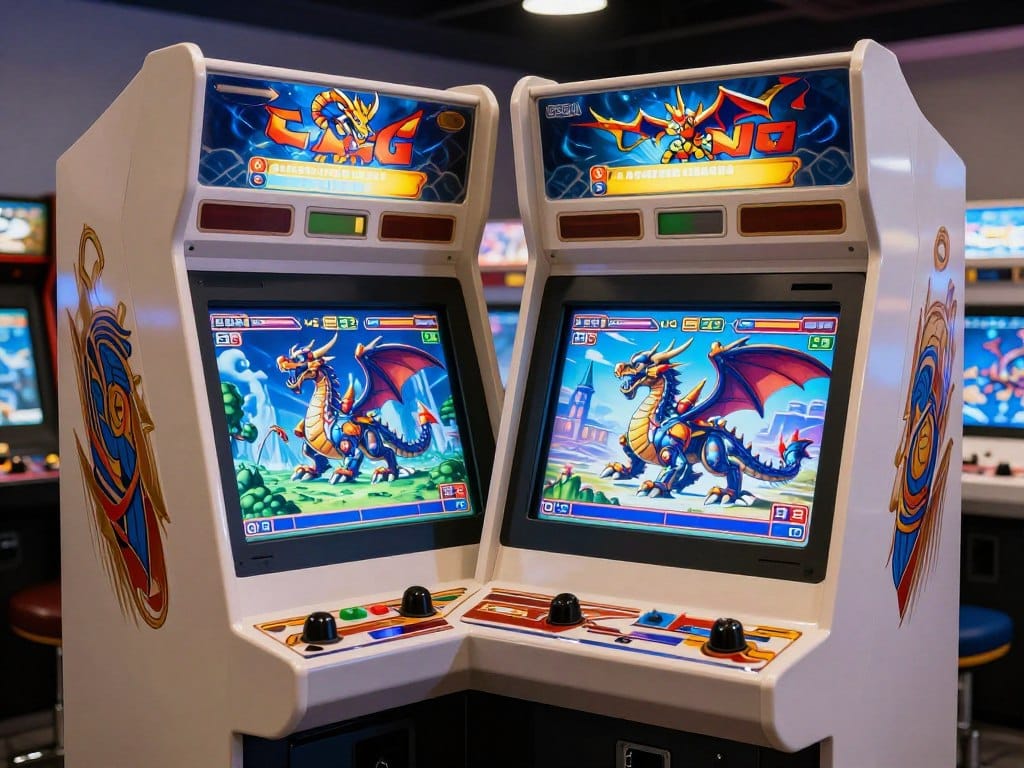
This Sega masterpiece combined rail shooting with dragon-riding fantasy. The unique art direction set it apart from military-themed competitors. Players battled through post-apocalyptic landscapes on dragon-back.
The 360-degree aiming system allowed shooting in all directions. Enemies attacked from every angle requiring constant vigilance. The epic soundtrack and atmospheric visuals created an unforgettable experience.
Highlights
- Unique fantasy setting
- Revolutionary 360-degree shooting
- Stunning visual design
- Memorable boss battles
Limitations
- Shorter campaign
- Limited replay incentives
- Steep learning curve
Star Wars Trilogy Arcade
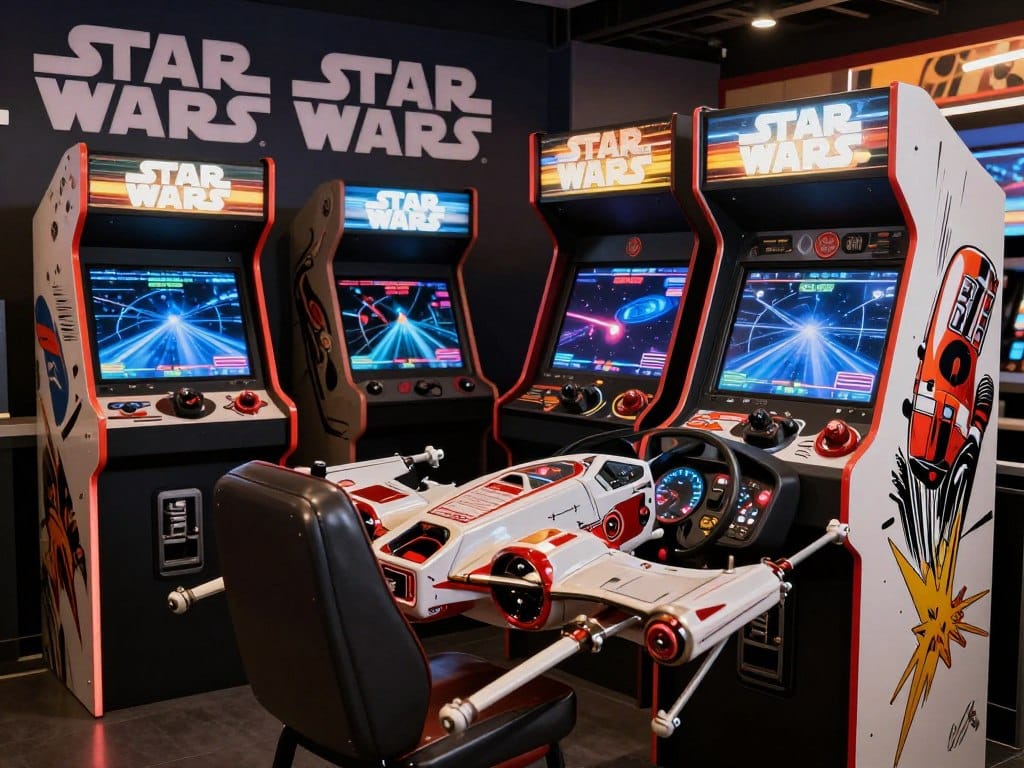
This licensed title recreated iconic Star Wars battles. Players flew through Death Star trenches, battled on Hoth, and faced TIE fighters in space. Authentic sound effects and music enhanced the Star Wars atmosphere.
The game compressed movie action sequences into playable segments. Each mission faithfully adapted film moments. Branching paths and multiple difficulty settings added longevity. The cabinet’s design mimicked spacecraft controls.
Jurassic Park Arcade
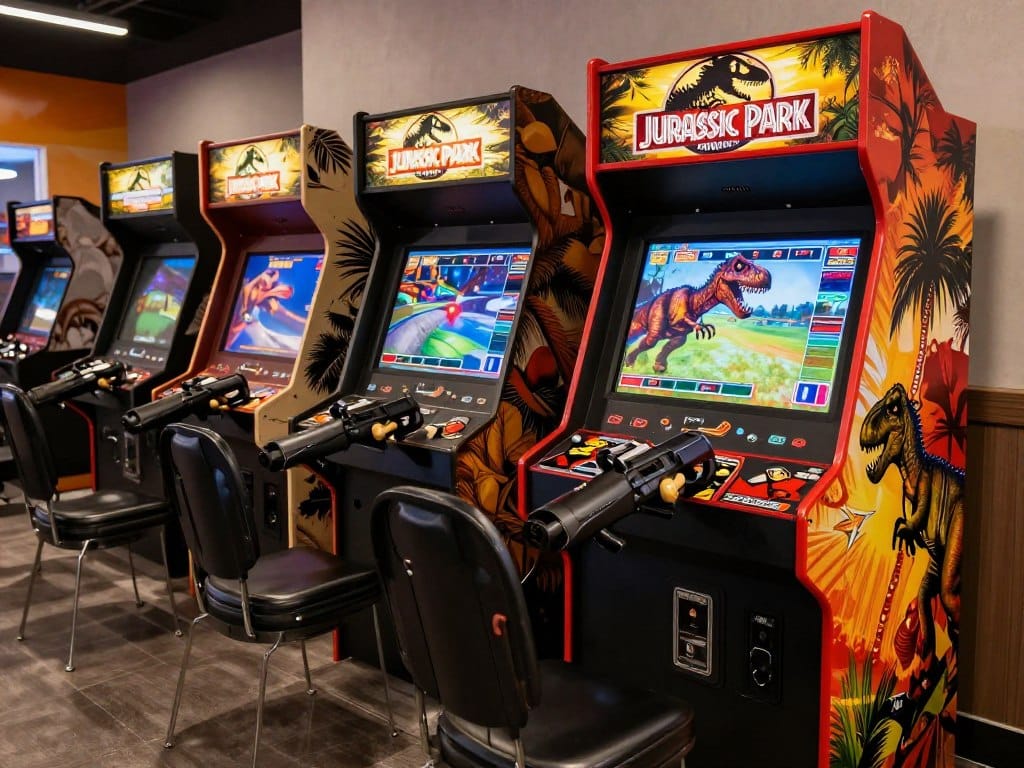
Multiple Jurassic Park arcade games exist, each offering dinosaur-hunting action. The Lost World arcade version featured vehicle-mounted gameplay. Players drove through dinosaur-infested areas while fending off prehistoric threats.
Various dinosaur species required different strategies. The T-Rex encounters became memorable showpieces. The games successfully translated movie excitement into arcade thrills.
Additional Rail Shooter Classics
- Star Fox Arcade – Nintendo’s aerial combat masterpiece
- Galaxian3 – Cooperative space battle experience
- Galaxy Force – Sega’s high-speed space shooter
- Starblade – Namco’s cinematic space adventure
Space-Themed Rail Shooters
- Beast Busters – Horror-themed zombie shooter
- Gunblade NY – Helicopter combat action
- Revolution X – Aerosmith-themed music action
- Maximum Force – Police tactical shooter
Action Rail Shooters
- Gungrave – Anime-inspired action shooter
- Rez – Musical rhythm rail shooter
- Child of Eden – Spiritual successor to Rez
- Sin and Punishment – Fast-paced anime shooter
Fantasy Rail Shooters
Vertical and Horizontal Scrolling Shooters (Shmups)
Shoot ’em ups, affectionately called shmups, represent the purest form of arcade shooting. These games feature constant scrolling backgrounds and relentless enemy waves. Players navigate tight spaces while dodging complex bullet patterns and destroying enemies.
The genre demands absolute precision and pattern memorization. One hit typically means death, creating intense tension. Power-up systems gradually increase player firepower. The difficulty progression remains notoriously challenging even for experienced players.
Japanese developers dominated shmup creation. Studios like Cave, Toaplan, and Taito defined genre conventions. The 1990s represented the golden age with hundreds of innovative titles released. Modern indie developers continue the tradition with fresh interpretations.

Vertical Scrolling Shooters
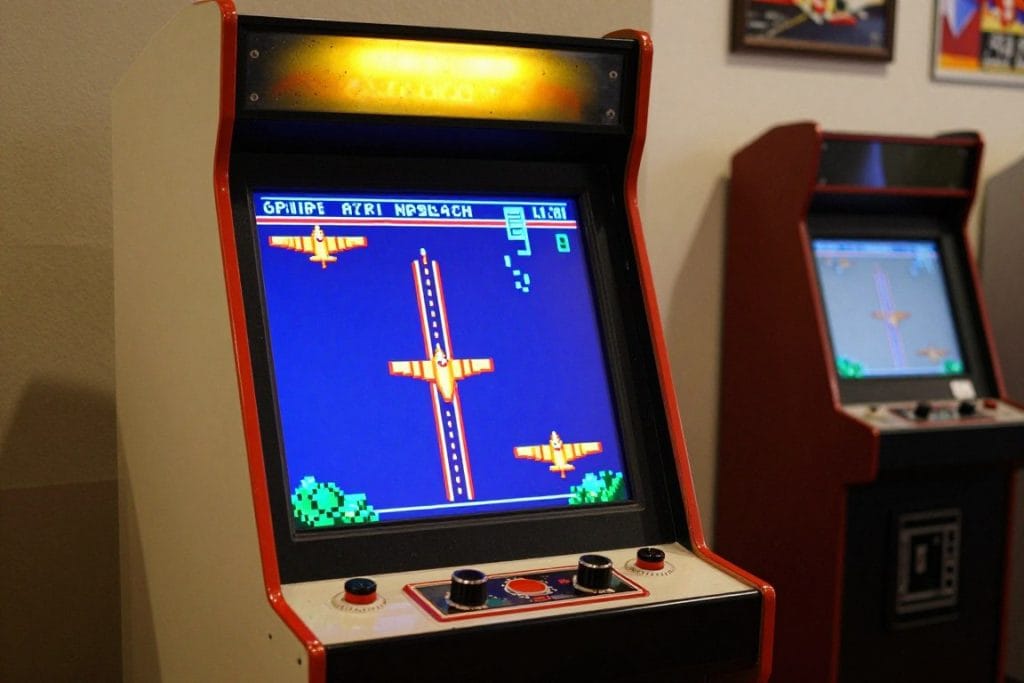
1942 Series
Capcom’s 1942 established many vertical shooter conventions. Players piloted World War II fighters through increasingly difficult stages. The loop mechanic allowed temporary invincibility through barrel rolls.
Subsequent sequels added complexity while maintaining accessibility. The series balanced historical themes with arcade excitement. Power-ups enhanced firepower without overwhelming core mechanics.
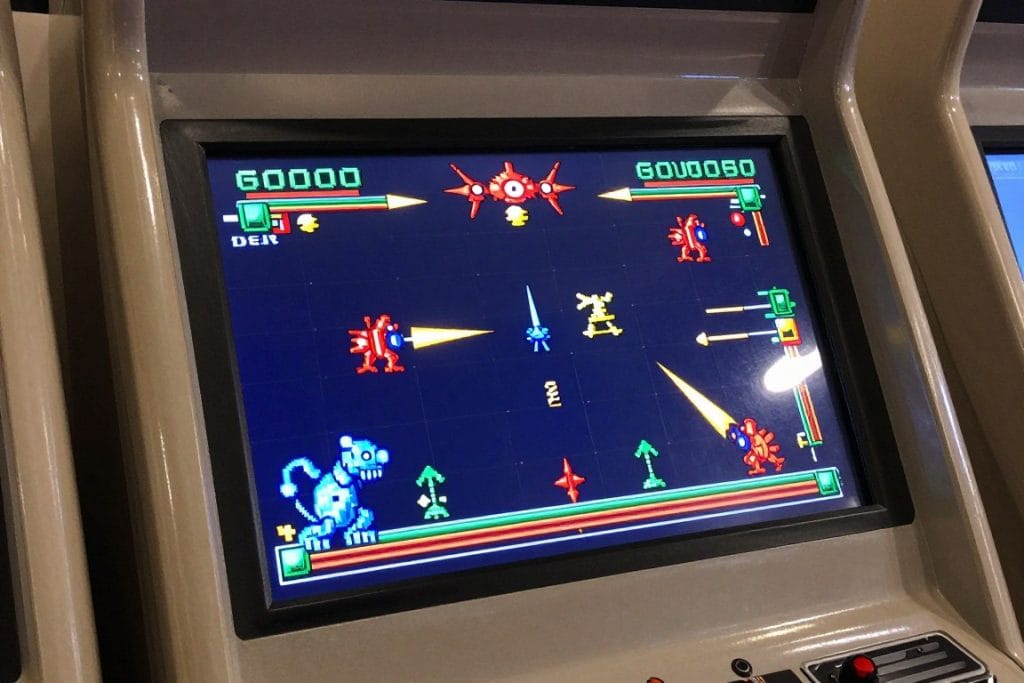
Raiden Series
Raiden defined modern vertical shooters with its weapon system. Players collected three weapon types, each with distinct characteristics. The Vulcan, Laser, and Plasma weapons suited different playstyles.
Massive boss battles featured intricate designs and attack patterns. The series maintained challenging but fair difficulty. Multiple sequels refined the formula without losing the original’s charm.
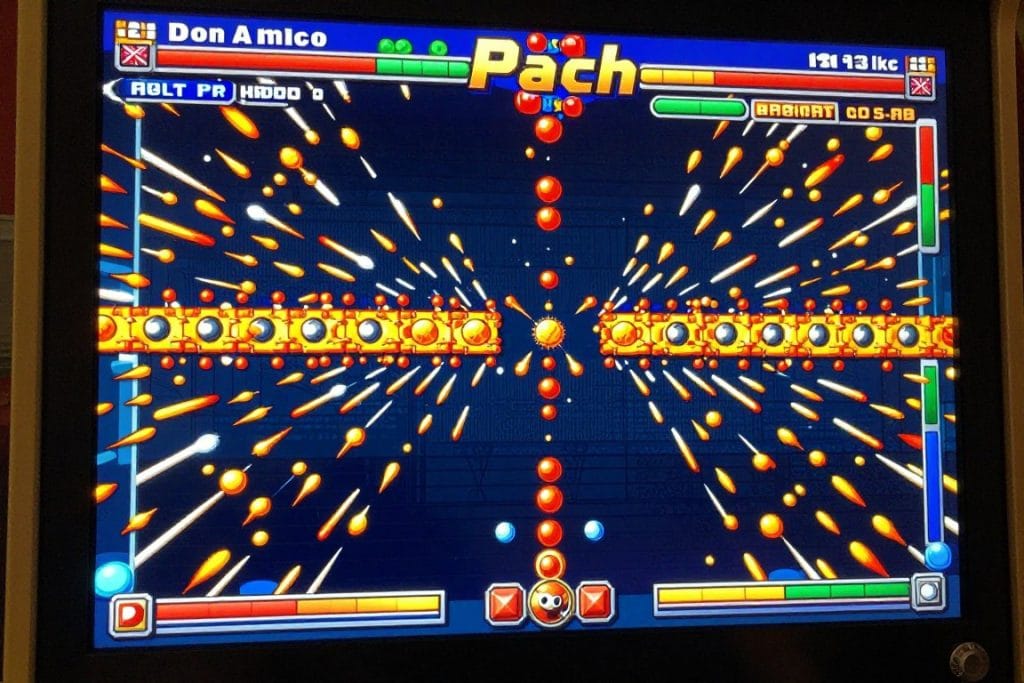
DoDonPachi
Cave’s DoDonPachi pushed bullet patterns to extreme levels. The screen fills with thousands of projectiles requiring pixel-perfect navigation. The scoring system rewards aggressive play and close-range combat.
This franchise represents bullet-hell shooters at their finest. The series demands complete mastery and pattern memorization. Despite brutal difficulty, fair hitboxes and responsive controls maintain balance.
Horizontal Scrolling Shooters
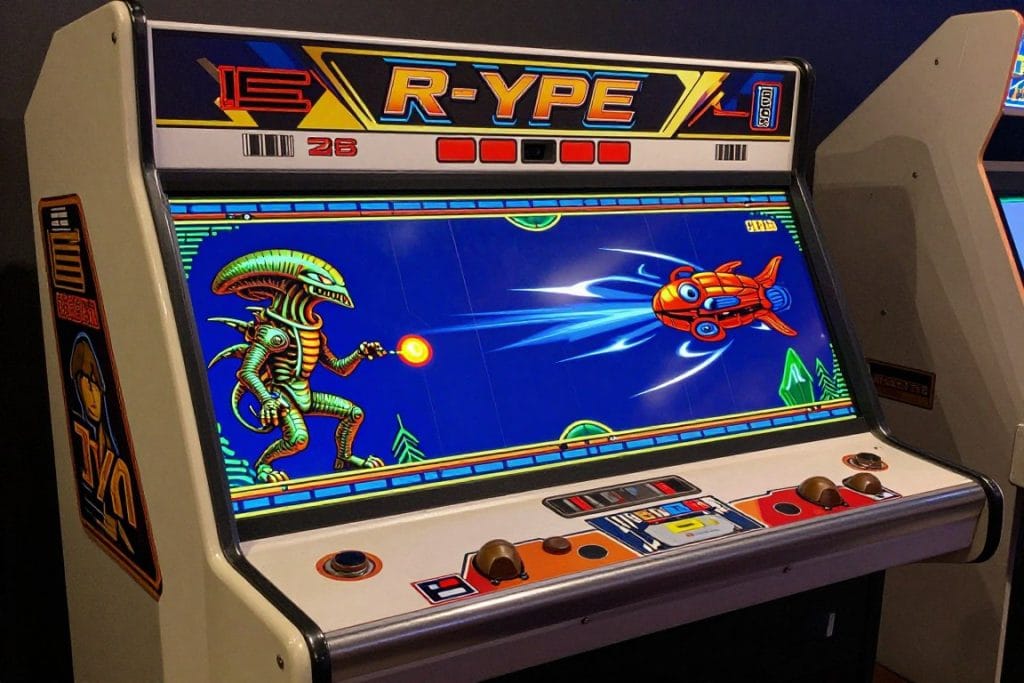
R-Type
Irem’s R-Type revolutionized horizontal shooters with the Force pod system. This detachable unit absorbed shots and enhanced firepower. Strategic positioning of the Force became crucial to survival.
Biomechanical enemy designs created disturbing alien atmospheres. The deliberate pacing contrasted with faster competitors. Memorization and strategy mattered more than reflexes alone.
Gradius Series
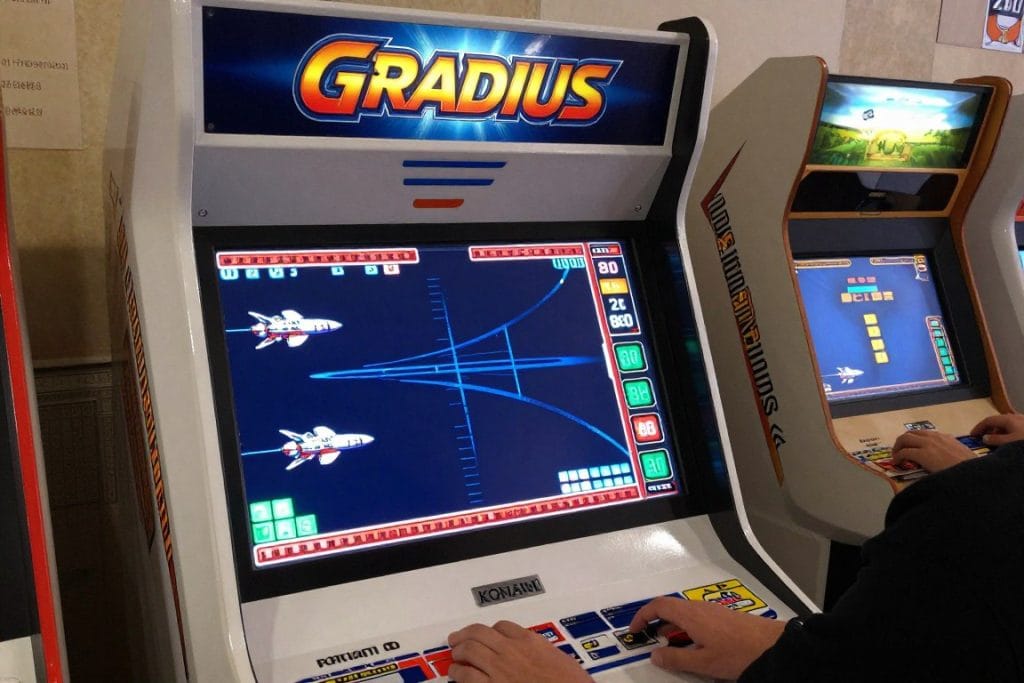
Konami’s Gradius pioneered the power-up bar system. Players collected power capsules to activate chosen upgrades. This strategic element added depth beyond simple collection mechanics.
The Option system created trailing firepower multipliers. Fully powered ships unleashed devastating attacks. The series spawned numerous sequels and spin-offs across decades.
Darius
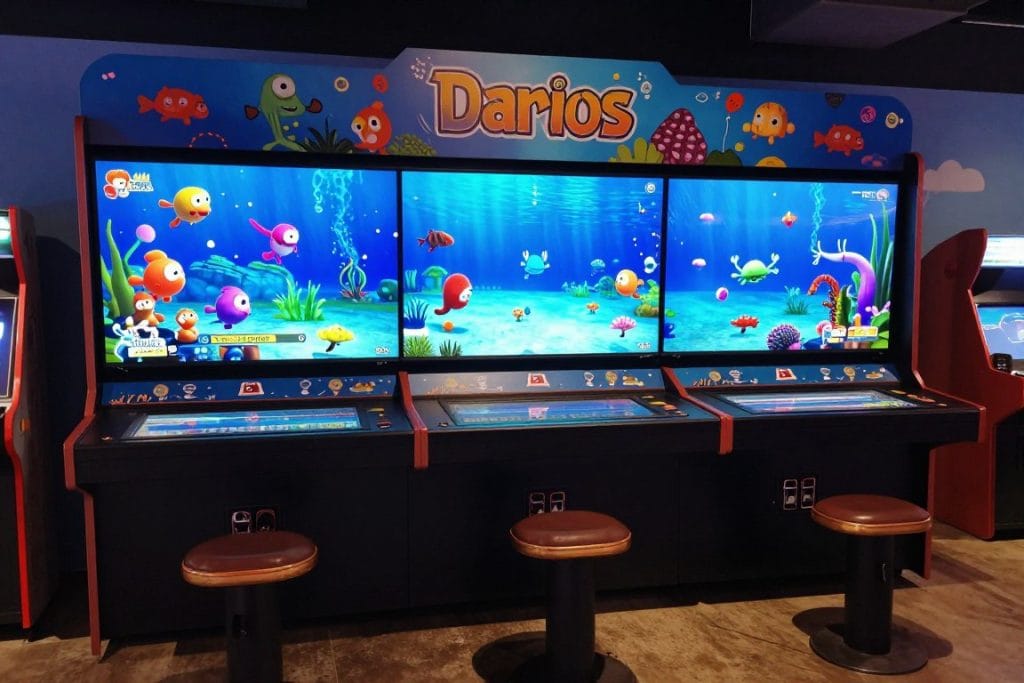
Taito’s Darius stood out with triple-screen arcade cabinets. The massive horizontal playing field created epic scope. Aquatic-themed bosses featured memorable designs and complex patterns.
Branching level paths offered replayability. Each route presented different challenges and boss encounters. The exceptional soundtrack featured memorable compositions.
Run-and-Gun Action Shooters
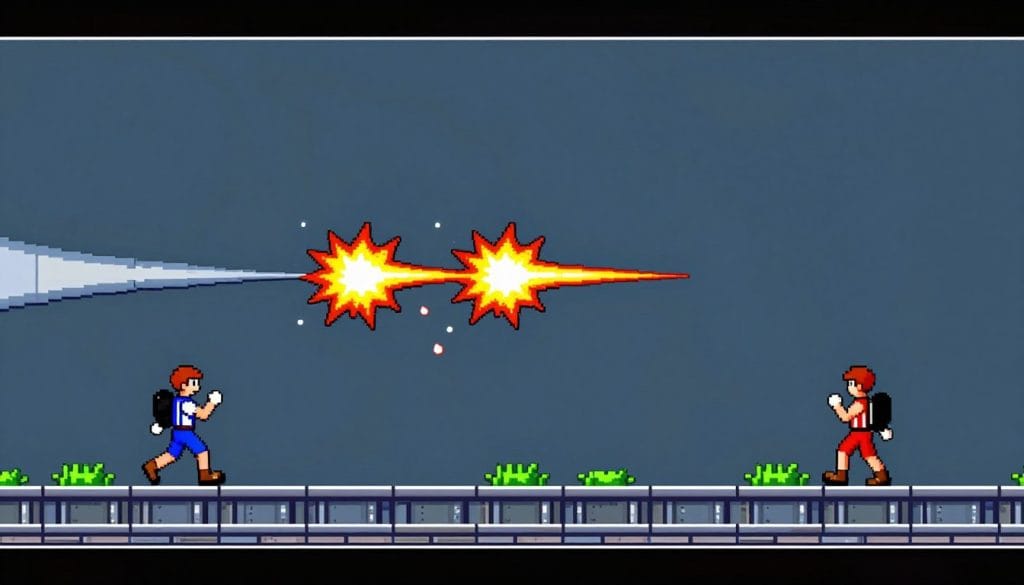
Run-and-gun games blend shooting mechanics with platforming elements. Players navigate levels on foot while battling enemies. This combination requires balancing movement, jumping, and shooting simultaneously. The genre emphasizes exploration and environmental interaction.
Cooperative multiplayer became a staple feature. Two players working together created dynamic experiences. Friend fire added chaos and humor. The best titles balanced challenge with accessibility for varying skill levels.
Iconic Run-and-Gun Titles
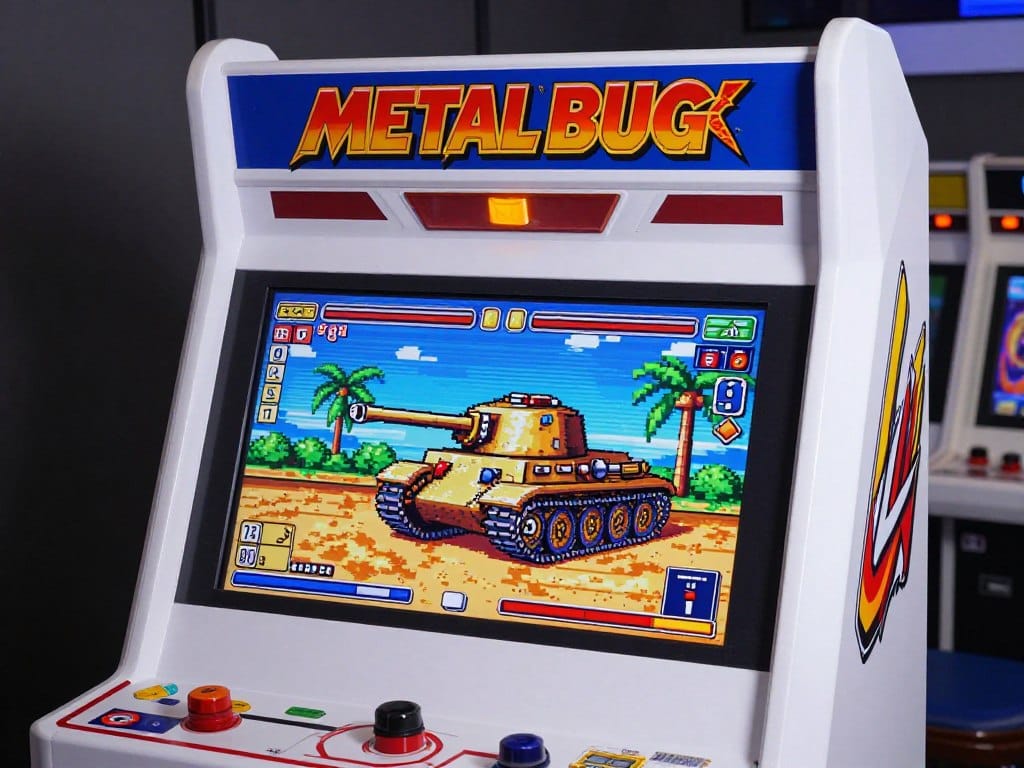
Metal Slug Series
SNK’s Metal Slug franchise represents the pinnacle of run-and-gun design. Gorgeous hand-drawn sprites featured incredible animation detail. The humor and personality made every stage memorable.
Vehicles added variety to on-foot combat. Players controlled tanks, planes, and mechs throughout campaigns. The weapon variety ensured constantly fresh gameplay. Seven main entries each offered unique stages and challenges.
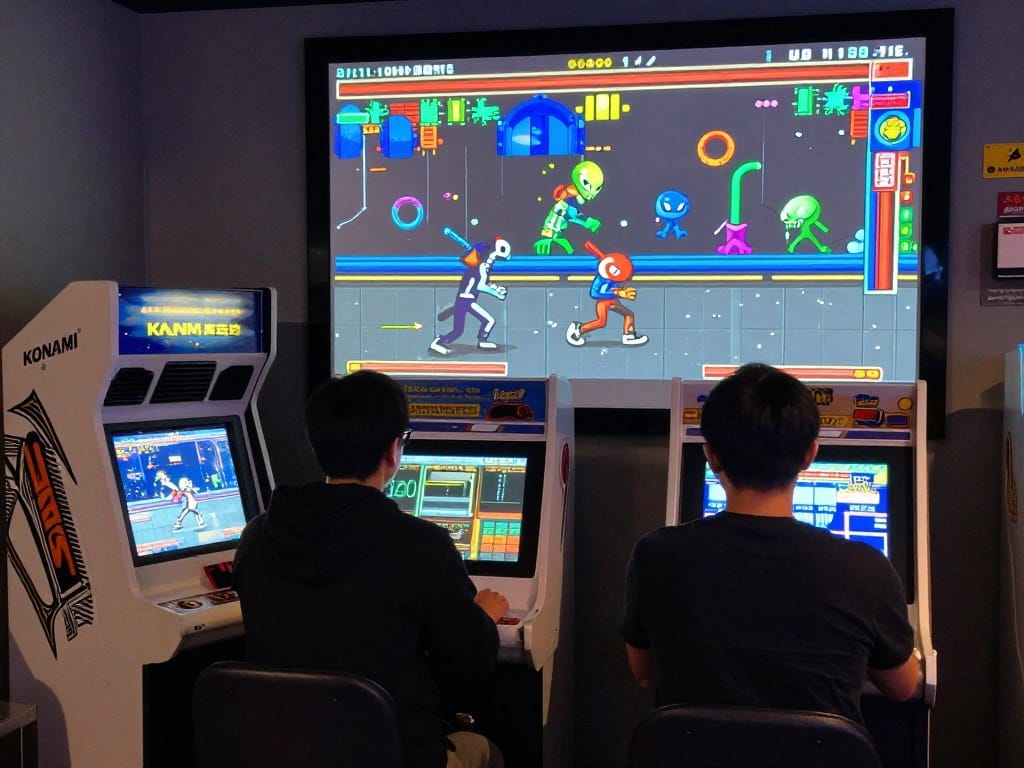
Contra
Konami’s Contra defined the run-and-gun genre for many players. The spread gun became legendary among power-ups. Memorizing enemy patterns and level layouts proved essential to progression.
The game’s infamous difficulty created lasting reputation. Players needed perfect timing and positioning. Cooperative play eased challenge while adding friendly fire chaos. The franchise spawned numerous sequels and spinoffs.
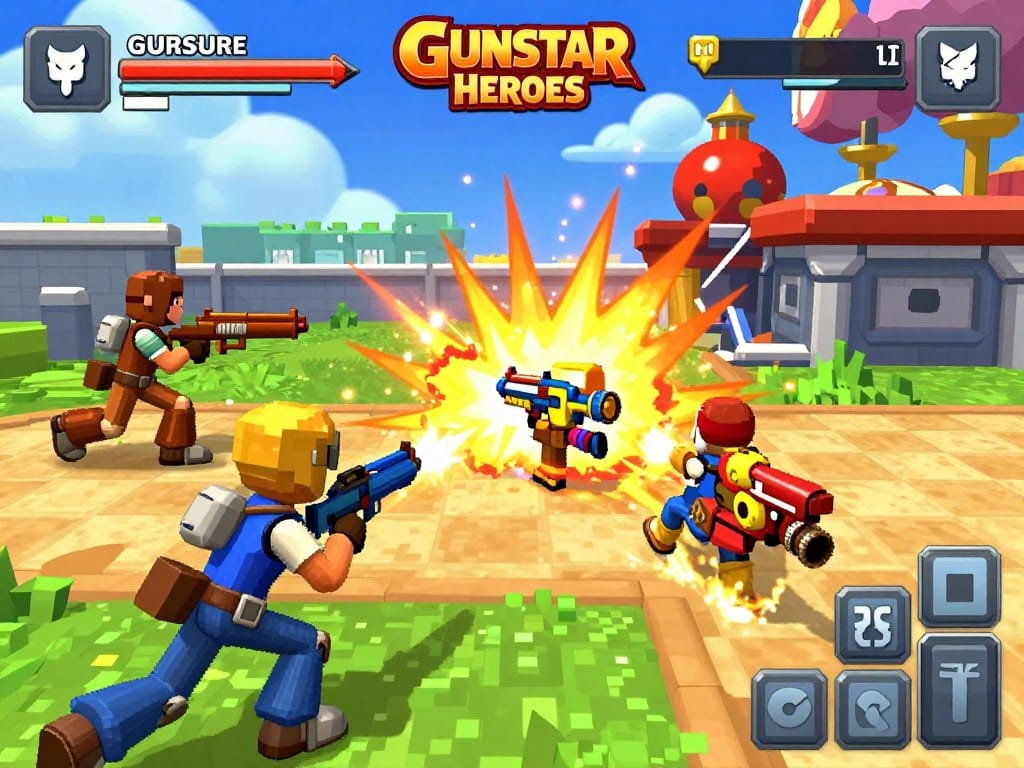
Gunstar Heroes
Treasure’s Gunstar Heroes revolutionized the genre with weapon combinations. Players mixed four base weapons creating unique loadouts. The frenetic action pushed hardware limits with on-screen chaos.
Boss battles featured creative multi-phase encounters. The visual spectacle and inventive design influenced countless future titles. The game balanced accessibility with hardcore challenge options.
Additional Run-and-Gun Classics
Arcade Originals
- Midnight Resistance – Unique dial control system for 360-degree shooting
- Shock Troopers – Top-down perspective run-and-gun action
- Alien Storm – Beat-em-up meets shooter hybrid gameplay
- Cybernator – Mech-based run-and-gun with strategic elements
- NAM-1975 – Vietnam War-themed shooting action
Modern Interpretations
- Cuphead – Hand-drawn animation meets run-and-gun challenge
- Blazing Chrome – Modern homage to classic 16-bit shooters
- Valfaris – Heavy metal space shooter with melee combat
- Huntdown – Cyberpunk bounty hunting action
- Broforce – Explosive action movie-inspired shooter
Key Features That Define Great Arcade Shooter Games
Successful arcade shooters share common design elements that transcend subgenre boundaries. Understanding these characteristics helps appreciate why certain games achieved legendary status. Developers carefully balanced multiple factors creating compelling experiences.
The best titles make players feel powerful while maintaining challenge. Power progression systems gradually increase capability without removing difficulty. Visual and audio feedback reinforce every action. These elements combine creating satisfying gameplay loops.
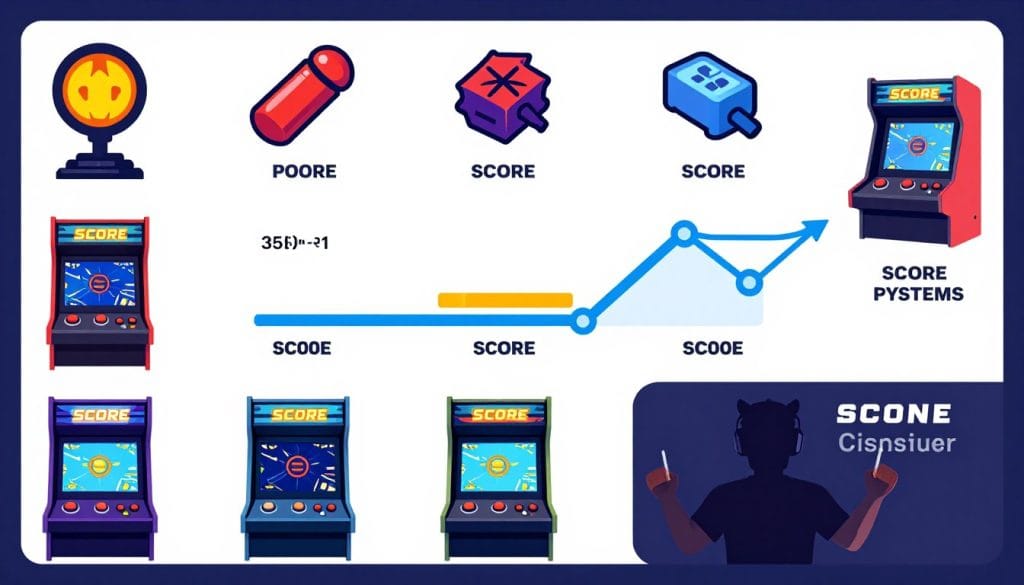
Essential Design Elements
Scoring Systems
Points drive arcade shooter engagement and competition.
- Base points for enemy elimination
- Multiplier chains for consecutive kills
- Bonus points for perfect accuracy
- Score-based extra lives or continues
Power-Up Mechanics
Gradual capability increases maintain excitement.
- Weapon upgrades with visual feedback
- Temporary invincibility or shields
- Screen-clearing smart bombs
- Speed increases for mobility
Difficulty Progression
Carefully crafted challenges keep players engaged.
- Gradually increasing enemy counts
- More complex attack patterns
- Faster projectile speeds
- Multiple difficulty mode options
Control Response
Precise controls enable skilled play.
- Zero input lag requirements
- Clear visual hit detection
- Responsive movement and shooting
- Intuitive button layouts
Visual and Audio Design
Visual Clarity: Great arcade shooters maintain readable screens even during intense action. Players must distinguish bullets, enemies, and backgrounds instantly. Color coding helps identify threats. Important elements use contrasting colors against backgrounds.
Audio Feedback: Sound effects communicate game states effectively. Weapon sounds feel impactful. Enemy destruction audio rewards player actions. Warning sounds alert to incoming dangers. Music energizes without overwhelming sound effects.
Player Psychology and Flow
The best arcade shooters understand psychological engagement principles. They create flow states where challenge perfectly matches skill level. Too easy becomes boring. Too difficult causes frustration. The balance point keeps players engaged for extended sessions.
Short-term goals provide constant micro-rewards. Destroying enemy waves gives immediate satisfaction. Long-term goals like stage completion or high scores motivate continued play. The combination creates addictive gameplay loops.
| Design Element | Purpose | Player Benefit | Common Implementation |
| Continue System | Monetization and progression | See more content per session | Limited continues with countdown timer |
| Boss Encounters | Climactic challenges and variety | Memorable set-piece moments | Multi-phase battles with weak points |
| Checkpoint System | Reduce repetition frustration | Resume from recent progress | Mid-stage respawn locations |
| Score Display | Competitive motivation | Clear performance tracking | Persistent on-screen counter |
| Visual Effects | Impact feedback and spectacle | Satisfying action moments | Explosions and particle systems |
Essential Tips for Arcade Shooter Newcomers
Starting your arcade shooter journey can feel overwhelming. The genre’s difficulty reputation intimidates many potential players. However, understanding fundamental strategies makes these games accessible. Progress comes through practice and pattern recognition.
Every expert player started as a beginner. The skills transfer between titles once mastered. Building foundational knowledge helps you enjoy the genre’s depth. These tips accelerate the learning process.
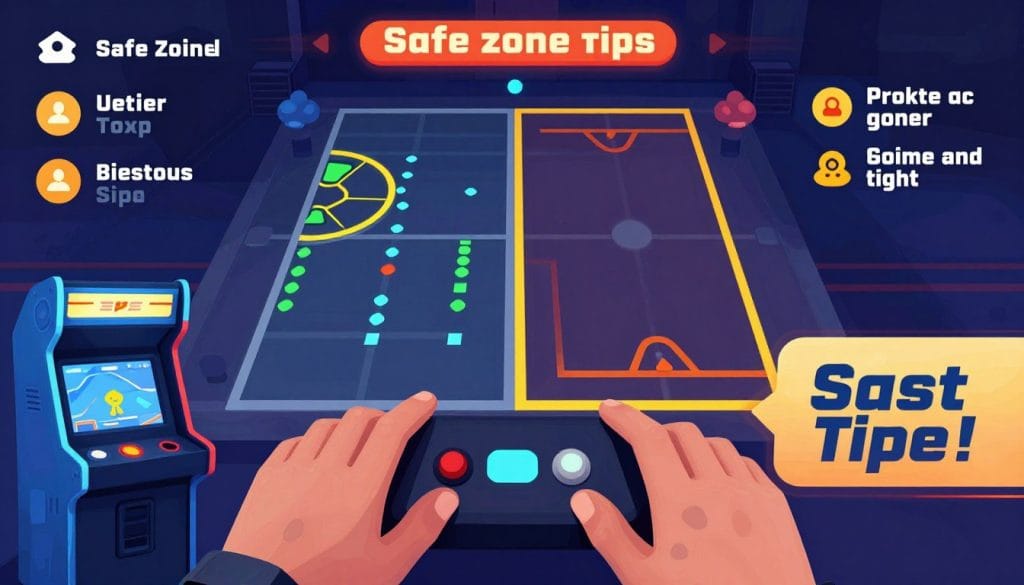
Fundamental Strategies
Master Basic Movement
Precise positioning matters more than aggressive shooting. Learn to weave through bullet patterns. Keep your character near screen edges for escape routes. Practice slow, deliberate movements before attempting speed runs.
- Stay calm during intense sequences
- Focus on dodging before shooting
- Learn your character’s hitbox size
- Use the entire screen space
Prioritize Target Selection
Not all enemies deserve equal attention. Identify high-threat targets first. Enemies that shoot require immediate elimination. Understanding threat priorities prevents overwhelming situations from developing.
- Eliminate shooters before melee enemies
- Target enemy spawn points
- Focus on pattern-breaking threats
- Learn boss weak point locations
Manage Power-Ups Wisely
Power-up timing significantly impacts survival. Save bombs and special weapons for difficult sections. Learn which upgrades complement your playstyle. Sometimes saving resources matters more than using them immediately.
- Reserve bombs for emergencies
- Understand weapon strengths
- Collect life-extending items first
- Know when to play defensively
Learning Process Tips
Practice Methods
Structured practice accelerates skill development significantly.
- Start with easier difficulty modes to learn patterns
- Focus on completing single stages consistently
- Watch expert player videos for strategy ideas
- Practice specific sections causing repeated failures
- Gradually increase difficulty as skills improve
- Take breaks to avoid frustration and fatigue
Mental Approach
Mindset matters as much as mechanical skill development.
- Accept that failure teaches valuable lessons
- Celebrate small improvements and milestones
- Maintain focus on personal progress over comparison
- Recognize patterns emerge through repetition
- Stay patient during difficult learning curves
- Enjoy the journey rather than rushing mastery
Common Beginner Mistakes
Avoid These Pitfalls: New players often make predictable errors that hinder progress. Recognizing these mistakes helps correct them quickly. Overcoming bad habits early prevents ingrained problems later.
- Holding fire constantly instead of aimed shooting
- Staying in one position too long
- Panicking when overwhelmed instead of methodical play
- Ignoring environmental hazards and obstacles
- Rushing through stages without observation
- Giving up after early failures
- Neglecting to learn from death replays
- Attempting advanced techniques too early
Recommended Starting Games
Some arcade shooters welcome newcomers better than others. These titles offer gentler learning curves while teaching fundamental skills. Mastering these games builds confidence for harder challenges.
- Point Blank – Simple target shooting exercises
- Big Buck Hunter – Casual hunting gameplay
- Time Crisis – Generous continue system
- Virtua Cop – Forgiving hit detection
Beginner-Friendly Light Gun Games
- Gradius – Power-up bar system teaches choices
- 1942 – Straightforward vertical shooting
- Twin Cobra – Balanced difficulty progression
- Phoenix – Classic simple mechanics
Accessible Shmups
- Metal Slug – Continues allow progression
- Shock Troopers – Multiple characters and paths
- Alien Storm – Beat-em-up hybrid easier entry
- Wild Guns – Western theme with fair challenge
Approachable Run-and-Gun
Collecting and Preserving Arcade Shooter History
Arcade games face extinction as cabinets age and technology becomes obsolete. Dedicated collectors and preservationists work to maintain these cultural artifacts. Original hardware requires specialized knowledge and maintenance. The community’s passion keeps classic games accessible.
Multiple preservation approaches exist. Some collectors restore original cabinets to working condition. Others focus on emulation and digital preservation. Both methods contribute to maintaining gaming history. The challenge grows as components become increasingly rare.
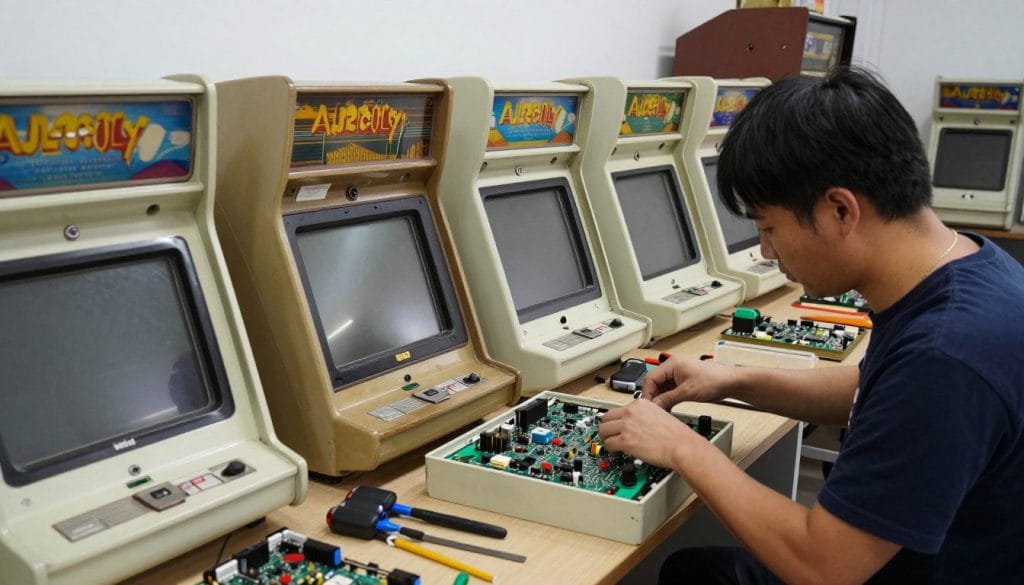
Collecting Original Hardware
Owning authentic arcade cabinets represents the ultimate collector goal. Full-size cabinets require significant space and investment. The experience of playing on original hardware remains unmatched. However, practical considerations limit this option for many enthusiasts.
Benefits of Original Hardware
- Authentic arcade experience with original controls
- Historical preservation of gaming artifacts
- Potential investment value appreciation
- Community respect and recognition
- Tangible connection to gaming history
Challenges to Consider
- Significant space requirements for cabinets
- High initial purchase and shipping costs
- Ongoing maintenance and repair needs
- Replacement parts increasingly difficult to source
- Electrical considerations and power consumption
Modern Alternatives and Solutions
Technology offers multiple ways to experience classic arcade shooters. Modern solutions balance authenticity with practicality. These options make the genre accessible without massive space or budget requirements.
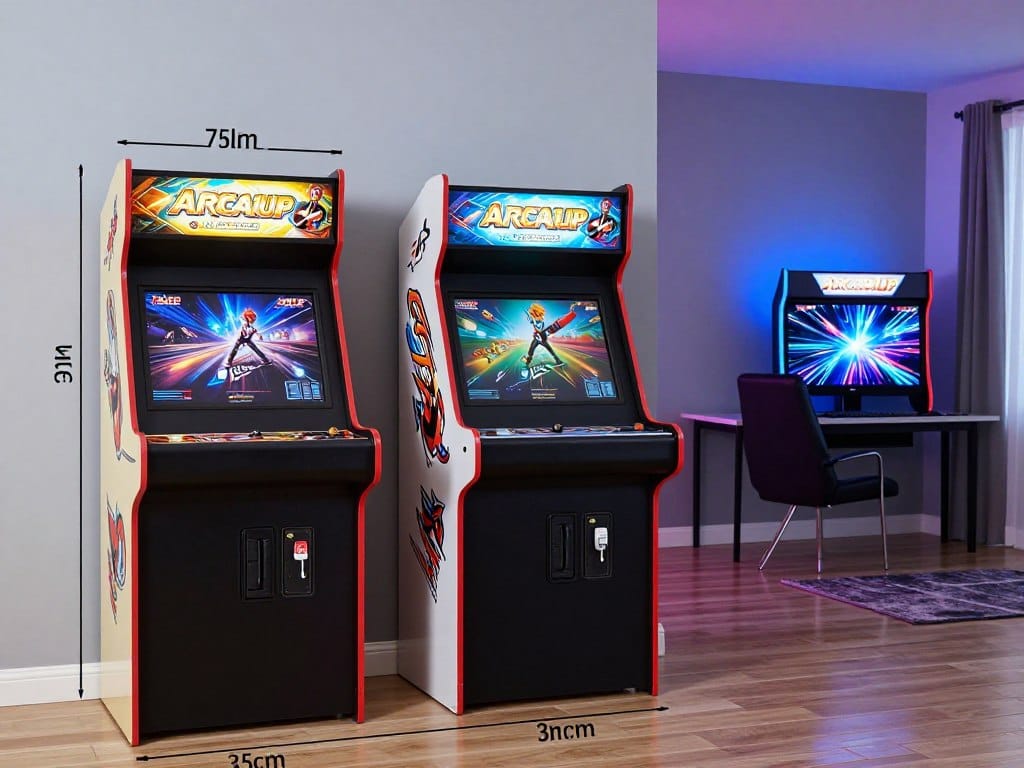
Scaled Replica Cabinets
Companies like Arcade1Up produce three-quarter scale cabinets. These units capture authentic aesthetics in manageable sizes. Multiple games come pre-installed. The price point makes collecting feasible for average budgets.
The smaller footprint fits home environments better. Assembly requires minimal technical knowledge. Some models support online leaderboards. While not identical to originals, they provide satisfying compromises.
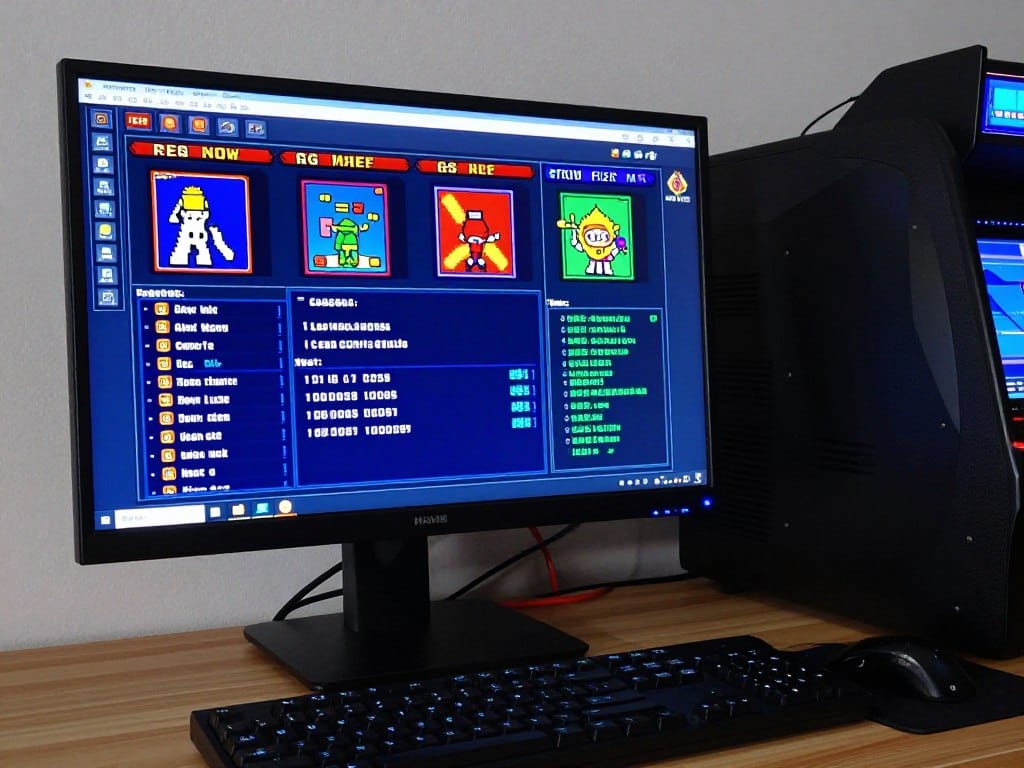
Emulation Solutions
MAME and similar emulators preserve thousands of arcade games. These programs run on modern computers. Compatibility covers nearly the entire arcade library. Digital preservation ensures games survive hardware failure.
Custom arcade stick controllers enhance the experience. RetroPie and similar projects create dedicated emulation machines. Legal considerations require owning original game boards. The community provides extensive documentation and support.
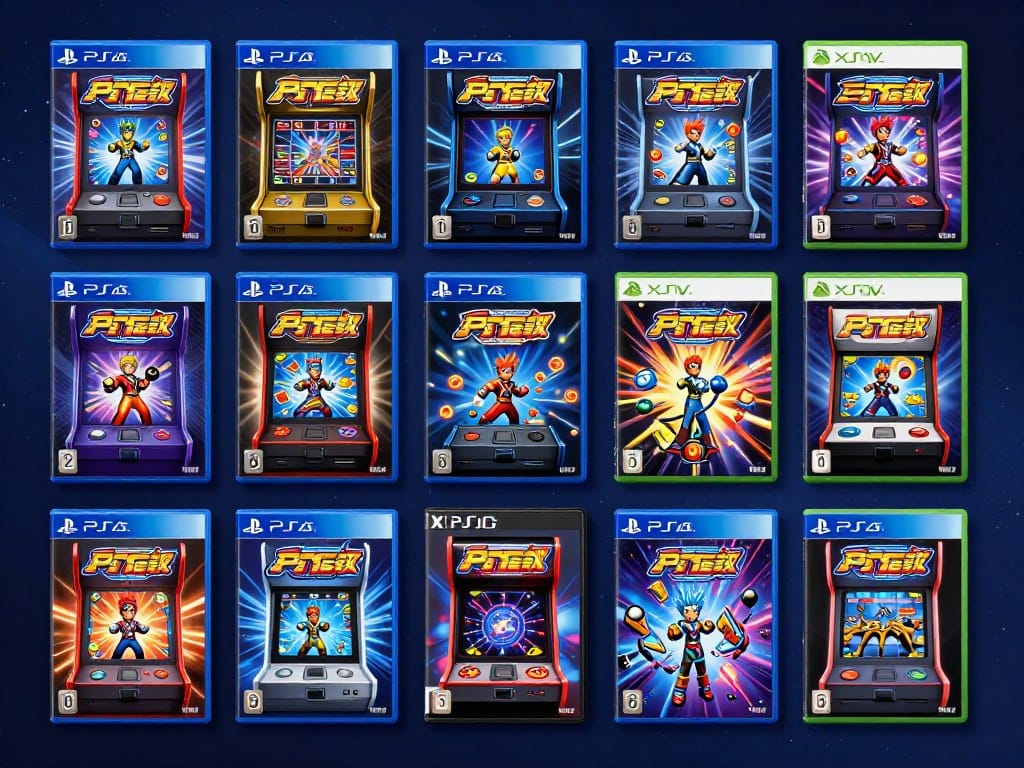
Official Compilations
Publishers release curated collections on modern platforms. These compilations include multiple classic titles. Features often add online play and achievement systems. Official releases ensure legal access to games.
Collections typically include bonus content like artwork and interviews. Some offer training modes teaching advanced techniques. The quality varies between publishers. Research helps identify the best compilations.
Resources for Collectors and Enthusiasts
Online Communities
- Arcade Museum Forums – Technical support and collecting advice
- KLOV Database – Comprehensive arcade game information
- Reddit r/cade – Active collector community discussions
- Arcade Projects Forum – DIY cabinet building help
- VideoGameSage – Price guides and market information
Preservation Organizations
- Internet Archive – Digital game preservation efforts
- The Strong Museum – Physical arcade collection and research
- MAME Development – Software preservation project
- Gaming Alexandria – Documentation and archiving
- Video Game History Foundation – Cultural preservation
Modern Arcade Shooters and the Genre's Future
The arcade shooter genre continues evolving despite arcade decline. Independent developers create innovative new titles. Digital distribution platforms make these games accessible worldwide. The community remains passionate and engaged with both classic and modern releases.
Modern games often blend traditional mechanics with contemporary design sensibilities. Pixel art aesthetics celebrate retro heritage. Others use cutting-edge graphics pushing technical boundaries. The variety ensures something appeals to every taste.
Contemporary Arcade Shooter Highlights
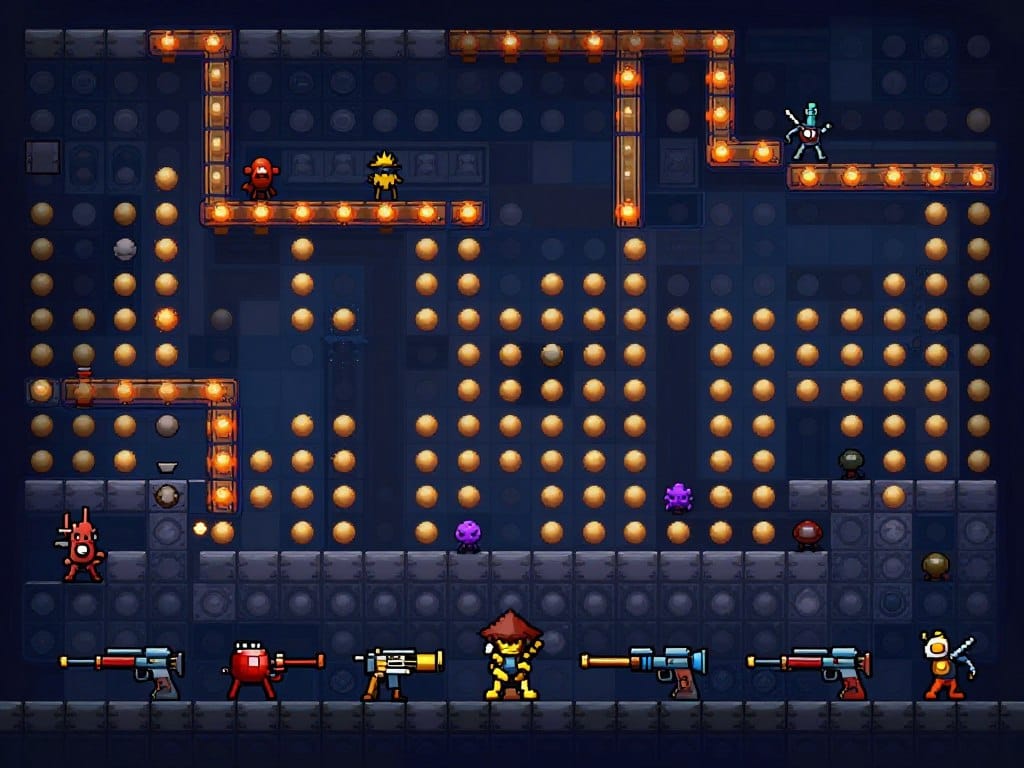
Enter the Gungeon
This roguelike bullet-hell shooter became an indie phenomenon. The game combines classic shmup mechanics with dungeon crawling. Hundreds of unique guns provide incredible variety. Each playthrough offers different experiences.
The difficulty remains challenging but fair. Permanent progression unlocks help repeated attempts. The humor and creativity shine throughout. Boss battles reference classic arcade game history.
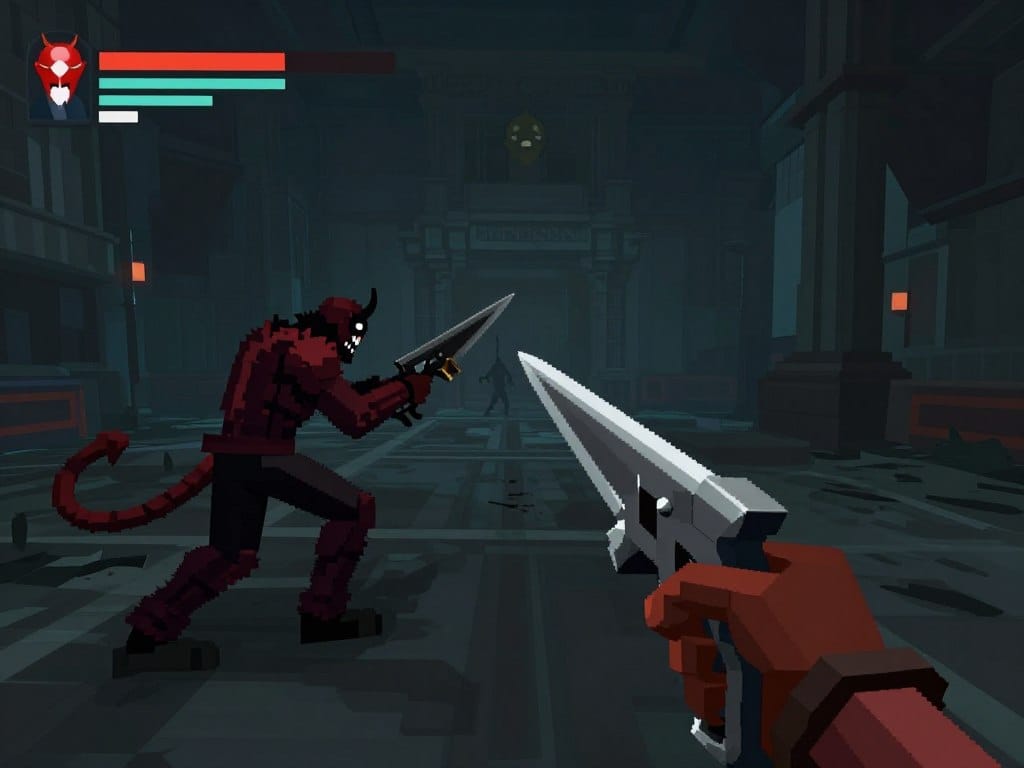
Devil Daggers
This first-person arena shooter channels classic arcade intensity. The minimalist retro aesthetic enhances focus on gameplay. Surviving increasingly difficult demon waves creates incredible tension. Global leaderboards drive competition.
Sessions last seconds to minutes, perfect for quick attempts. The simple concept masks surprising depth. Movement and weapon techniques require practice to master. The game proves arcade shooter principles transcend perspective.
Nex Machina
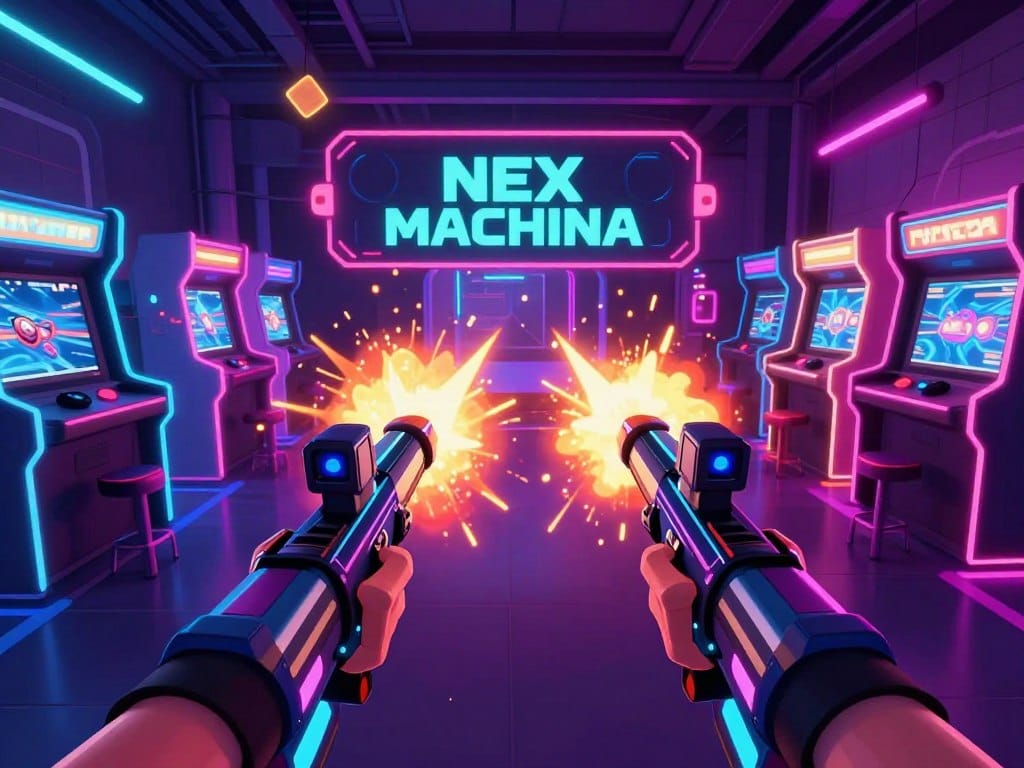
Housemarque’s love letter to classic arcade shooters features stunning visuals. The twin-stick controls modernize traditional mechanics. Intricate scoring systems reward skillful play. Each level hides secrets and challenges.
The game respects arcade traditions while embracing modern technology. Cooperative play adds strategic depth. Multiple difficulty modes accommodate various skill levels. The experience feels simultaneously nostalgic and fresh.
The Genre's Evolution and Trends
Several trends shape modern arcade shooter development. Roguelike elements add replayability through procedural generation. Scoring systems become more complex rewarding mastery. Visual styles range from retro pixel art to photorealistic 3D. The diversity reflects the genre’s flexibility.
Gameplay Innovations
Developers experiment with traditional formulas creatively.
- Roguelike elements adding random generation
- Metroidvania progression systems
- Narrative integration without sacrificing action
- Cooperative mechanics encouraging teamwork
Technical Advances
Modern technology enables new possibilities.
- Massive particle effects and explosions
- Physics-based destruction systems
- Online multiplayer and leaderboards
- Procedural level generation algorithms
Accessibility Features
Games welcome broader audiences without compromising challenge.
- Multiple difficulty modes and assists
- Practice modes for specific sections
- Tutorials teaching advanced techniques
- Customizable control schemes
Community Integration
Social features enhance single-player experiences.
- Ghost replay systems showing friends
- Integrated streaming and sharing tools
- Daily and weekly challenge modes
- User-created content and mods
Promising Upcoming Releases
The future looks bright for arcade shooter enthusiasts. Numerous promising titles remain in development. Both established studios and indie developers contribute. The genre’s renaissance shows no signs of slowing.
- Returnal – AAA roguelike shooter combining horror and bullet-hell
- Archvale – RPG elements meet twin-stick shooting action
- SPRAWL – Cyberpunk wall-running shooter with retro aesthetics
- Turbo Overkill – First-person shooter with chainsaw leg weaponry
- Gravity Circuit – Platforming shooter with grappling mechanics
- Vengeful Guardian: Moonrider – 16-bit style action platformer
The Timeless Appeal of Arcade Shooter Games
Arcade shooter games have entertained players for over four decades. The genre’s fundamentals remain as engaging today as during the golden age. Simple concepts combined with deep mechanics create lasting appeal. Whether through light guns, joysticks, or modern controllers, the thrill endures.
The community surrounding these games continues thriving. Collectors preserve history while new players discover classics. Modern developers honor traditions while innovating boldly. This balance ensures the genre’s vitality for future generations.
From Time Crisis pedal mechanics to Metal Slug’s gorgeous sprites, arcade shooters offer unmatched variety. The House of the Dead’s horror atmosphere differs vastly from Gradius’s space battles. Yet all share the core appeal of immediate action and skill-based challenge. This diversity means everyone finds games matching their preferences.
The accessibility continues improving. Digital storefronts make classic and modern titles available worldwide. Home hardware eliminates arcade hunting necessity. Yet the social aspects of shared experiences remain irreplaceable. Whether competing for high scores or cooperating through campaigns, these games connect people.
As technology advances, new possibilities emerge. Virtual reality may revolutionize light gun games. Improved haptics could enhance tactile feedback. Whatever the future holds, the foundational appeal of arcade shooters endures. Fast reflexes, pattern recognition, and pure action transcend technological limitations.
Your arcade shooter journey starts now. Explore different subgenres discovering personal favorites. Practice builds skills transferring between titles. Connect with the passionate community sharing knowledge and experiences. Most importantly, enjoy the pure excitement these games deliver.
“Arcade shooters represent gaming in its purest form – immediate challenge, clear objectives, and satisfying skill progression. They remind us why we fell in love with video games in the first place.”
– Classic Gaming Magazine
The genre welcomes both casual players and hardcore enthusiasts. Quick sessions fit busy schedules while marathon runs satisfy dedicated fans. Affordable entry points make starting easy. Whether playing original cabinets, emulated classics, or modern releases, the experience remains compelling.
Arcade shooter games will continue evolving while respecting their roots. New generations discover these timeless classics annually. Veterans return for nostalgia and continued challenge. This cycle ensures the genre never truly ages. The future remains bright for these action-packed gaming experiences.
Thank you for joining this comprehensive exploration of arcade shooter games. May your aim stay true and your continues never run out. Game on!