
Getting shots right in Ubisoft’s tactical shooter is all about controlling kickback. This guide will help players improve their aim and hit more headshots in intense battles.
Knowing how to handle recoil is key to being a top player in Tom Clancy’s Rainbow Six Siege. Each gun acts differently, and mastering this can be the difference between victory and defeat.
This guide covers everything from attachments and operator choices to training and competitive strategies. You’ll learn about recoil basics, the best grip and muzzle setups, and advanced tips from Rainbow Six esports pros.
Understanding Recoil Mechanics in Rainbow Six Siege
Every weapon in Rainbow Six Siege acts differently when fired. The game uses a system where each gun follows a set pattern of movement. To master recoil management, players first need to understand these core mechanics. It’s important to know how the system works before learning specific techniques.
How Recoil Works in Siege
Ubisoft made Siege with predictable recoil behaviour. When a player fires a weapon, the crosshair moves up and to the side in a fixed pattern. Players can memorise and counter these patterns by adjusting their mouse or thumbstick.
Each gun has its own unique recoil spread. This means no two weapons feel the same.
Different Types of Weapon Recoil
Recoil in Siege is divided into two main types:
- Vertical recoil — the upward kick that pushes the crosshair above the target.
- Horizontal recoil — the side-to-side sway that makes spray control unpredictable at range.
Assault rifles like the R4-C have strong vertical pull. SMGs such as the SMG-11 have aggressive horizontal drift. Knowing this helps players choose the right compensation strategy.
First Shot Recoil vs Sustained Fire
The first bullet fired has a recoil multiplier that causes a sharp initial kick. After the first shot, the pattern becomes more consistent. This is important for managing recoil at longer distances.
At longer distances, single taps or short bursts are better than full-auto sprays.
| Fire Type | Best Range | Recoil Difficulty |
|---|---|---|
| First Shot / Tap Fire | Long (25m+) | Low |
| Burst Fire (3–5 rounds) | Medium (10–25m) | Moderate |
| Full Auto Sustained | Close (under 10m) | High |
Understanding these differences is key to learning practical control methods in the sections ahead.
Rainbow Six Siege Recoil Control Guide Fundamentals
Every player must first learn the basics. Controlling recoil in R6 Siege starts with three key skills. These are mouse movement, crosshair discipline, and choosing the right firing mode. These skills are essential for consistent play at all ranks.
Basic Mouse Control Techniques
To control recoil, pull the mouse down to counter the kick. When a gun fires, the barrel goes up. Pulling down keeps your shots on target.
For horizontal drift, make small adjustments left or right. Use your entire forearm for better control and less fatigue. Most players prefer a sensitivity of 400–800 DPI with a low in-game multiplier.
Proper Crosshair Placement
Good crosshair placement means less need for big corrections. Keep your crosshair at head level always. Aim at common angles and doorways before they appear.
- Aim where enemies are most likely to appear
- Trace along walls at head height when moving through rooms
- Adjust elevation based on distance — farther targets appear lower on screen
Burst Fire vs Full Auto Strategies
The right firing mode depends on the distance to your target. Here’s when each is best:
| Firing Mode | Best Range | Recoil Difficulty | Time to Kill |
|---|---|---|---|
| Burst Fire (2–4 rounds) | Medium to Long | Low | Slightly Slower |
| Full Auto | Close Quarters | High | Fastest |
At range, burst firing keeps shots tight. In close combat, full auto is best. Knowing both techniques makes you flexible in any situation.
Mastering Weapon Recoil Patterns in Siege
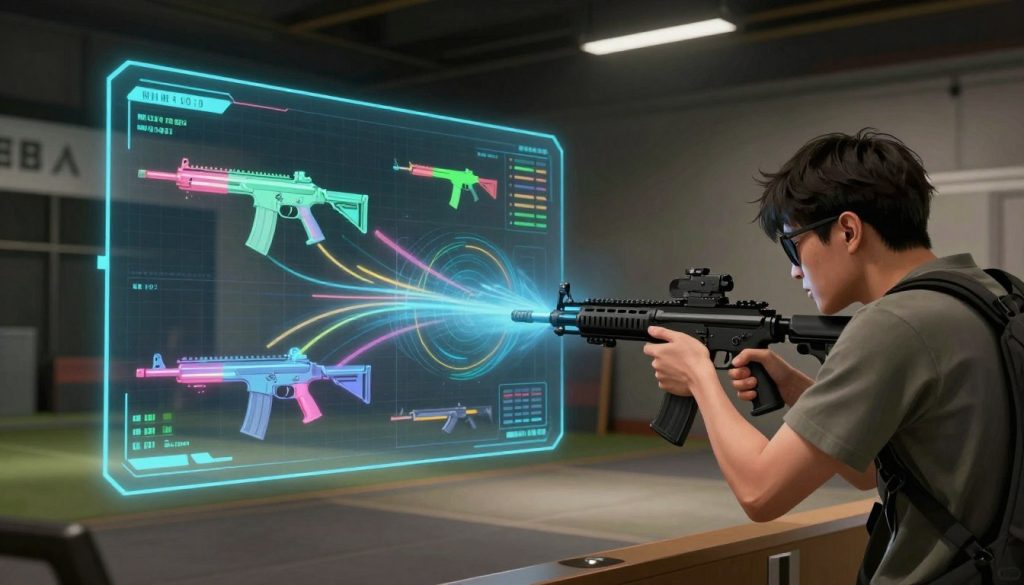
Every weapon in Rainbow Six Siege acts differently when fired. Knowing how each weapon recoils is key to improving. Each gun has its own spray path, turning raw aim into precise shots.
Assault rifles climb up steadily and kick a bit to the side. This makes them easy for beginners. SMGs kick up fast and hard, while LMGs start strong but then settle down.
The best Siege players don’t just aim well — they understand exactly how each weapon moves and build muscle memory around it.
Getting good at recoil takes practice with one gun at a time. Training with one gun helps your brain learn its pattern. With time, moving the gun becomes second nature.
Here’s how different weapons compare in recoil:
| Weapon Class | Vertical Recoil | Horizontal Spread | Fire Rate | Stabilisation Speed |
|---|---|---|---|---|
| Assault Rifles | Moderate | Low to Moderate | 650–850 RPM | Consistent throughout |
| SMGs | High | Low | 800–1100 RPM | Quick but erratic |
| LMGs | High (initial) | Moderate | 650–780 RPM | Stabilises after 8–10 rounds |
| DMRs | High per shot | Minimal | Semi-automatic | Resets between shots |
Knowing how your weapon moves is the first step. Then, you can use the right attachments. This is vital for climbing the ranks.
Best Attachments for Recoil Control
Choosing the right attachments can make a big difference. It turns a hard-to-control weapon into one that’s very accurate. Each slot has its own benefits, helping players create the best loadouts for ranked matches.
Vertical Grip vs Angled Grip Comparison
The choice between vertical and angled grip depends on your playstyle. The vertical grip reduces vertical recoil by about 25%. This makes it easier to keep firing without moving the gun too much.
But, it does make aiming down sights a bit slower. On the other hand, the angled grip speeds up aiming down sights by about 40%. It doesn’t reduce recoil at all. Players who like quick movements prefer this grip.
| Grip Type | Recoil Reduction | ADS Speed Bonus | Best For |
|---|---|---|---|
| Vertical Grip | ~25% less vertical recoil | None | Sustained fire, new players |
| Angled Grip | None | ~40% faster ADS | Quick peeks, aggressive entry |
Muzzle Attachments and Their Impact
Muzzle attachments are just as important as grip choice. The compensator helps keep bullets straight during full-auto. The flash hider reduces kick and hides the flash, good for burst fire. The muzzle brake is best for single shots, helping with recoil.
Pairing the right muzzle device with a grip is what separates a good loadout from a great one.
Barrel Attachments for Stability
The extended barrel increases damage at long range but doesn’t help with recoil. It’s good for players who shoot from far away. But, for those who need stability, muzzle devices are better. The right attachments make sure your gun feels consistent, no matter the distance.
Recoil Compensation Techniques for Different Operators
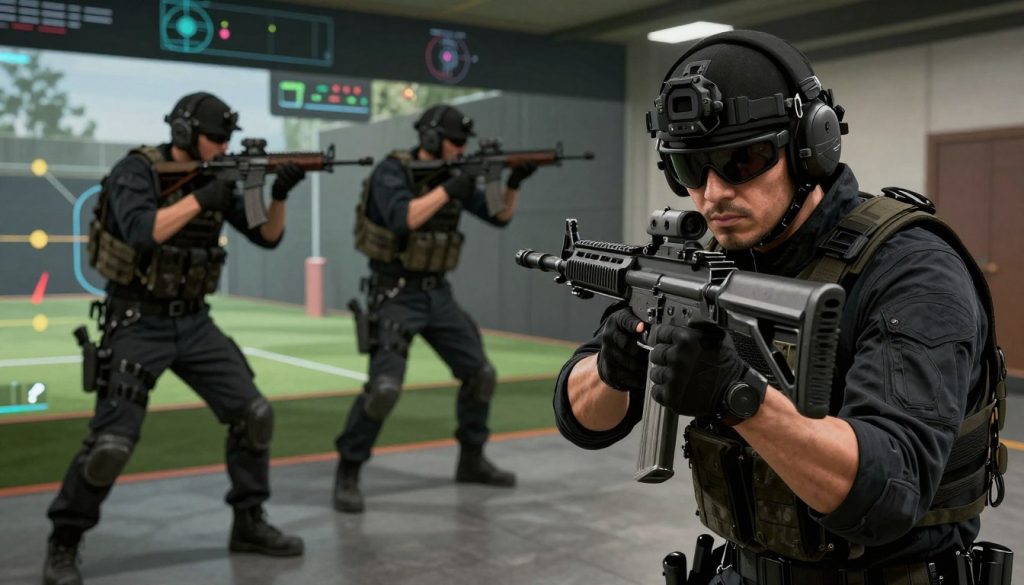
Every operator in Rainbow Six Siege is unique. Their weapons need special recoil techniques. To get better, players must learn how each gun behaves and adjust their play.
Attacker Weapon Recommendations
Attackers often shoot from far away. So, controlling the gun’s kick is key. Ash’s R4-C is powerful but kicks up quickly. A vertical grip and compensator help keep shots straight.
For those who like quick shots, Thermite’s 556XI with a flash hider is great. It’s perfect for medium-range fights.
Ace’s AK-12 is a top choice for attackers. With a vertical grip and flash hider, it’s easy to control. It’s great for practicing recoil control.
Defender Weapon Optimisation
Defenders fight in close spaces. Jäger’s 416-C Carbine with a compensator is ideal for quick shots. Lesion’s T-5 SMG needs a vertical grip for steady fire.
| Operator | Weapon | Best Grip | Best Muzzle | Ideal Fire Style |
|---|---|---|---|---|
| Ash | R4-C | Vertical Grip | Compensator | Full Auto |
| Thermite | 556XI | Vertical Grip | Flash Hider | Burst Fire |
| Jäger | 416-C Carbine | Vertical Grip | Compensator | Full Auto |
| Lesion | T-5 SMG | Vertical Grip | Flash Hider | Sustained Fire |
Choosing the right loadout for each operator is key. It helps both new and experienced players. Learning these setups improves your aim and helps in ranked matches.
Advanced Rainbow Six Spray Control Tips
Once players learn the basics, they can improve further. These tips help players move from casual to competitive levels. They require patience and practice.
Pre-firing is a key strategy. It involves starting a controlled spray before peeking. This surprises opponents. The goal is to keep the spray tight, not wild.
Leaning is vital for better recoil control. It reduces exposure to enemy fire. Players should practice quick leans with steady mouse pulls. This keeps shots accurate while moving.
Sensitivity settings are important. A good starting point is:
| Setting | Recommended Range | Purpose |
|---|---|---|
| Horizontal Sensitivity | 40–55 | Smooth target tracking |
| Vertical Sensitivity | 40–55 | Precise recoil compensation |
| ADS Sensitivity (1x) | 50–65 | Fine spray adjustments |
Target transitioning is key. Players should practice moving between targets smoothly. The trick is to reset the recoil pattern between bursts. This makes the next burst more accurate.
- Pre-fire common angles with a controlled burst
- Combine lean mechanics with steady recoil pulls
- Reset recoil between bursts for consistent accuracy
- Adjust sensitivity to match personal comfort and playstyle
These tips build on earlier attachment choices. With the right setup and technique, controlling recoil becomes easier. Structured practice routines help improve faster.
Practice Routines to Improve Aim in Rainbow Six Siege
Regular training is key to getting better at Rainbow Six Siege. A 30-minute daily warm-up helps build muscle memory. This is essential for handling recoil in Rainbow Six Siege, no matter your skill level. There are three main ways to practice effectively.
T-Hunt Training Methods
Terrorist Hunt (now called Training Grounds) in Elimination mode has endless AI opponents. Players can practice single-tapping or spraying full magazines. This mode helps remember recoil patterns in a relaxed setting.
Playing T-Hunt on House or Shooting Range for 10 minutes before ranked play boosts reflexes.
Custom Game Drills
Custom matches are great for studying spray patterns on blank walls. Firing a full magazine shows the weapon’s kick. Distance drills, at 10, 20, and 30 metres, are also valuable.
These drills help players adjust to recoil at different ranges. This skill is essential for live matches.
Aim Training Software Integration
Tools like Aim Lab and Kovaak’s offer scenarios for Siege-style gameplay. They focus on flicking, tracking, and small adjustments. This improves aim in Rainbow Six Siege.
Make sure to match sensitivity settings between the trainer and the game. This ensures skills transfer directly.
| Training Method | Best For | Recommended Duration |
|---|---|---|
| T-Hunt Elimination | Recoil pattern memorisation | 10 minutes |
| Custom Game Wall Sprays | Spray analysis and distance control | 10 minutes |
| Aim Lab / Kovaak’s | Flick accuracy and micro-adjustments | 10 minutes |
Using all three methods daily creates a balanced warm-up. This prepares players for the recoil challenges in competitive play.
Recoil Management for Rainbow Six Competitive Play
In ranked and professional games, poor spray control is heavily penalised. To excel, players must do more than just pull down on the trigger. They need to read each fight and adjust quickly. Every distance on a competitive map requires a unique handling approach.
Adapting to Different Ranges
Knowing the map is key to controlling recoil. Players must understand if a room is for close combat or long shots. This knowledge helps them choose the right firing mode before facing enemies. This skill sets apart the good from the great.
- Close range (0–8 metres): Full-auto spray is best here. Speed is more important than accuracy.
- Medium range (8–20 metres): Short bursts of 3–5 rounds are ideal. They keep shots on target and fast.
- Long range (20+ metres): Single taps or controlled two-round bursts are needed. Precise adjustments are key.
Quick Peek Recoil Control
Quick peeking is a key skill in Siege. It involves briefly showing your character to fire a short burst before hiding. Good players fire during the peek, not after.
Before peeking, aim at head level. This makes aiming easier. Fire no more than 2–3 rounds per peek. This keeps recoil manageable and predictable. Custom games help build the needed muscle memory.
Quick peeking without pre-aimed crosshair placement is just feeding the enemy information for free.
Mastering these skills can lead to real wins in matches. Regular practice at different distances is essential. It builds the adaptability needed for ranked play.
Conclusion
This guide has shown you how to control recoil in Rainbow Six Siege. It covers basic mouse skills to advanced spray control. Each weapon in Ubisoft’s game has its own recoil pattern.
Learning these patterns and choosing the right attachments are key. Practising crosshair placement also helps improve aim. This all works together to sharpen your aim.
Mastering recoil in Siege takes time and effort. It’s not something you learn overnight. Regular training through Terrorist Hunt sessions and custom game drills is essential.
Using aim trainers like Aim Lab or Kovaak’s also helps. Players who make these routines part of their daily warm-ups will see big improvements. They’ll get better in ranked matches.
Ubisoft keeps updating Rainbow Six Siege with balance changes. These updates can change how weapons behave. Keeping up with patch notes and adjusting your attachments is important.
Staying competitive in both casual and ranked queues requires steady practice. Being open to adapting is also key. These are the true secrets to success in this challenging game.