
Blizzard Entertainment’s Overwatch started with 21 heroes. Each hero had unique skills that changed the game forever. This guide explains every original character’s abilities, from primary fire to ultimate game-winners.
Knowing the hero abilities is key to getting better at Overwatch. There are three main roles: Tank, Damage, and Support. Each role has its own set of tools for every match.
Mastering the timing of cooldowns, positioning, and combining abilities is important. It makes the difference between casual players and ranked veterans.
Ultimate abilities can change the game in seconds. Knowing how to use ultimate charge, when to activate it, and which ultimates work well together is essential. This guide helps UK players improve their game sense.
Understanding Overwatch Hero Ability Guide Fundamentals
Every hero in Overwatch has their own special tools for battle. It’s important to understand how these abilities work before looking at specific characters. These systems handle things like cooldowns, how often you can use abilities, and the types of damage they can do.
Core Mechanics of Hero Abilities
Each hero has a main weapon, special abilities, and an ultimate. There are two main types of damage: hitscan and projectile. Hitscan weapons deal damage right away, while projectiles need you to aim them.
Some weapons lose power at longer distances. This can affect how well they work.
Characters also take up space. This means teammates and enemies can block each other, affecting where you can move.
Cooldown Management Basics
Cooldowns are a big part of how abilities work. After using a skill, you have to wait before you can use it again. Skilled players can use a trick called buffering to use abilities right when they’re ready again.
Reloading your weapon while using an ability can also save time. It’s a small trick that can help a lot in fights.
Ultimate Charge Rates and Mechanics
Ultimates are the strongest abilities each hero has. They build up over time, but you can charge them faster by dealing damage or healing teammates. How fast you can charge your ultimate depends on the hero.
| Charge Method | Contribution Rate | Example Heroes |
|---|---|---|
| Passive generation | 5 points per second | All heroes |
| Dealing damage | 1 point per 1 damage dealt | Soldier: 76, Pharah |
| Healing allies | 1 point per 1 health restored | Mercy, Ana |
| Self-healing | 1 point per 1 health restored | Soldier: 76, Roadhog |
Learning these basics is key to understanding the game better. It prepares you for the detailed looks at different hero types in the next sections.
Tank Heroes: Shields, Barriers and Defensive Powers
Tank heroes are key to any Overwatch team. They take damage, open up space, and shield their teammates. Knowing what each tank can do is vital for victory. Each tank has a special role that affects how they play.
| Sub-Role | Heroes | Playstyle |
|---|---|---|
| Stalwart | Reinhardt, Sigma | Hold ground and block damage for the team |
| Initiator | D.Va, Doomfist, Winston, Wrecking Ball | Dive into enemies and disrupt formations |
| Bruiser | Mauga, Orisa, Roadhog, Zarya | Deal heavy damage while staying durable |
Reinhardt's Barrier Field and Earthshatter
Reinhardt’s Barrier Field stops many attacks for his team. It’s very durable and regenerates health. His Earthshatter stuns enemies, which can turn battles in his team’s favour.
D.Va's Defence Matrix and Self-Destruct
D.Va’s Defence Matrix starts active from the game’s start. It absorbs many attacks. Her Self-Destruct turns her mech into a bomb, forcing enemies to scatter.
Winston's Tesla Cannon and Primal Rage
Winston’s Tesla Cannon hits many enemies at once. This makes him a threat to squishy heroes. His Primal Rage increases his health and gives him strong knockback attacks.
Zarya's Particle Barriers and Graviton Surge
Zarya’s Particle Barriers absorb damage and boost her beam’s strength. Her Projected Barrier is great for protecting teammates. Her ultimate, Graviton Surge, traps enemies, making it a powerful tool.
Damage Heroes: Offensive Abilities and Ultimate Breakdowns
Damage heroes in Overwatch are divided into four roles. Each role has a unique passive that affects how they play. Knowing this is key to choosing the right attacker for your team.
Sharpshooter heroes like Widowmaker and Hanzo get cooldowns reduced on critical hits. This encourages precise shooting and faster ability use. Flanker heroes, including Tracer, get more healing from health packs. This helps them stay alive while attacking from behind.
Specialist heroes, like Soldier: 76, get faster reloads after killing enemies. This keeps their damage high in fights. Recon heroes, like Echo, can spot low-health enemies through walls after hitting them. This makes it easier to finish off enemies.
Understanding ultimates shows the power of damage heroes. Soldier: 76’s Tactical Visor auto-locks targets and lets him use Helix Rockets during his ultimate. This creates powerful combos that can clear enemy teams.
| Sub-Role | Passive Benefit | Example Heroes |
|---|---|---|
| Sharpshooter | Cooldown reduction on critical hits | Widowmaker, Hanzo, Cassidy, Ashe, Sojourn |
| Flanker | Enhanced health pack healing | Tracer, Genji, Reaper, Venture |
| Specialist | Reload speed boost after eliminations | Soldier: 76, Junkrat, Mei, Bastion, Symmetra, Torbjörn |
| Recon | Low-health enemy detection through walls | Echo, Pharah, Sombra |
Learning to use these passives and combining them with the right combos can make a player unbeatable.
Support Heroes: Healing Abilities and Game-Changing Ultimates
Support heroes are key to a winning team. They heal and buff allies, unlike damage or tank roles. There are three main types: Tacticians (Ana, Baptiste, Lúcio, Zenyatta), Medics (Kiriko, Lifeweaver, Mercy, Moira), and Survivors (Brigitte, Illari, Juno). Each has unique abilities that can change the game.
Mercy's Caduceus Staff and Resurrect Mechanics
Mercy’s Caduceus Staff can heal or boost damage. The damage boost is great with heroes who deal a lot of damage quickly. Her Resurrect can revive allies through walls, making her very flexible in fights.
Lúcio's Crossfade and Sound Barrier
Lúcio’s Crossfade switches between healing and speed. He needs to see health bars to heal effectively. His Sound Barrier is very powerful. It lets teams rush in safely with shields up.
Zenyatta's Orbs and Transcendence
Zenyatta throws Harmony and Discord Orbs up to 40 metres. Each orb needs line of sight to stay active. His Orb Volley is great for quick damage. Transcendence heals a lot of area, countering enemy ultimates.
Ana's Biotic Abilities and Nano Boost
Ana’s kit is a mix of offence and support. Her Biotic Rifle and Grenade are key. She can boost heroes like Winston or Genji for big damage.
A well-timed support ultimate can undo an entire enemy offensive in a single moment.
| Hero | Primary Healing Style | Ultimate | Sub-Role |
|---|---|---|---|
| Mercy | Single-target beam | Valkyrie | Medic |
| Lúcio | Area-of-effect aura | Sound Barrier | Tactician |
| Zenyatta | Orb of Harmony | Transcendence | Tactician |
| Ana | Long-range rifle | Nano Boost | Tactician |
Projectile vs Hitscan: Understanding Different Ability Types
Players need to know the difference between projectile and hitscan attacks in Overwatch. These systems affect how damage is dealt in every match. Learning them can greatly improve a player’s performance.
Hitscan weapons deal damage the instant you click. The game draws a line from your crosshair to the target. If the line connects, damage is applied right away. Heroes like Widowmaker and McCree use this system.
Projectile attacks, like Pharah’s rockets, launch objects that travel through the air. They take time to reach their target. Heroes like Hanzo and Zenyatta use projectiles.
| Feature | Hitscan | Projectile |
|---|---|---|
| Damage Registration | Instant on click | On contact after travel time |
| Damage Fall-off | Common at long range | Rare; consistent damage |
| Leading Targets | Not required | Required at distance |
| Example Heroes | McCree, Soldier: 76 | Pharah, Hanzo |
Players often miss the timing of damage boosts. When Mercy boosts a projectile hero, the boost applies at impact, not when fired. This means a rocket can get a damage boost mid-flight.
Shield interactions are complex. Some abilities, like Reinhardt’s Fire Strike, go through barriers. Most hitscan and projectile attacks are blocked. Headshot rules also vary, like Bastion in Tank Form not having a headshot hitbox.
- Hitscan heroes benefit from strong aim and crosshair placement
- Projectile heroes reward prediction and target-leading skills
- Fall-off damage reduces hitscan effectiveness at extreme range
- Some abilities bypass shields entirely, ignoring standard barriers
Knowing these mechanics helps players understand when and where to attack. It’s key for working with teammates and using abilities together.
Ability Combos and Synergies Between Heroes
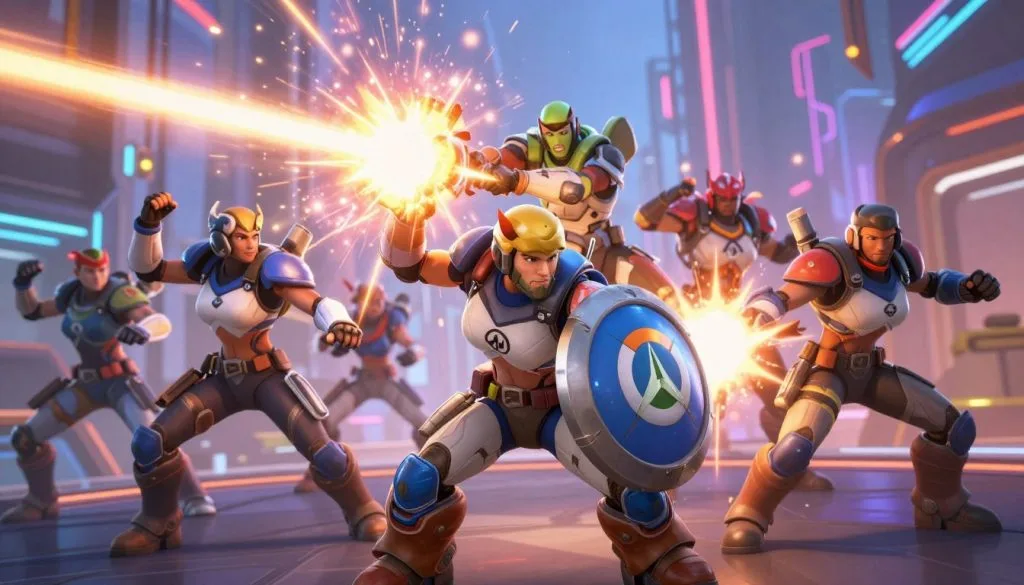
No hero can win a match alone. The real power comes from combining overwatch character skills. When teammates work together, their abilities create something much stronger than solo efforts. These team efforts are key to success in competitive play.
Wombo Combo Strategies
The term wombo combo means using many ultimates at once to clear the enemy team. Zarya’s Graviton Surge is a key setup ability. It pulls enemies together, making them easy targets for area damage.
Pairing it with Pharah’s Barrage or Hanzo’s Dragonstrike can quickly wipe out the enemy team. To master these combos, players need perfect timing and clear communication.
Ultimate Combinations for Maximum Impact
Not all ultimate pairings need Zarya’s Graviton Surge. Ana’s Nano Boost boosts a teammate’s damage by 50%. This makes it great for aggressive ultimates.
A Nano-Boosted Genji with Dragonblade is a formidable opponent. Here are some of the most powerful pairings:
| Setup Ultimate | Damage Ultimate | Expected Result |
|---|---|---|
| Zarya – Graviton Surge | Pharah – Barrage | Full team elimination |
| Ana – Nano Boost | Genji – Dragonblade | Multi-kill with sustain |
| Zarya – Graviton Surge | Hanzo – Dragonstrike | Unavoidable area damage wipe |
Support and Tank Synergies
Support and tank heroes are at their best when working together. Zarya’s Projected Barrier can protect a diving Winston, helping him survive. Lucio’s speed aura helps Reinhardt get close to use Earthshatter.
These combos are what set apart good teams from great ones. They require practice and teamwork.
- Zarya barrier on Winston during his leap engages
- Mercy damage boost paired with Reinhardt’s Fire Strike
- Ana’s Biotic Grenade amplifying all healing on a shielded tank
Movement Abilities: Mobility Skills Across All Roles
Speed and positioning are key for top players in Overwatch. Movement abilities are the biggest skill gap between casual and competitive players. These skills help heroes move, escape danger, or chase down enemies.
Tracer's Blink and Recall Mechanics
Tracer has up to three Blink charges, each covering 7.5 metres. Players use Blinks to stay unpredictable between attacks. Her Recall ability rewinds her by three seconds, restoring health and ammo.
Any guide will tell you managing Blink charges is critical. Using all three makes Tracer very vulnerable.
Genji's Swift Strike and Wall Climb
Genji can climb walls and jump high thanks to his passive and double jump. Swift Strike dashes him 15 metres and resets its cooldown on every kill. This makes Genji a deadly threat in fights.
His Deflect ability can block projectiles and some ultimates. It’s a very useful defensive tool.
Widowmaker's Grappling Hook Techniques
Widowmaker’s Grappling Hook quickly takes her to high places. Skilled players use a super jump technique to get even higher. This surprises enemies with new angles.
| Hero | Movement Ability | Cooldown | Distance (Metres) |
|---|---|---|---|
| Tracer | Blink | 3s per charge | 7.5 |
| Tracer | Recall | 12s | Varies (3s rewind) |
| Genji | Swift Strike | 8s (resets on kill) | 15 |
| Widowmaker | Grappling Hook | 12s | 20 |
Learning these mobility skills is as important as crowd control abilities. This guide will cover both.
Defensive Abilities: Shields, Armour and Damage Mitigation
Surviving in Overwatch requires knowing how to use defensive mechanics. A detailed look at protective abilities shows three main systems: armour, shields, and active damage reduction. Each plays a unique role in team battles.
Armour reduces damage from each hit. It’s great against fast-firing guns. Heroes like Torbjörn gave Armour Packs to teammates, helping those who attack a lot. These packs would disappear after a minute if not picked up.
Shields, by contrast, regenerate automatically when not hit. This makes heroes with shields more self-sufficient in long fights. Zenyatta and Symmetra use this to stay in battles without needing constant healing.
Knowing which defensive ability counters which type of attack is half the battle in competitive play.
Active tools are the final part of defensive hero skills. D.Va’s Defence Matrix blocks projectiles but not beam attacks like Zarya’s laser. Zarya’s Particle Barriers absorb damage, turning it into more charge for her gun, encouraging bold play.
| Defensive Mechanic | How It Works | Key Hero Example | Weakness |
|---|---|---|---|
| Armour | Reduces damage per shot by a fixed value | Torbjörn | Less effective against high single-shot damage |
| Shields (Health) | Regenerates after avoiding damage briefly | Zenyatta | No innate damage reduction |
| Defence Matrix | Deletes incoming projectiles in a cone | D.Va | Cannot block beam or melee attacks |
| Particle Barrier | Absorbs damage and boosts weapon charge | Zarya | Short duration and long cooldown |
Understanding these defensive layers can greatly improve your gameplay. Before moving on to crowd control, practice each tool to grasp their timing and limits in real matches.
Crowd Control Abilities: Stuns, Freezes and Knockbacks
Crowd control (CC) is a key part of Overwatch. It stops enemies, cancels ultimates, and opens up chances for picks. Any good guide will talk about heroes who are great at controlling the enemy.
Flashbang Mechanics
McCree’s Flashbang is a stun grenade that lasts 0.7 seconds. It needs you to be close to the enemy. After, using Fan the Hammer can be very deadly.
Heroes like Tracer and Genji are easy targets for a Flashbang. It’s a high-risk move but can be very effective.
Endothermic Blaster and Cryo-Freeze
Mei’s primary fire slows enemies down, turning into a freeze after 1.5 seconds. Heroes like Reaper can escape before it freezes them. Her Cryo-Freeze makes her invulnerable and heals her.
Mei’s Blizzard ultimate freezes anyone caught in it. It’s great for defending and stalling on objectives.
Chain Hook Combinations
Roadhog’s Chain Hook pulls enemies close. A hook followed by a blast and melee strike is very deadly. It’s a go-to combo for many players.
| Hero | CC Ability | Effect | Cooldown |
|---|---|---|---|
| McCree | Flashbang | Stun (0.7s) | 10 seconds |
| Mei | Endothermic Blaster | Slow into Freeze (1.5s) | No cooldown |
| Roadhog | Chain Hook | Pull and Stun | 8 seconds |
| Lúcio | Soundwave | Knockback | 4 seconds |
| Pharah | Concussive Blast | Knockback | 9 seconds |
Lúcio and Pharah’s knockback abilities are also important. Lúcio’s Soundwave can knock enemies off the map. Pharah’s Concussive Blast can disrupt enemy groups. Knowing how to use crowd control is essential for winning team fights.
Area Denial Ultimates: Controlling Space in Overwatch
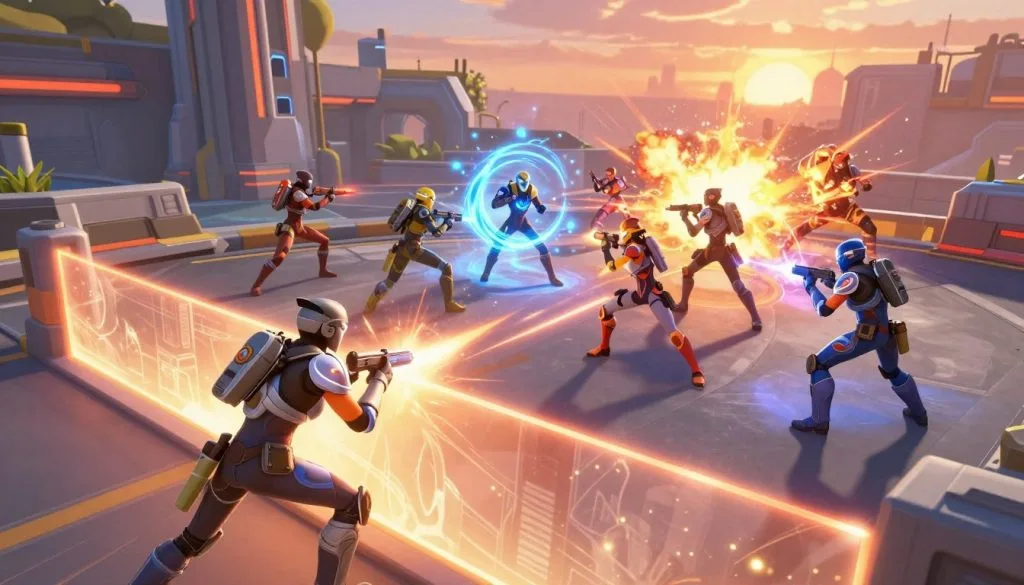
Some ultimate abilities in Overwatch are great at pushing enemies out of key spots. These abilities can block off important areas, stop enemies from reaching objectives, and change the way team fights go. Each hero has special skills that help them take control of the battlefield and punish enemies who are in the wrong place.
Hanzo's Dragonstrike Positioning
Hanzo’s Dragonstrike sends two spirit dragons through any surface, causing a lot of damage to anyone inside. It can go through walls, turrets, traps, and mines. Players often use it with Sonic Arrow to find hidden enemies before attacking.
At the start of a match, good Hanzo players use double arrow tricks to look at enemy teams without alerting them.
- Dragonstrike passes through walls, shields, and barriers
- Best aimed at narrow corridors and objective zones
- Combines well with Zarya’s Graviton Surge for guaranteed eliminations
Torbjörn's Molten Core and Turret Placement
Torbjörn’s skills focus on his turret system. Skilled players can upgrade turrets faster by hitting them at the right times. During Molten Core, Torbjörn and his turret get big boosts, making the area they’re in very dangerous for enemies.
It’s important to place turrets near chokepoints to get the most out of them.
Symmetra's Teleporter and Photon Barrier
Symmetra’s Teleporter is a unique ultimate ability. It gives back some of the ultimate charge if not used, encouraging careful planning. The Teleporter disappears at certain points, so timing is key. Her Photon Orbs can deal damage in different ways, depending on how long you hold the charge.
| Hero | Area Denial Ability | Passes Through Barriers | Best Use Case |
|---|---|---|---|
| Hanzo | Dragonstrike | Yes | Chokepoints and payloads |
| Torbjörn | Molten Core + Turret | No | Defensive holds |
| Symmetra | Teleporter / Photon Barrier | No | Team repositioning and shielding |
Conclusion
Mastering hero abilities in Overwatch takes time and patience. Each character’s abilities are key to winning. Knowing how to use them well can make a big difference.
Players who learn about cooldowns and ultimate charges do better in games. They also understand the difference between projectile and hitscan attacks. This knowledge gives them an edge in competitive play.
This guide has shown the basics of hero abilities across all roles. Tanks protect with barriers and crowd control. Damage heroes deal damage with precise aim and smart positioning.
Support heroes keep teams alive and provide game-changing ultimates. These can change the outcome of team fights.
UK players aiming to improve should practice ability combos and hero synergies. For example, Zarya’s Graviton Surge with Hanzo’s Dragonstrike is a powerful combo. Knowing how to use these combinations is what makes great players.
Regular practice improves gameplay. This guide is a good start, but real improvement comes from playing matches. Try out different heroes and strategies in the game.