
The Doom Slayer returns with an arsenal of new weapons, expanded mobility options, and an insatiable hunger for demon destruction. DOOM Eternal takes everything that made its 2016 predecessor a hit and cranks the intensity to eleven, delivering a symphony of carnage that few first-person shooters can match. But does this blood-soaked sequel live up to the legacy of one of gaming’s most iconic franchises? Let’s rip and tear into this DOOM Eternal game review to find out.
Gameplay & Combat: A Symphony of Violence
DOOM Eternal’s combat is a masterclass in first-person shooter design. The game builds upon the “push-forward combat” philosophy of DOOM 2016, where standing still means certain death, and aggression is rewarded with resources. The dance of death is more complex this time around, requiring players to constantly juggle between different weapons and abilities to survive.
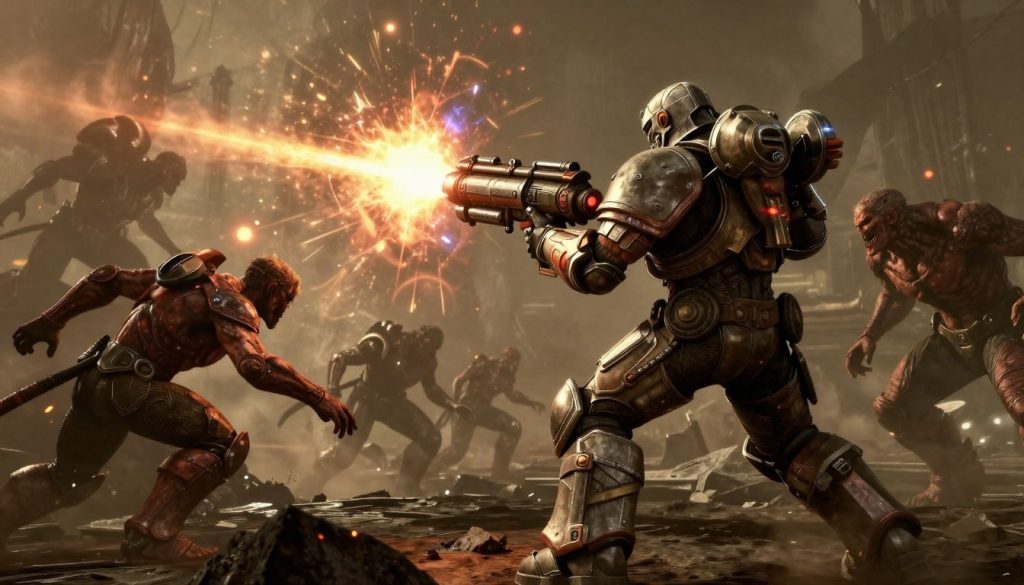
The arsenal feels weighty and powerful, with each weapon serving a specific purpose in combat. The Super Shotgun now comes equipped with a “Meat Hook” that allows you to grapple toward enemies, closing distance instantly while setting them ablaze. The Ballista delivers devastating energy bolts, while the Plasma Rifle excels at stripping shields. Weapon mastery is no longer optional – it’s essential for survival.
Resource Management: The Combat Puzzle
DOOM Eternal introduces a brilliant resource management system that transforms each encounter into a strategic puzzle. Low on health? Execute a Glory Kill on a staggered demon. Need armor? Use your shoulder-mounted Flame Belch to set enemies ablaze, causing them to drop armor shards. Running out of ammo? Chainsaw a smaller demon for an instant resupply.
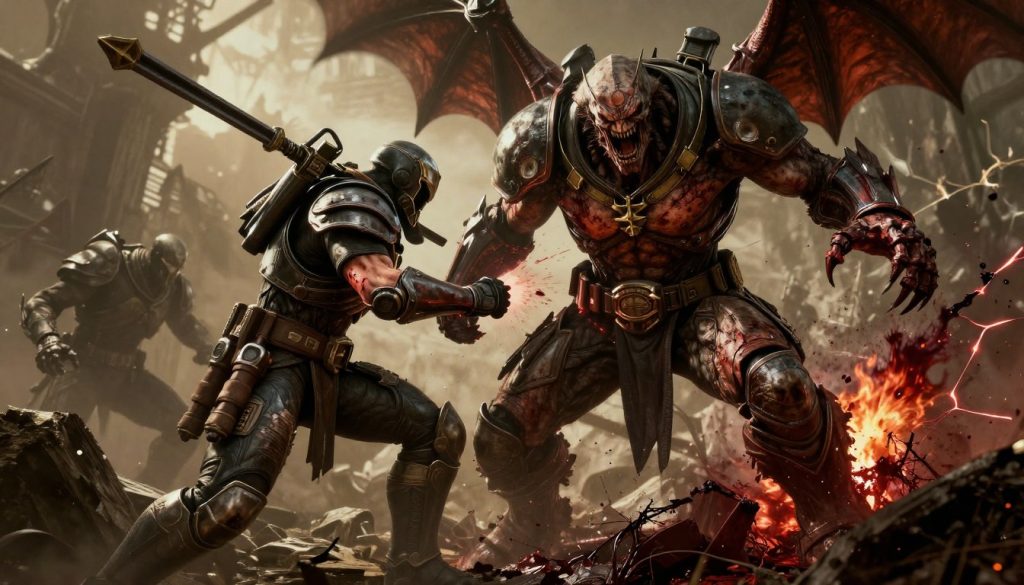
This resource trinity creates a rhythm to combat that feels both challenging and rewarding. You’re constantly making split-second decisions about which resource you need most, which enemy to target, and which weapon to deploy. It’s exhausting in the best possible way, leaving you breathless after each intense encounter.
Expanded Mobility
The Doom Slayer is more agile than ever, with a double dash ability that allows for quick directional changes mid-combat. Combined with the double jump from the previous game, you now have unprecedented control over your movement. This enhanced mobility is essential for surviving the more complex arena designs and avoiding the relentless demon hordes.
Level & World Design: Hell on Earth and Beyond
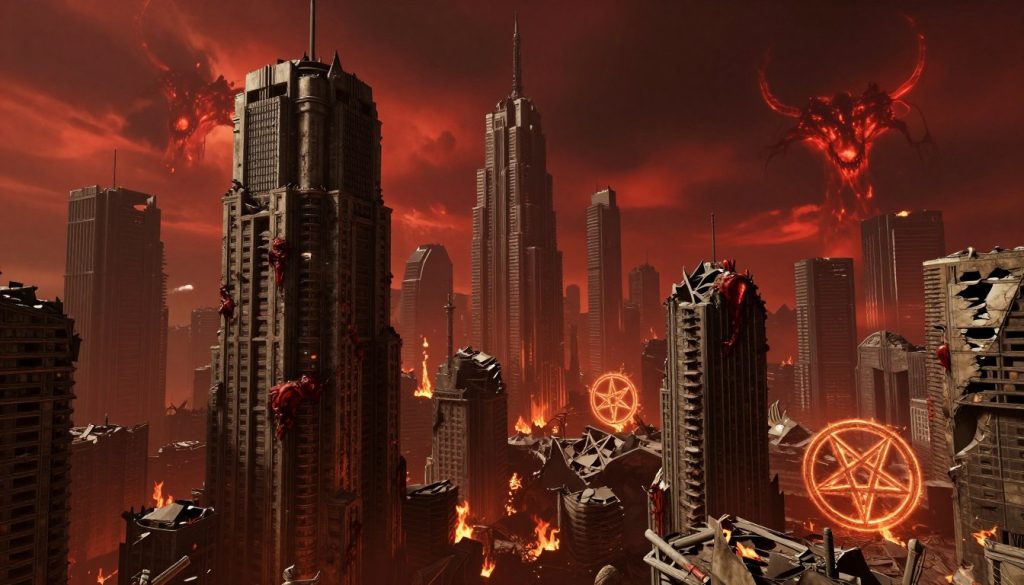
DOOM Eternal significantly expands the visual variety of its environments compared to its predecessor. While DOOM 2016 primarily took place in the industrial corridors of Mars and the monotonous landscapes of Hell, Eternal takes you on a journey across Earth’s ruined cities, celestial realms, alien landscapes, and more.
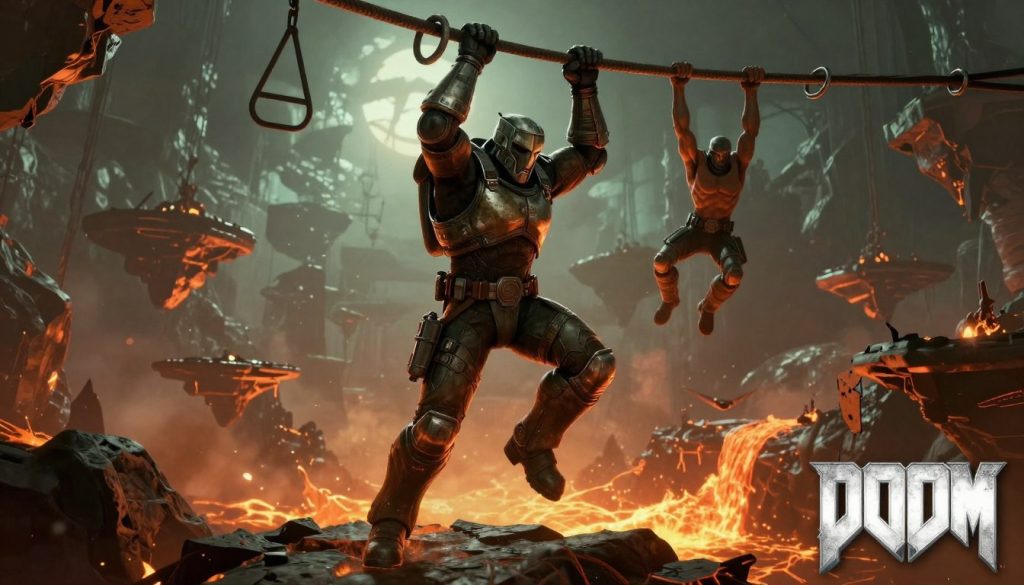
The level design brilliantly balances combat arenas with platforming sections. These traversal challenges provide a welcome breather between intense fights, though some players might find the increased focus on platforming at odds with the series’ run-and-gun roots. The monkey bars, jump pads, and climbable walls add a layer of vertical exploration that wasn’t present in previous DOOM titles.
The Fortress of Doom: Your Celestial Sanctuary
Between missions, you’ll return to the Fortress of Doom, a celestial castle that serves as your hub. This space station overlooks the ravaged Earth and houses the Slayer’s personal quarters, complete with collectible toys, guitars, and even a retro PC that lets you play the original DOOM games.
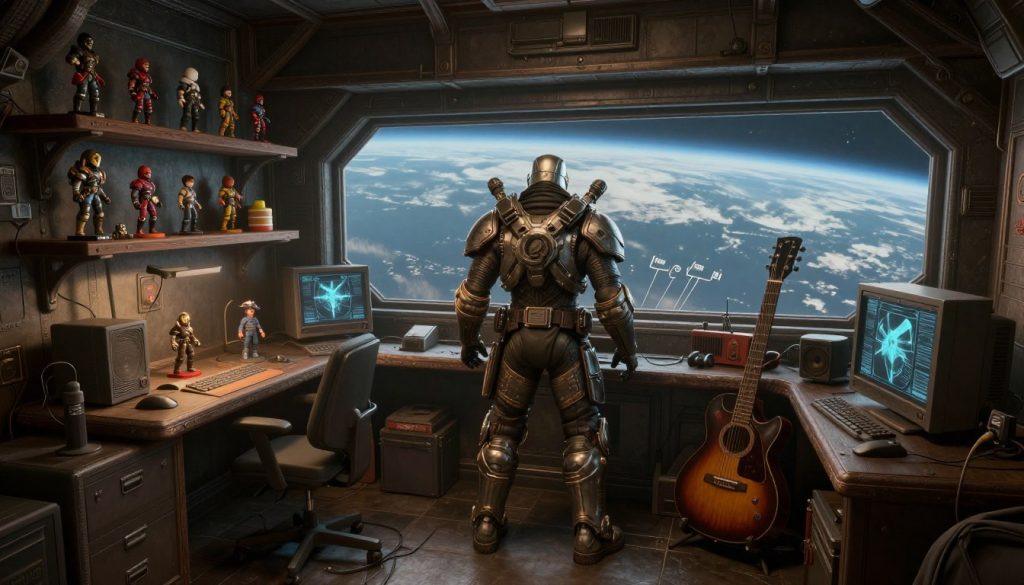
The Fortress serves as more than just eye candy – it’s where you’ll spend Sentinel Batteries to unlock new abilities, perks, and cosmetics. It’s a clever way to reward exploration, as these batteries are hidden throughout the campaign levels.
Story, Lore & Atmosphere: Heavy Metal Mythology
While DOOM 2016 kept its story largely in the background, DOOM Eternal places a greater emphasis on narrative. The game expands the mythology of the DOOM universe, exploring the origins of the Doom Slayer, the ancient conflict between the Sentinels and Hell, and the mysterious Maykrs – a race of technologically advanced beings with their own sinister agenda.

Purists might argue that DOOM doesn’t need a complex narrative, but the story is delivered in a way that respects the player’s time. Cutscenes are brief and skippable, while deeper lore is tucked away in collectible codex entries for those who want to dive deeper. The Doom Slayer himself remains characteristically silent, letting his shotgun do the talking.
Demonic Design
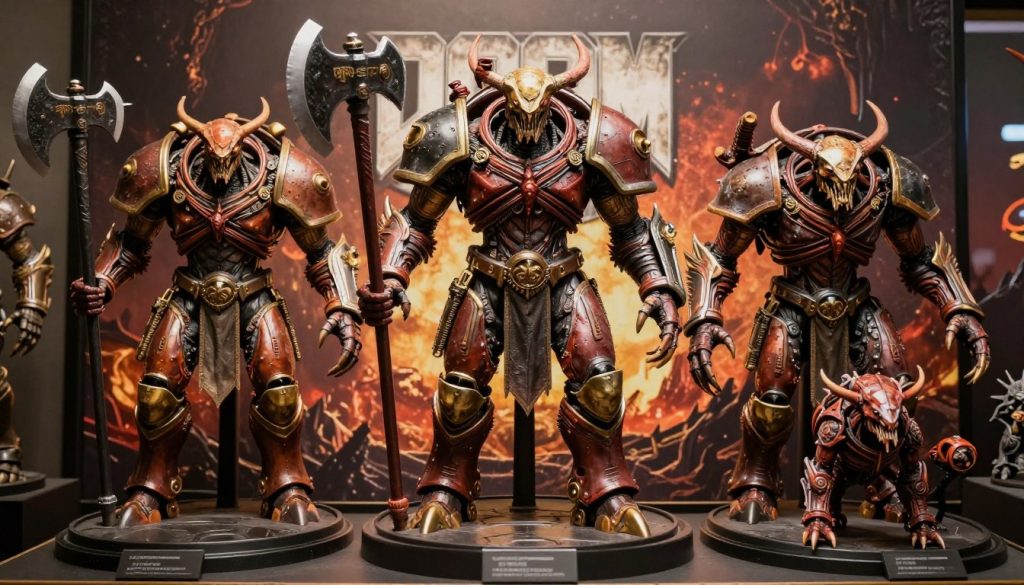
The demon designs draw inspiration from DOOM II, with updated versions of classics like the Pain Elemental, Archvile, and Arachnotron. Each enemy has a distinct silhouette and behavior pattern, making them instantly recognizable in the heat of battle. The art direction leans into the “heavy metal album cover” aesthetic, with grotesque demons, ancient architecture, and biblical imagery creating a visually striking hellscape.
Challenge & Pacing: Brutal But Fair
DOOM Eternal doesn’t pull its punches. The difficulty curve is steeper than its predecessor, with complex combat scenarios that demand mastery of all your tools. The game introduces new enemy types gradually, teaching you how to deal with each before throwing them at you in increasingly challenging combinations.
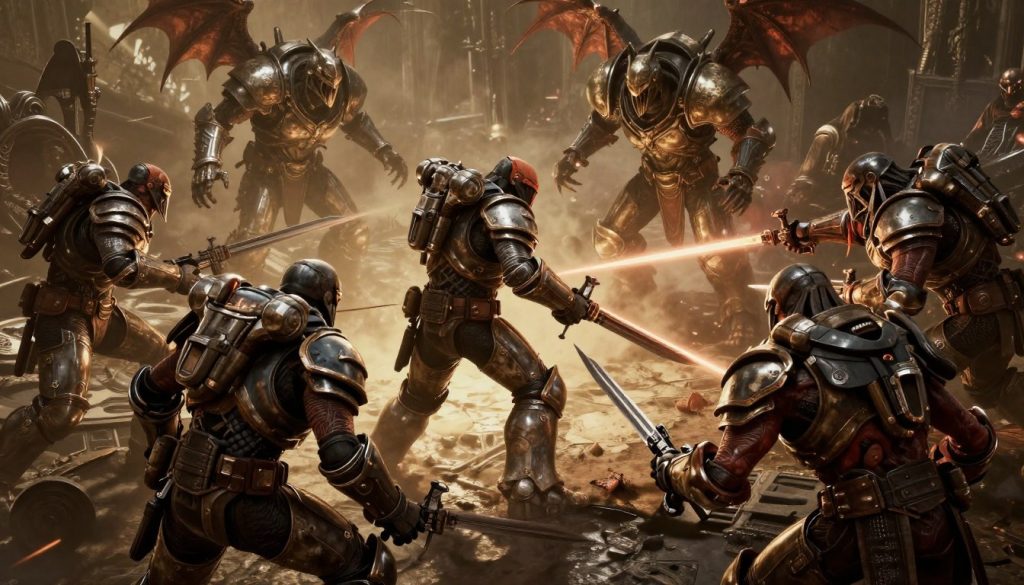
The controversial Marauder enemy deserves special mention. This axe-wielding demon requires precise timing to defeat, as he can only be damaged during specific attack windows. Some players find him frustrating, while others appreciate the tactical depth he brings to encounters.
Extra Lives System
To help manage the increased difficulty, DOOM Eternal introduces an Extra Lives system. These 1-UP pickups allow you to instantly respawn upon death rather than reloading a checkpoint. It’s a clever compromise that maintains challenge while reducing frustration, especially during particularly brutal combat sequences.

The pacing alternates between white-knuckle combat arenas and more relaxed exploration and platforming sections. This rhythm prevents combat fatigue and gives players time to breathe between the intense demon-slaying sequences.
Technical Performance & Presentation: Hellishly Beautiful
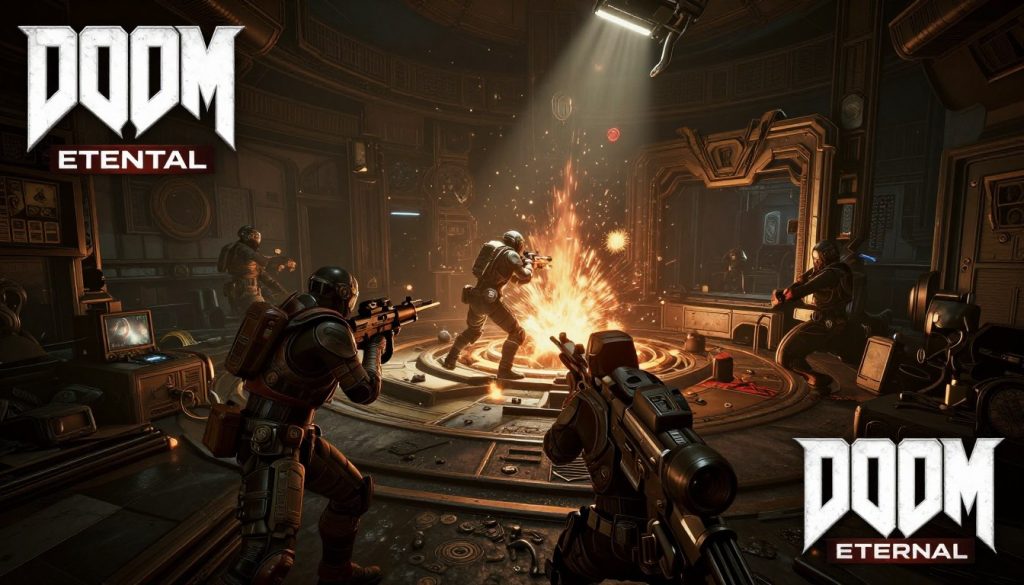
Running on id Software’s impressive idTech 7 engine, DOOM Eternal delivers stunning visuals while maintaining a rock-solid 60 frames per second on most platforms. The level of detail in both environments and enemy models is impressive, with gore and particle effects that never compromise performance.
Mick Gordon's Metal Masterpiece
The soundtrack deserves special mention. Composer Mick Gordon returns with an even more aggressive metal score that dynamically responds to your actions. The music intensifies during combat, with heavy guitar riffs and industrial beats perfectly complementing the on-screen carnage. It’s the ideal accompaniment to the ballet of violence that is DOOM Eternal.
The sound design is equally impressive, with each weapon having a distinct and satisfying audio profile. The Super Shotgun’s thunderous boom, the Plasma Rifle’s electric crackle, and the BFG’s ominous charge-up all contribute to the sensory feast that is DOOM Eternal.
Critique & Final Verdict
What Works
- Combat is deeper and more strategic than ever
- Expanded mobility options add vertical dimension
- Visually diverse environments
- Excellent weapon feel and feedback
- Brilliant soundtrack that complements the action
- Extra Lives system reduces frustration
What Doesn't
- Increased platforming may not appeal to purists
- Story can feel intrusive at times
- Marauder enemies can disrupt combat flow
- Reduced ammo capacity forces weapon switching
- Battlemode multiplayer feels underdeveloped
DOOM Eternal is an evolution rather than a revolution. It takes the foundation laid by DOOM 2016 and builds upon it with more complex combat, expanded mobility, and greater environmental variety. The increased focus on resource management transforms each encounter into a strategic puzzle that demands mastery of all your tools.
Not every change will please series veterans. The increased emphasis on platforming, the more prominent story, and the controversial Marauder enemy have divided the community. The Battlemode multiplayer, while innovative, lacks the depth and longevity of traditional deathmatch modes.
Despite these minor criticisms, DOOM Eternal stands as one of the finest first-person shooters of its generation. It’s a relentless, adrenaline-fueled experience that demands your full attention and rewards mastery with some of the most satisfying combat in gaming. If you’re looking for a challenging, fast-paced shooter that respects your intelligence while testing your reflexes, DOOM Eternal delivers in spades.
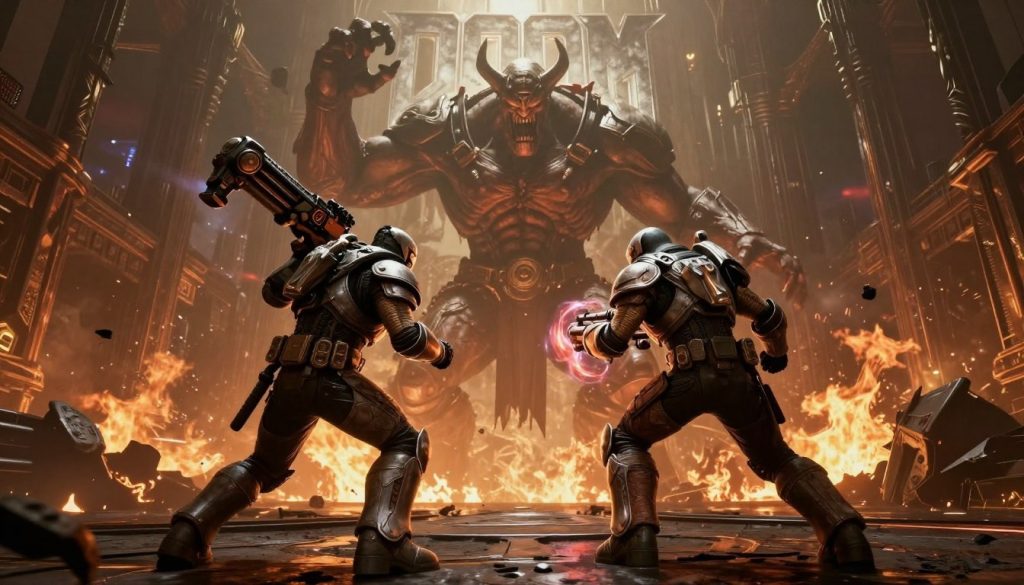
This DOOM Eternal game review concludes that whether you’re a longtime fan of the series or a newcomer to the franchise, id Software’s latest offering is an essential experience for anyone who appreciates the art of virtual demon slaying. Rip and tear, until it is done.
Ready to Rip and Tear?
Experience the ultimate demon-slaying adventure in DOOM Eternal. Available now on PC, PlayStation, Xbox, and Nintendo Switch.