
Few games have managed to create such an unforgettable world as BioShock’s underwater dystopia of Rapture. From the moment your character descends into the depths following a plane crash in the middle of the Atlantic, you’re immersed in one of gaming’s most atmospheric and thought-provoking experiences. This landmark title seamlessly blends first-person shooter action with a compelling narrative that explores philosophy, morality, and the dark side of human ambition. Nearly fifteen years after its release, BioShock remains a testament to what video games can achieve as both entertainment and art.
Pros
- Immersive underwater city setting
- Compelling narrative with memorable twists
- Innovative plasmid and weapon systems
- Atmospheric audio and visual design
- Thought-provoking themes and moral choices
Cons
- Final boss fight feels underwhelming
- Hacking mini-game becomes repetitive
- Limited enemy variety in later levels
- Vita-Chambers reduce challenge
The World of Rapture: A Fallen Underwater Utopia
BioShock’s greatest achievement is undoubtedly Rapture itself – an underwater city built by the visionary industrialist Andrew Ryan as a haven for the world’s brightest minds. Free from the constraints of government, religion, and conventional morality, Rapture was meant to be a paradise of scientific progress and artistic achievement. What you discover instead is a crumbling dystopia, where unchecked ambition and the discovery of genetic modification led to societal collapse.
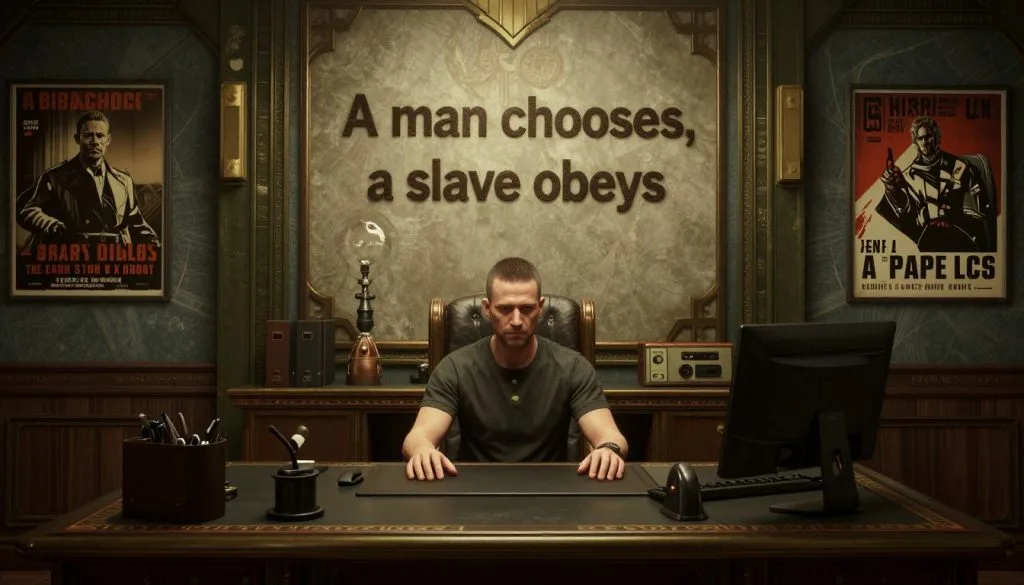
The art deco architecture, the haunting audio logs scattered throughout the environments, and the constant presence of the ocean pressing against glass tunnels create an atmosphere that few games have matched. As you explore Rapture’s districts – from the medical pavilion to Fort Frolic’s entertainment venues – you piece together the story of how this ambitious experiment failed so catastrophically.
Environmental storytelling is masterfully executed here. Propaganda posters line the walls, promoting Rapture’s ideals and products. Water leaks through cracks in the ceiling, creating puddles that reflect the flickering neon signs. The iconic phrase “A man chooses, a slave obeys” becomes a haunting refrain that takes on deeper meaning as the story unfolds. Every corner of Rapture feels lived-in and tells part of its tragic history.
“Is a man not entitled to the sweat of his brow? ‘No,’ says the man in Washington, ‘it belongs to the poor.’ ‘No,’ says the man in the Vatican, ‘it belongs to God.’ ‘No,’ says the man in Moscow, ‘it belongs to everyone.’ I rejected those answers. Instead, I chose something different. I chose the impossible. I chose… Rapture.”
Gameplay & Mechanics: Innovative Combat Systems
BioShock revolutionized first-person shooter gameplay by introducing the dual-wielding system of conventional weapons and plasmids – genetic modifications that grant superhuman abilities. This combination creates a combat sandbox that encourages experimentation and creative problem-solving.
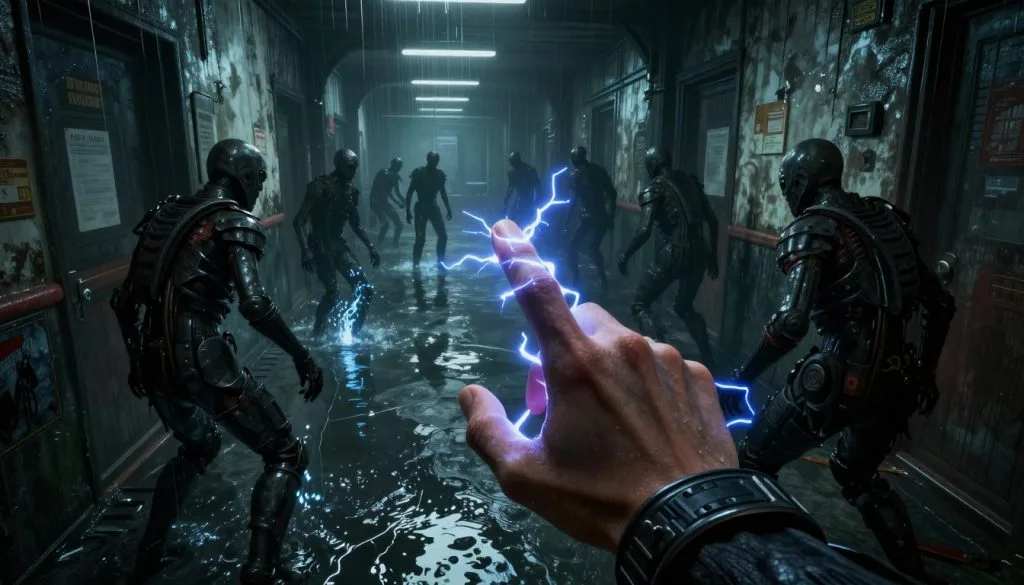
Plasmids & Gene Tonics
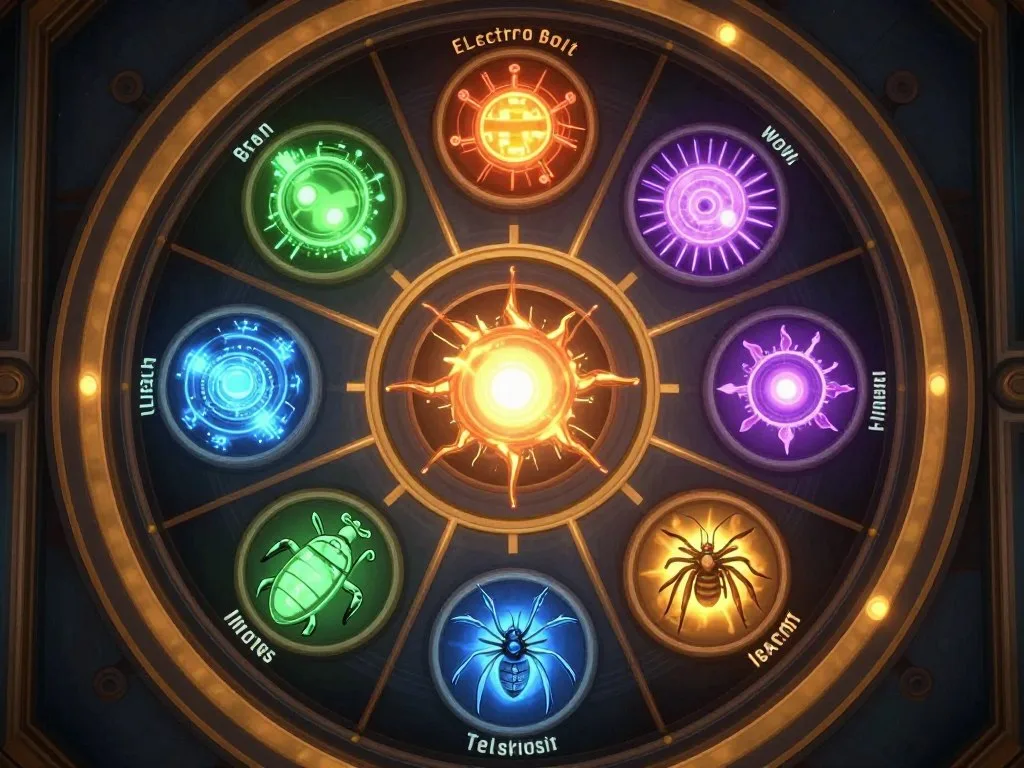
Plasmids form the core of BioShock’s unique gameplay. These genetic modifications allow you to shoot electricity from your fingertips, set enemies ablaze, freeze them solid, or even control machines and security systems. The Electro Bolt plasmid can stun enemies or be used to electrify water, damaging multiple foes at once. Incinerate sets enemies and flammable surfaces on fire, while Telekinesis lets you grab and throw objects – or even enemy projectiles – back at your attackers.
Gene Tonics complement plasmids by providing passive bonuses. These are divided into three categories: Physical Tonics enhance combat abilities, Engineering Tonics improve hacking skills, and Combat Tonics boost weapon effectiveness. The limited number of slots for each type forces meaningful choices about your playstyle.
Big Daddies & Little Sisters
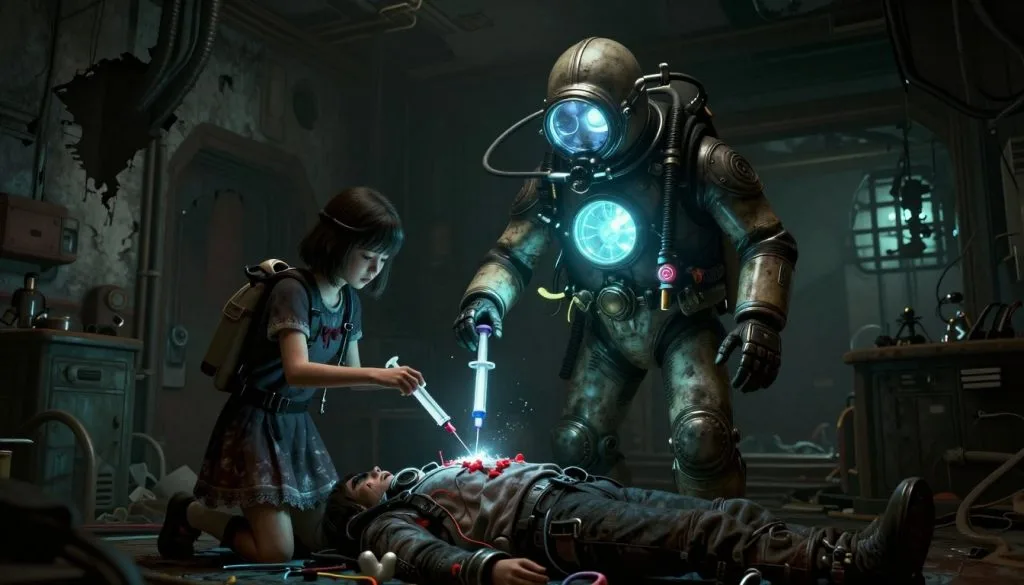
Perhaps BioShock’s most iconic gameplay element is the relationship between Big Daddies and Little Sisters. These hulking, diving suit-clad protectors guard the small, ghostly girls who harvest ADAM – the genetic material needed for plasmids – from corpses throughout Rapture.
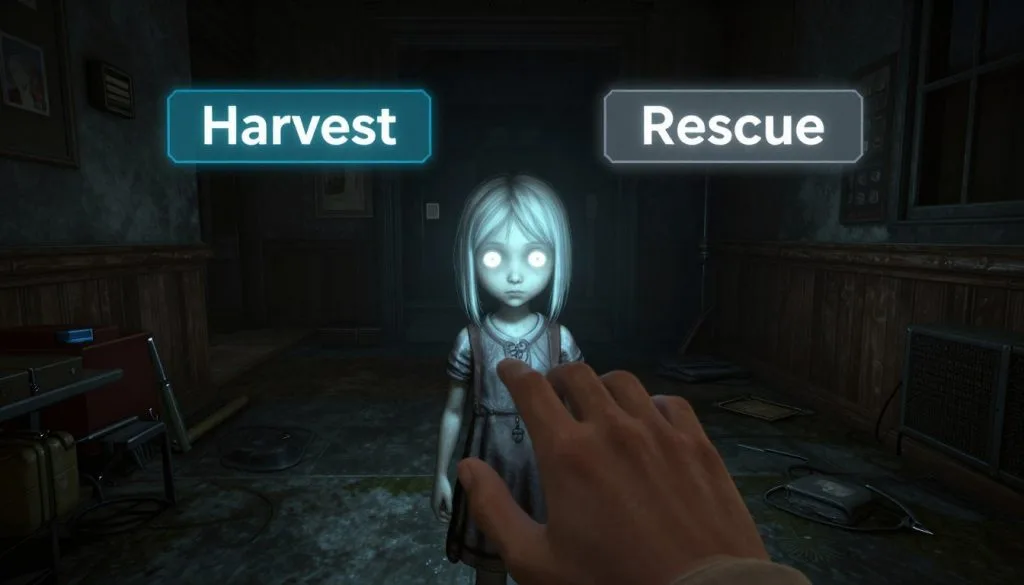
Confronting a Big Daddy is always a tense, challenging experience that requires preparation and strategy. Once defeated, you face the game’s central moral choice: harvest the Little Sister for maximum ADAM, killing her in the process, or rescue her, receiving less ADAM but preserving her life. This decision affects not only your resources but also the game’s story and ending.
Hacking & Security Systems
Rapture’s security systems can be turned to your advantage through hacking. Security cameras, turrets, and flying drones can be reprogrammed to attack enemies instead of you. The hacking mini-game involves connecting pipes to direct a flow of liquid – a puzzle that starts simple but becomes increasingly complex as you progress.
While the hacking system adds depth to gameplay, it can become repetitive after dozens of similar puzzles. Fortunately, automatic hacking tools can be found or crafted to bypass the mini-game when it becomes tedious.
Story, Themes & Narrative: "Would You Kindly?"
BioShock’s narrative stands as one of gaming’s most memorable stories, exploring themes of free will, objectivism, and the dangers of unchecked scientific progress. The game’s famous twist – which I won’t spoil here for those who haven’t experienced it – fundamentally challenges the player’s assumptions about agency in video games.
Note: This review avoids major spoilers, but BioShock is best experienced with minimal prior knowledge of its story developments.
The philosophical underpinnings of Rapture are heavily influenced by Ayn Rand’s objectivist philosophy, with Andrew Ryan serving as a cautionary example of these ideals taken to extremes. The phrase “would you kindly” becomes central to the narrative in ways that cleverly comment on the nature of player choice in video games.
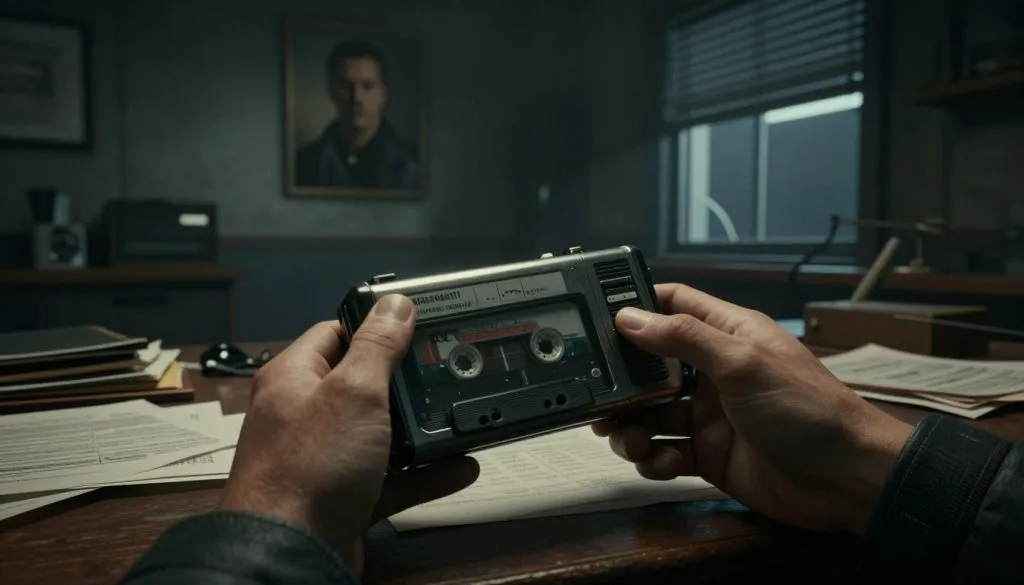
The story unfolds primarily through environmental details and audio diaries found throughout Rapture. These recordings from various citizens provide multiple perspectives on the city’s rise and fall, creating a rich tapestry of narratives that rewards exploration. Characters like the artist Sander Cohen and the scientist Dr. Brigid Tenenbaum are complex and memorable, each representing different aspects of Rapture’s ideals and failures.
The moral choice system – while somewhat binary by modern standards – was groundbreaking for its time. Your decisions regarding the Little Sisters affect not only gameplay resources but culminate in different endings that reflect on the cycle of power and exploitation.
Graphics, Sound & Presentation: Atmospheric Excellence
Despite its age, BioShock’s visual design remains impressive thanks to its strong art direction. The art deco architecture, neon signage, and period-appropriate advertisements create a cohesive aesthetic that makes Rapture feel like a place frozen in time – specifically, an alternate 1960 where genetic modification became possible.

Water effects were particularly impressive for the time and remain effective today. Water drips from ceilings, pools on floors (creating gameplay opportunities with electricity), and constantly presses against the windows and glass tunnels, reminding you of the crushing depths surrounding Rapture.
The sound design is equally masterful. The groaning of the city’s structure, distant screams and laughter of splicers, the whale-like moans of Big Daddies, and the eerie singing of Little Sisters create a soundscape that enhances the atmosphere of dread and wonder. Period music from the 1940s and 50s plays from radios and record players, creating a dissonant contrast with the violence and horror around you.
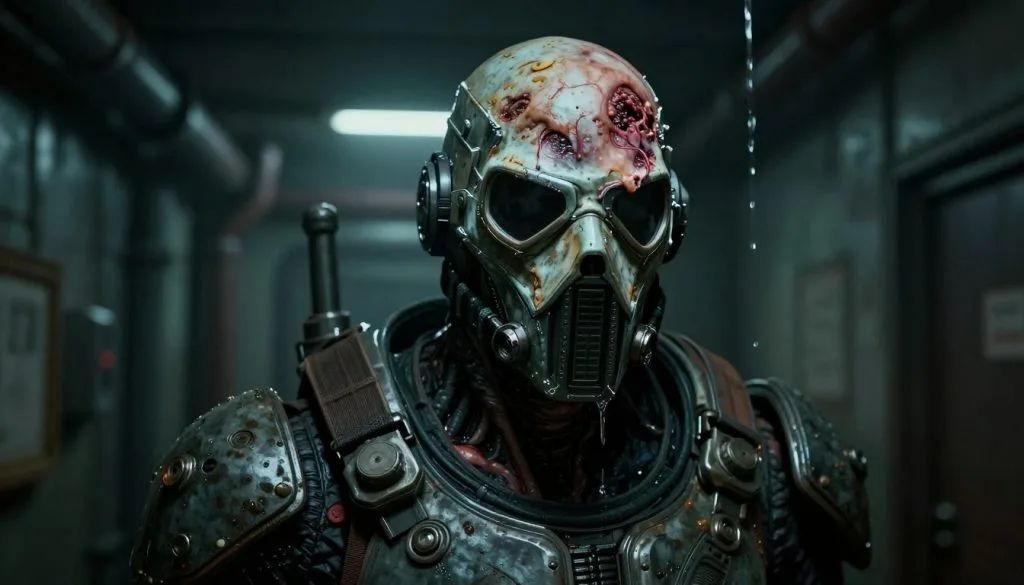
Character designs, particularly the Big Daddies and splicers, are distinctive and memorable. The various types of splicers – from the hook-wielding Thuggish Splicers to the teleporting Houdini Splicers – each have unique appearances and behaviors that reflect their genetic modifications.
Garry Schyman’s original score perfectly complements the atmosphere, ranging from tense, dissonant strings during combat to melancholy piano pieces that underscore Rapture’s fallen grandeur.
Strengths & Weaknesses: A Critical Analysis
What BioShock Gets Right
- World-Building Excellence: Rapture remains one of gaming’s most fully realized and memorable settings, with environmental storytelling that rewards exploration.
- Narrative Depth: The story tackles complex philosophical themes while delivering one of gaming’s most impactful plot twists.
- Gameplay Variety: The combination of plasmids, weapons, and environmental interactions creates a sandbox that encourages creative approaches to combat.
- Atmospheric Immersion: Sound design, visuals, and pacing work together to create a consistent sense of place and mood.
- Moral Choices: While somewhat binary, the Little Sister decisions were groundbreaking for their time and meaningfully impact the story.
Where BioShock Falls Short
- Final Act Pacing: The game’s last third doesn’t maintain the same level of tension and discovery as earlier sections.
- Boss Encounters: The final confrontation feels underwhelming compared to the build-up.
- Repetitive Hacking: The pipe mini-game becomes tedious after dozens of similar puzzles.
- Vita-Chamber System: The resurrection mechanic reduces challenge and tension, though it can be disabled in later versions.
- Limited Enemy Variety: Despite visual differences, many splicers follow similar attack patterns.
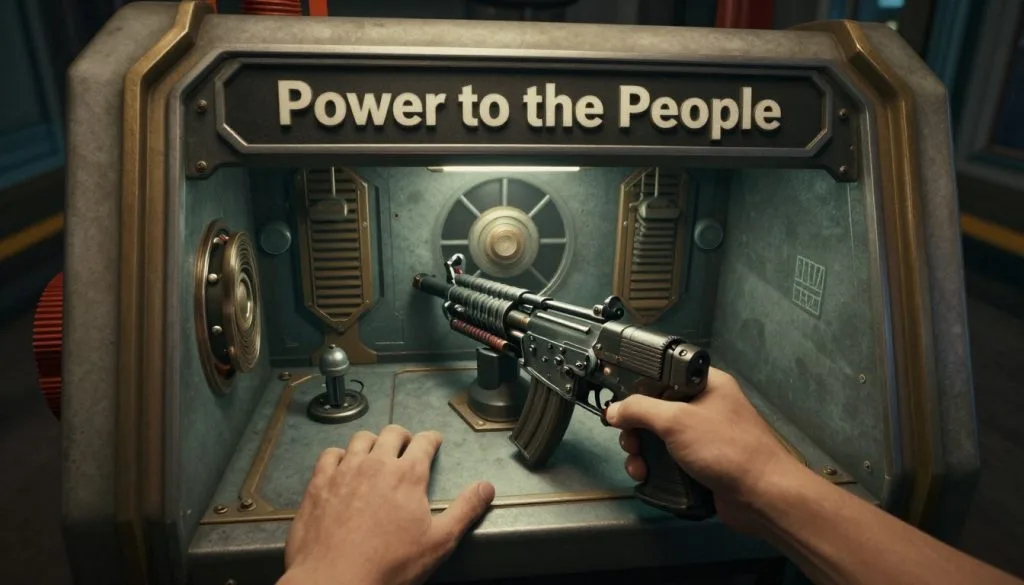
BioShock’s strengths far outweigh its weaknesses. Even its shortcomings – like the somewhat simplistic moral choice system – were groundbreaking for their time and paved the way for more nuanced approaches in later games. The core experience of exploring Rapture, uncovering its secrets, and experiencing its story remains compelling even by today’s standards.
Legacy & Conclusion: A Landmark in Gaming History
BioShock’s influence on gaming cannot be overstated. As a spiritual successor to System Shock 2, it brought the “immersive sim” genre to a wider audience while proving that first-person shooters could deliver sophisticated narratives and meaningful player choice. Its success spawned two sequels – BioShock 2 and BioShock Infinite – and its DNA can be seen in countless games that followed.
Beyond its commercial success, BioShock is frequently cited in discussions about games as art. Its exploration of objectivist philosophy, its commentary on player agency, and its atmospheric storytelling demonstrated the medium’s potential for intellectual and emotional depth.
For newcomers to the series, BioShock remains highly playable today, especially in its remastered form. The gameplay holds up remarkably well, and the story and setting are as impactful as ever. Veterans of the series will find that returning to Rapture reveals new details and nuances that may have been missed on first playthrough.
BioShock stands as a masterpiece of game design – a perfect storm of compelling narrative, innovative gameplay, and unforgettable atmosphere. Its famous question – “would you kindly?” – has become shorthand for discussions about player choice and agency in games. Few titles can claim such a lasting impact on both the industry and the art form.
Experience Rapture For Yourself
BioShock is available as part of BioShock: The Collection on PC, PlayStation, Xbox, and Nintendo Switch platforms. The collection includes all three games in the series with enhanced graphics and additional content.
How long does it take to complete BioShock?
A standard playthrough of BioShock takes approximately 12-15 hours. Players who explore thoroughly to find all audio diaries and upgrades can expect to spend 18-20 hours in Rapture.
Should I play BioShock before BioShock Infinite?
While BioShock Infinite works as a standalone story, playing the original BioShock first will enhance your appreciation of certain elements in Infinite, particularly regarding its DLC content. The original also establishes many of the series’ core themes and mechanics.
Is BioShock suitable for players who don't typically enjoy horror games?
BioShock has horror elements but is primarily an action-adventure game with a strong narrative focus. While some sequences are tense and atmospheric, it’s less focused on jump scares than traditional horror games. Many players who don’t typically enjoy horror games still find BioShock accessible and enjoyable.