
In a gaming landscape saturated with battle royale titles, Apex Legends emerged in February 2019 as a refreshing contender that quickly carved out its own identity. Developed by Respawn Entertainment, the studio behind the critically acclaimed Titanfall series, Apex Legends combines hero-shooter elements with battle royale mechanics to create something that feels both familiar and revolutionary. After spending countless hours dropping into the Outlands, I’m ready to break down what makes this free-to-play phenomenon stand out in an increasingly crowded genre.
Game Overview: Welcome to the Apex Games
Set in the same universe as Titanfall but decades later, Apex Legends takes place in the Outlands, a frontier region where various characters compete in the Apex Games – a bloodsport battle royale competition. Unlike traditional battle royales where players start as blank slates, Apex introduces “Legends” – unique characters with distinct abilities, backstories, and personalities.
The core premise remains familiar: drop onto a map, scavenge for weapons and equipment, and fight to be the last squad standing as a deadly ring closes in. However, Apex’s squad-based approach (typically three-person teams) and character-specific abilities create a dynamic that rewards teamwork and strategy as much as raw shooting skill.
What immediately sets Apex Legends apart is its polished, responsive gameplay that carries the DNA of Respawn’s previous work. The fluid movement system, satisfying gunplay, and innovative communication tools make it accessible to newcomers while offering enough depth to keep veterans engaged for thousands of hours.
Core Gameplay: Drop, Loot, Fight, Win
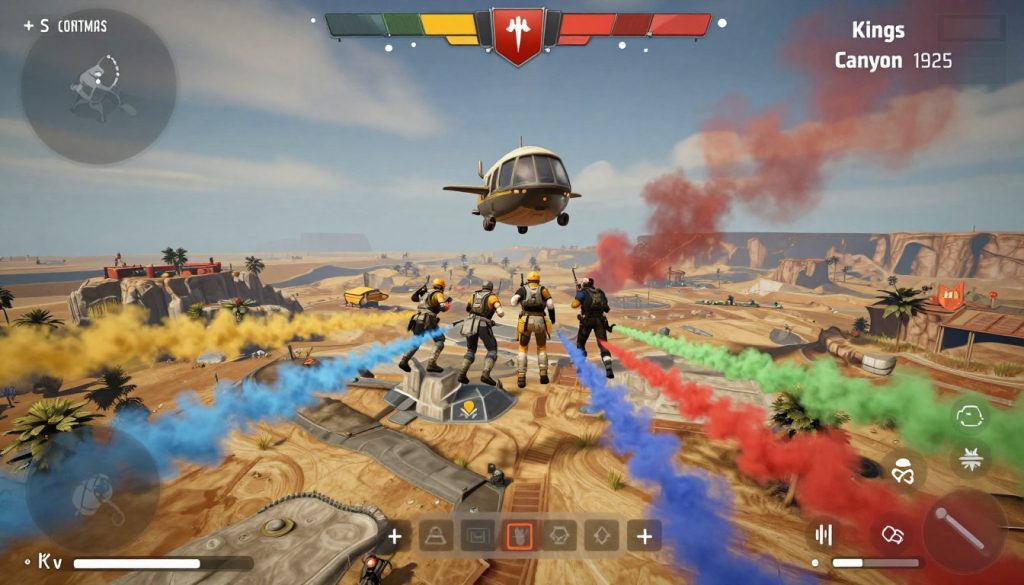
Each match of Apex Legends follows the battle royale formula with some key refinements. Squads of three players select their Legends (with no duplicates allowed per team), then drop from a dropship onto one of several maps. The “Jumpmaster” system assigns one player control over the squad’s initial landing, ensuring teams start together rather than scattered across the map.
Once on the ground, the race begins to find weapons, shields, and attachments of varying rarity levels (from common white to rare gold). The equipment system is intuitive – better gear provides advantages without making lower-tier weapons completely obsolete. This means skill remains the deciding factor in most engagements rather than just who found the best loot.
Apex’s revolutionary ping system deserves special mention. This contextual communication tool allows players to mark locations, enemies, items, and intentions with remarkable precision – all without saying a word. It’s an accessibility triumph that makes teamwork possible even without voice chat, and it’s so effective that numerous games have since implemented similar systems.
Movement in Apex feels exceptional, with sliding, climbing, and ziplines creating vertical gameplay opportunities. While wall-running from Titanfall didn’t make the cut, the smooth traversal mechanics still set a high bar for the genre. The recent addition of the Trident vehicle on certain maps adds another mobility layer to consider.
Combat and Gunplay
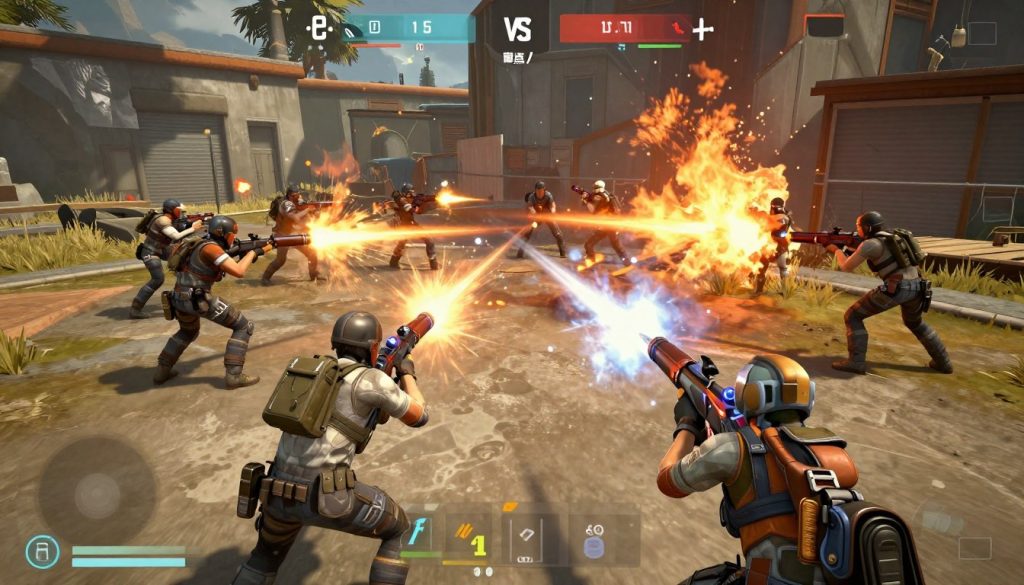
Respawn’s expertise in first-person shooters shines in Apex’s gunplay. Weapons feel distinct and satisfying, from the precise Wingman hand cannon to the devastating Peacekeeper shotgun. The time-to-kill is longer than many shooters, giving players opportunities to react, use abilities, or retreat when under fire.
The shield system is particularly clever. Evo Shields gain strength as you deal damage, encouraging aggressive play rather than camping. This creates a natural flow to matches where early fights directly benefit your late-game survivability.
Sound design plays a crucial role in combat awareness. Footsteps, gunfire, and ability usage all create audio cues that skilled players can use to track enemies. This audio-based intelligence gathering adds another layer of skill expression beyond aim and movement.
The "Apex" of the Game: Legends & Abilities
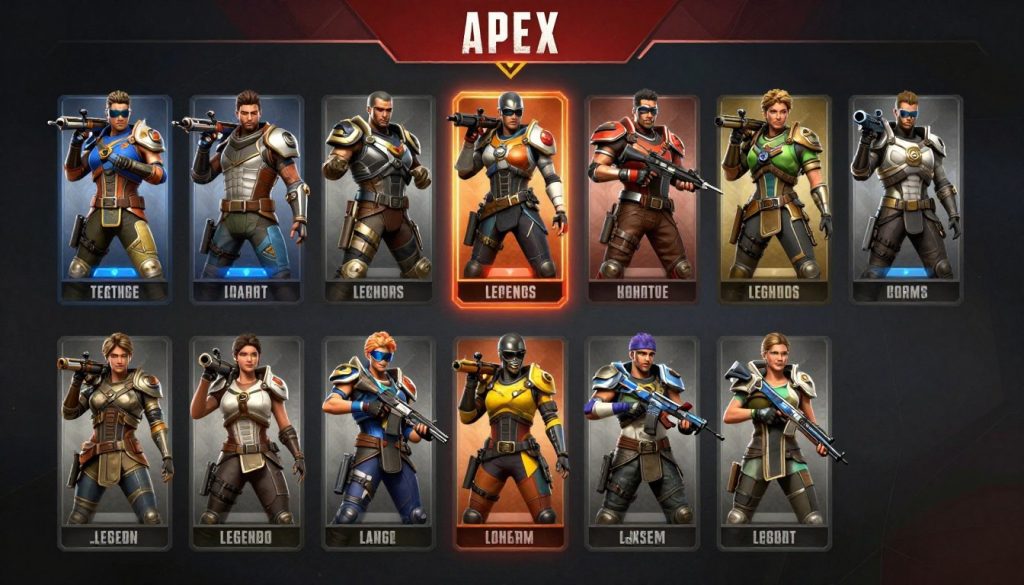
The heart of Apex Legends’ unique identity lies in its diverse cast of characters. Each Legend belongs to one of four classes (Assault, Recon, Support, or Controller) and comes equipped with a tactical ability (used frequently), an ultimate ability (charged over time), and a passive ability (always active).
This hero-shooter element creates fascinating team dynamics. A well-coordinated squad might pair Bloodhound’s enemy-revealing scan with Bangalore’s smoke grenades, or use Wraith’s dimensional portals to safely transport a downed teammate to Gibraltar’s protective dome shield.
The Legend roster has expanded significantly since launch, with each new character introducing fresh mechanics that reshape the meta. From Horizon’s gravity manipulation to Valkyrie’s jetpack-powered flight, these additions keep the gameplay evolving without rendering older Legends obsolete.
Assault Legends
Offensive powerhouses like Bangalore, Wraith, and Octane excel at aggressive pushes and repositioning. Their abilities focus on mobility, creating chaos, and dealing damage.
Recon Legends
Information gatherers like Bloodhound, Crypto, and Seer reveal enemy positions and upcoming ring locations. Their abilities provide crucial intelligence for strategic decision-making.
Support & Controller Legends
Team players like Lifeline and Gibraltar provide healing and protection, while controllers like Caustic and Wattson lock down areas with defensive capabilities.
What makes the Legend system truly special is how it creates distinct playstyles without forcing rigid roles. Unlike strict hero shooters, Apex allows any Legend to use any weapon, giving players flexibility while still encouraging team composition planning.
Maps and Environments: Battlegrounds of the Outlands
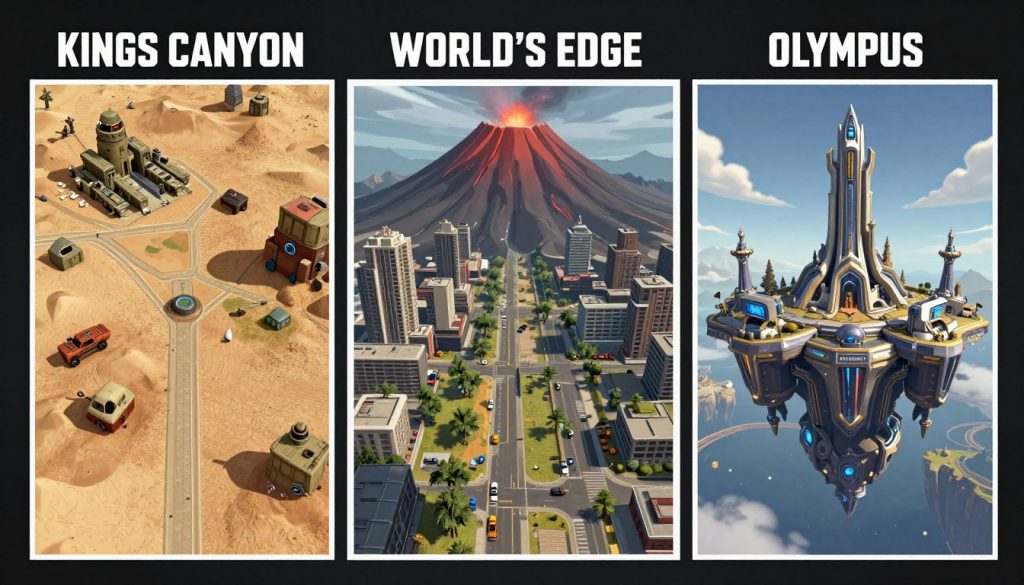
Apex Legends currently features three main maps in rotation: Kings Canyon (the original), World’s Edge, and Olympus. Each offers distinct visual aesthetics, points of interest, and strategic considerations.
Kings Canyon, the smallest map, features a mix of desert outposts, military installations, and crashed ships. Its compact size leads to frequent third-party interventions where new teams join ongoing fights. World’s Edge, with its volcanic fissures and urban areas, provides more breathing room and varied engagement distances. Olympus, a floating city in the clouds, offers the most visually striking environment with its manicured gardens and futuristic architecture.
The maps evolve over time through “map updates” that introduce new locations, remove others, or dramatically alter existing areas. These changes keep the gameplay environment fresh while creating narrative moments that advance the game’s lore.
Each map contains various high-tier loot zones that attract multiple squads, creating early-game hotspots. Supply ships, care packages, and vaults with special keys add dynamic elements that create additional points of interest during matches.
Progression and Monetization: The Free-to-Play Balance
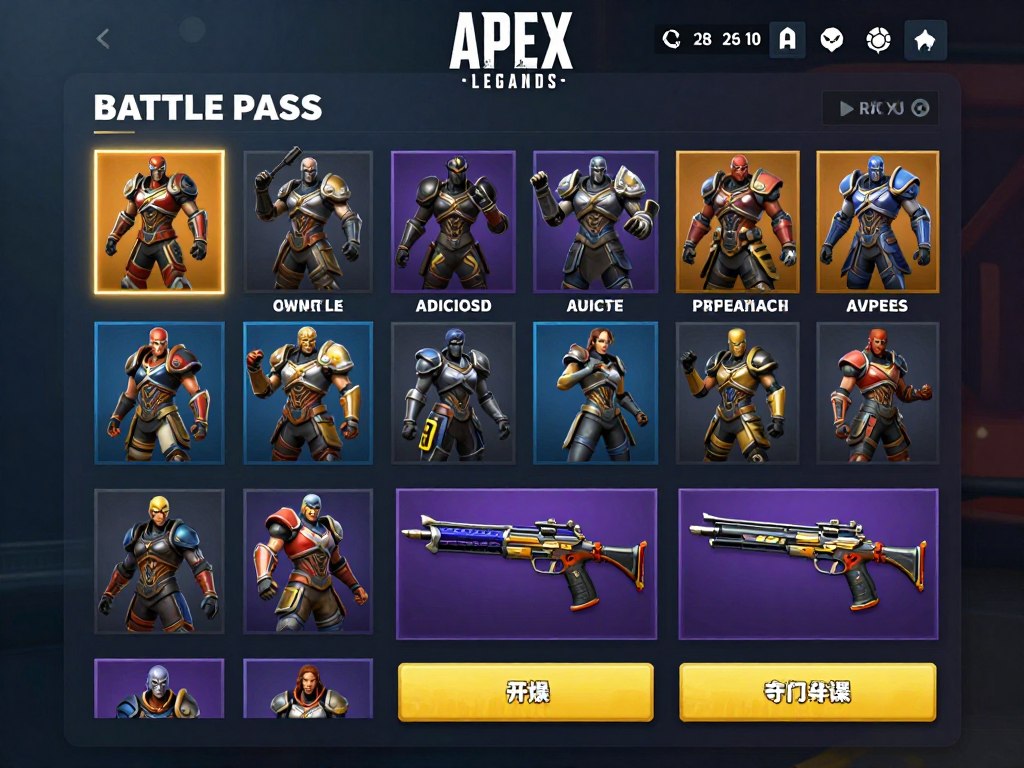
As a free-to-play title, Apex Legends uses a monetization model focused on cosmetic items. Players can purchase or earn Apex Coins (premium currency), Legend Tokens (earned through gameplay), and Crafting Metals (for creating specific cosmetics).
The progression system revolves around a seasonal Battle Pass that offers cosmetic rewards as players complete challenges and gain experience. Each season (lasting roughly three months) introduces a new Legend, weapon, or major gameplay change alongside a fresh Battle Pass and collection events.
Importantly, all gameplay elements are available without spending money. New Legends can be purchased with either premium currency or earned Legend Tokens, ensuring competitive integrity. The monetization focuses entirely on visual customization through character and weapon skins, with the most desirable being Legendary and Heirloom rarities.
While loot boxes (called Apex Packs) do exist, the system guarantees no duplicates and provides crafting materials that let players create specific desired items. The controversial “Heirloom” ultra-rare items are guaranteed after opening 500 packs, creating a ceiling on the randomness.
Technical Performance and Presentation
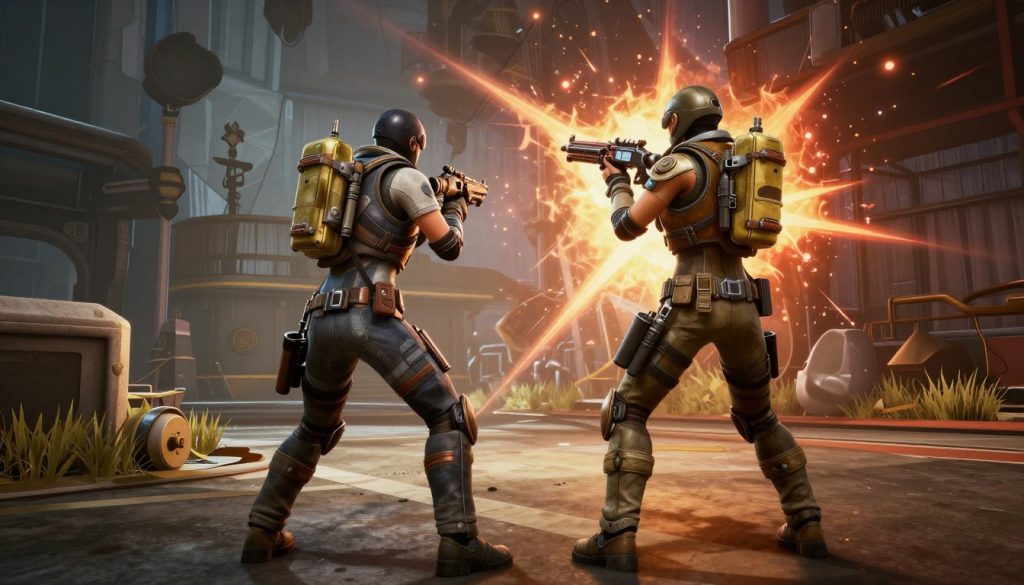
Running on a modified version of Valve’s Source engine, Apex Legends achieves a remarkable balance between visual fidelity and performance. Character models are detailed and distinctive, environments are varied and atmospheric, and weapon effects provide satisfying feedback.
The game runs at 60fps on current-generation consoles with higher framerates available on PC. A next-gen update is planned to take full advantage of PS5 and Xbox Series X|S capabilities. Load times are quick, particularly on SSDs, getting players back into the action rapidly after matches.
Sound design deserves special praise, with directional audio cues providing crucial information during gameplay. Each Legend has a distinctive voice with unique callouts and quips that add personality. Weapon sounds are punchy and identifiable, allowing players to recognize what they’re facing even before visual confirmation.
The one technical area where Apex occasionally struggles is server stability. High-traffic periods or major updates can sometimes lead to connection issues or lag, though these have improved significantly since launch.
Community and Longevity

Over two years after launch, Apex Legends maintains a healthy player base across all platforms. The game has established a robust competitive scene through the Apex Legends Global Series (ALGS), with substantial prize pools attracting professional organizations and talented players.
Respawn’s commitment to regular updates keeps the game fresh. Each season brings balance adjustments, map changes, new Legends, weapons, or game modes. The introduction of Arenas mode in 2021 added a more focused 3v3 experience alongside the traditional battle royale, appealing to players who prefer more consistent engagements.
The development team maintains relatively transparent communication with the community through Reddit, Twitter, and developer livestreams. While not every community request is implemented, there’s a clear feedback loop that has resulted in numerous quality-of-life improvements.
The game’s narrative continues to evolve through seasonal quests, comics, and cinematics that develop the characters and world. This ongoing storytelling creates investment beyond the gameplay itself, giving players reasons to return season after season.
Pros and Cons
What Works
- Exceptional movement and gunplay mechanics
- Revolutionary ping system makes teamwork accessible
- Diverse, well-designed cast of Legends
- Free-to-play model with fair monetization
- Regular content updates and balance adjustments
- Polished presentation and performance
What Doesn't
- Occasional server stability issues
- Third-party interventions can be frustrating
- Steep learning curve for complete newcomers
- Some audio bugs persist since launch
- Solo play experience can be challenging
- Limited PvE content options
Final Verdict

Apex Legends stands as one of the most polished and innovative entries in the battle royale genre. By combining Respawn’s expertise in fluid first-person gameplay with thoughtfully designed hero elements, it creates an experience that feels both accessible and deeply rewarding. The ping system alone revolutionized how players communicate in team-based games, while the diverse Legend roster ensures there’s a playstyle for everyone.
The game isn’t without flaws – server issues can occasionally frustrate, and the learning curve might intimidate complete newcomers. However, these minor issues are easily overshadowed by the core gameplay excellence and Respawn’s commitment to regular, meaningful updates.
For battle royale veterans looking for something fresh or hero-shooter fans curious about the genre, Apex Legends offers an exceptional experience that continues to evolve. Even better, its free-to-play model means there’s no barrier to entry – you can drop into the Outlands today and see for yourself why millions of players keep coming back match after match.
Ready to Join the Apex Games?
Apex Legends is free to play on PlayStation, Xbox, Nintendo Switch, and PC. Download now and experience one of the most innovative battle royale games available today.
Frequently Asked Questions
Is Apex Legends completely free to play?
Yes, Apex Legends is entirely free to download and play. All gameplay elements, including maps and Legends, can be accessed without spending money. The monetization is focused on cosmetic items that don’t affect gameplay performance.
Which platforms is Apex Legends available on?
Apex Legends is available on PlayStation 4, PlayStation 5, Xbox One, Xbox Series X|S, Nintendo Switch, and PC (via Origin, Steam, and EA Play). The game supports cross-platform play, allowing friends to team up regardless of their platform.
How often does Apex Legends receive updates?
Apex Legends operates on a seasonal model, with major updates approximately every three months. Each season typically introduces a new Legend, weapon, or gameplay feature, along with map changes and balance adjustments. Smaller patches and hotfixes are deployed as needed between seasonal updates.
Is Apex Legends good for solo players?
While Apex Legends is designed as a team-based game, solo players can still enjoy it through matchmaking with random teammates. The ping system makes communication possible without voice chat. For players who prefer not to rely on teammates, the Arenas mode offers a more controlled 3v3 experience that can be more manageable for solo queue players.