
PUBG: BATTLEGROUNDS stands as the pioneer that defined the battle royale genre, creating a template that countless games have since followed. From its early access days to its current free-to-play model, PUBG has maintained its position as one of the most intense, strategic multiplayer experiences available. In this PUBG: BATTLEGROUNDS game review, we’ll examine what makes this high-stakes shooter continue to captivate players worldwide, and whether it’s still worth dropping into in today’s competitive landscape.
Core Gameplay Loop & Mechanics
The iconic beginning of every PUBG match: 100 players parachuting onto the battlefield
PUBG’s core gameplay loop is deceptively simple yet endlessly engaging. Each match begins with up to 100 players parachuting from a cargo plane onto one of several massive maps. From the moment your boots hit the ground, you’re in a desperate scramble for weapons, armor, and supplies scattered throughout buildings and compounds.
The game’s defining feature is its ever-shrinking “blue zone” that gradually constricts the playable area, forcing surviving players into increasingly tense encounters. This mechanism creates a perfect balance of strategic positioning and inevitable conflict, ensuring that even the most cautious players must eventually fight.
PUBG’s gunplay leans toward realism, with weapons exhibiting distinct recoil patterns, bullet drop, and damage profiles. Movement feels deliberate and weighty, creating a sense that your character exists physically in the world. This realistic approach extends to vehicles, which handle with an appropriate sense of mass and momentum, though they can sometimes be unpredictable due to the game’s physics.
The ultimate goal remains the coveted “Winner Winner Chicken Dinner” screen that appears when you’re the last player or team standing. This simple objective drives every decision you make throughout a match, from where to land to when to engage or avoid conflict.
Game Modes & Maps
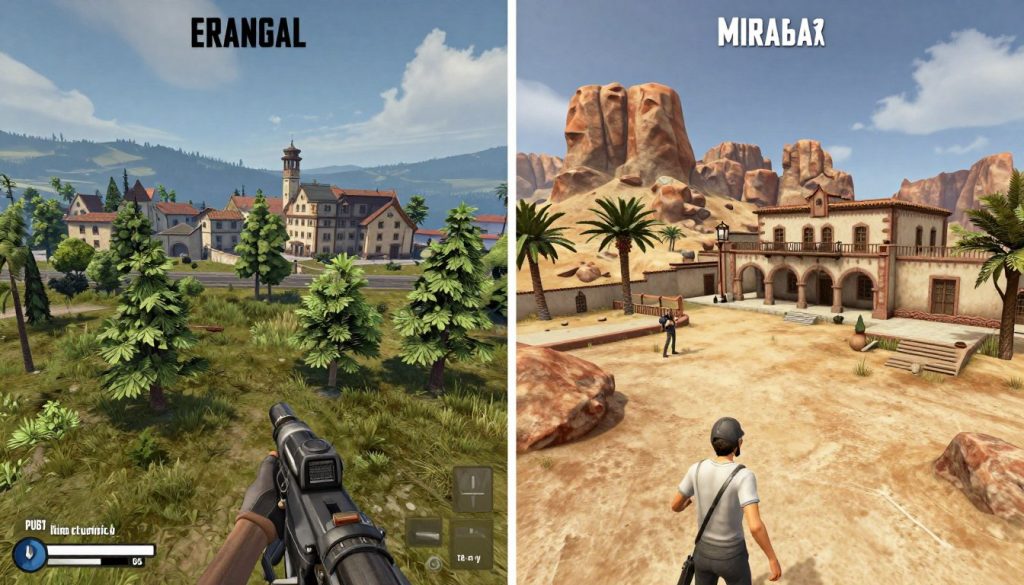
PUBG’s diverse environments: the lush Erangel (left) versus the arid Miramar (right)
PUBG offers several distinct maps, each with its own strategic considerations. Erangel, the original map, features a mix of dense forests, open fields, and small towns across its 8×8 kilometer expanse. Miramar’s desert landscape forces different tactical approaches with its mountainous terrain and sprawling urban areas. The smaller 4×4 kilometer Sanhok creates faster-paced matches with its dense jungle setting, while the snow-covered Vikendi offers unique visibility and tracking opportunities.
The game supports various play modes to suit different preferences. Solo play delivers the purest survival experience, where it’s just you against 99 other players. Duos allow for team tactics with a friend, while Squads (teams of four) enable more complex strategies and role specialization. PUBG also regularly introduces limited-time modes that experiment with the formula, keeping the experience fresh for veteran players.
Each combination of map and mode creates a distinctly different experience. A solo match on Sanhok feels dramatically different from a squad game on Miramar, giving PUBG remarkable longevity despite its conceptual simplicity.
Visuals, Audio & Atmosphere
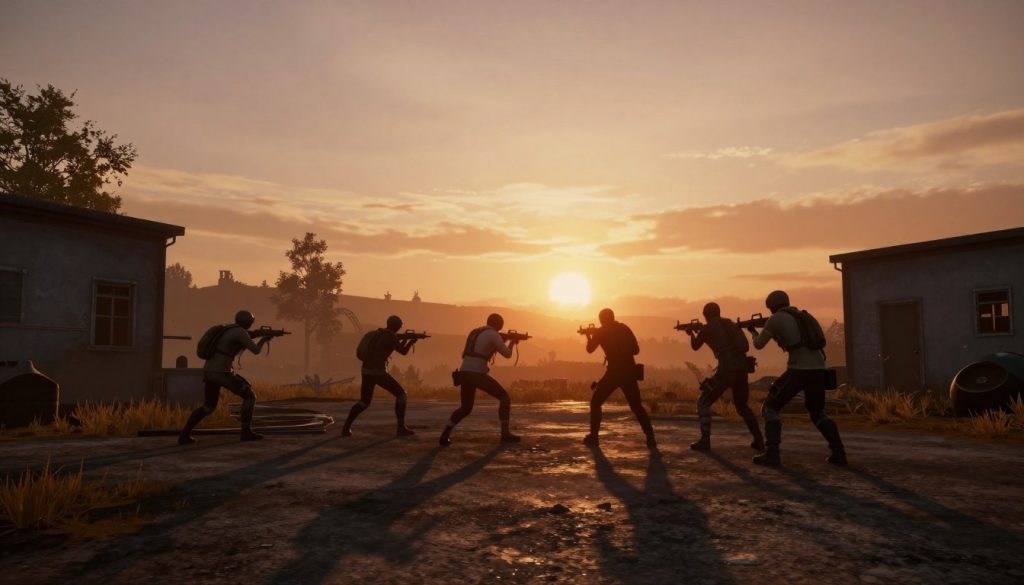
PUBG’s lighting and atmosphere create tense, memorable moments
Visually, PUBG opts for a realistic aesthetic that prioritizes clarity over flashiness. While it won’t win awards for technical brilliance, the art direction successfully creates believable, lived-in environments that serve the gameplay well. Performance varies significantly across platforms, with high-end PCs delivering the most consistent experience, while console versions have historically struggled with frame rate stability and texture loading.
Where PUBG truly excels is in its audio design. The game’s soundscape is meticulously crafted to provide crucial tactical information. Footsteps reveal an enemy’s proximity and movement direction, while different surfaces produce distinct sounds. Gunshots echo across the landscape, with the crack of bullets passing nearby creating immediate tension. Vehicle engines can be heard from considerable distances, alerting you to approaching threats or escape opportunities.
This careful audio implementation creates an atmosphere of constant vigilance. The sudden crack of a distant rifle or the soft footsteps in a nearby building trigger immediate physiological responses – increased heart rate, heightened awareness, and the fight-or-flight instinct that makes PUBG so addictively tense.
Weapons, Vehicles, and Loot

Weapon customization through attachments is key to success
PUBG features an extensive arsenal of real-world inspired firearms, from pistols and shotguns to assault rifles and sniper weapons. Each weapon category serves different tactical purposes, with further specialization through attachments like scopes, extended magazines, and recoil-reducing compensators.
The game’s color-coded loot system clearly communicates item value at a glance. White items are common, blue uncommon, purple rare, and red items represent the most powerful gear. This intuitive system helps players make quick decisions during the critical early-game looting phase.

Vehicles provide mobility but attract unwanted attention
Vehicles are essential for traversing PUBG’s massive maps efficiently. Options range from nimble motorcycles and buggies to more durable UAZs and boats for water crossings. While vehicles provide rapid transportation, they also generate significant noise, creating a risk-reward decision every time you consider using one.
The randomized loot distribution ensures no two matches play the same way. Sometimes you’ll find a high-powered scope and sniper rifle early, encouraging a long-range playstyle. Other times, you might only secure close-quarters weapons, forcing a more aggressive approach.
The "PUBG Experience"
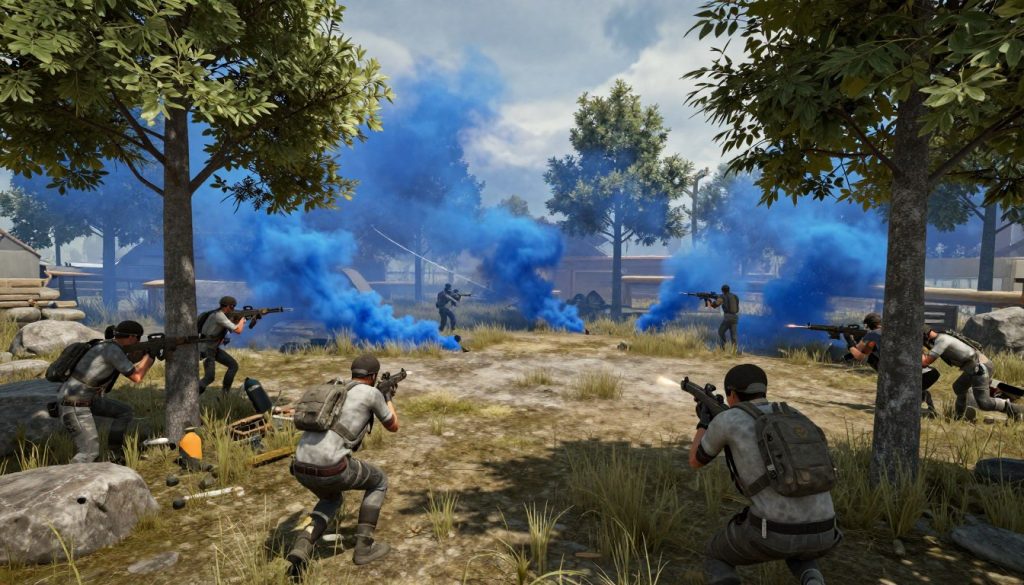
The final circles create some of gaming’s most intense moments
What truly sets PUBG apart is its distinctive pacing and tension curve. Matches typically begin with frantic action as players compete for initial resources, followed by a middle phase of strategic movement and occasional encounters. As the circle shrinks and player count dwindles, the tension ratchets up exponentially, culminating in heart-pounding final circles where the slightest mistake means elimination.
This single-life format creates stakes rarely found in other multiplayer games. With no respawns, each decision carries significant weight. The investment of time (matches typically last 20-30 minutes) means that reaching the final stages generates genuine adrenaline and emotional investment. Few gaming experiences can match the rush of securing a chicken dinner after navigating the gauntlet of a full PUBG match.
The game also creates memorable emergent stories. Perhaps you’ll remember the time you survived a four-squad firefight with only a pistol, or when your vehicle flipped at the worst possible moment, or that perfect long-range headshot that secured your victory. These unscripted moments form the core of PUBG’s lasting appeal.
Technical Performance & Monetization
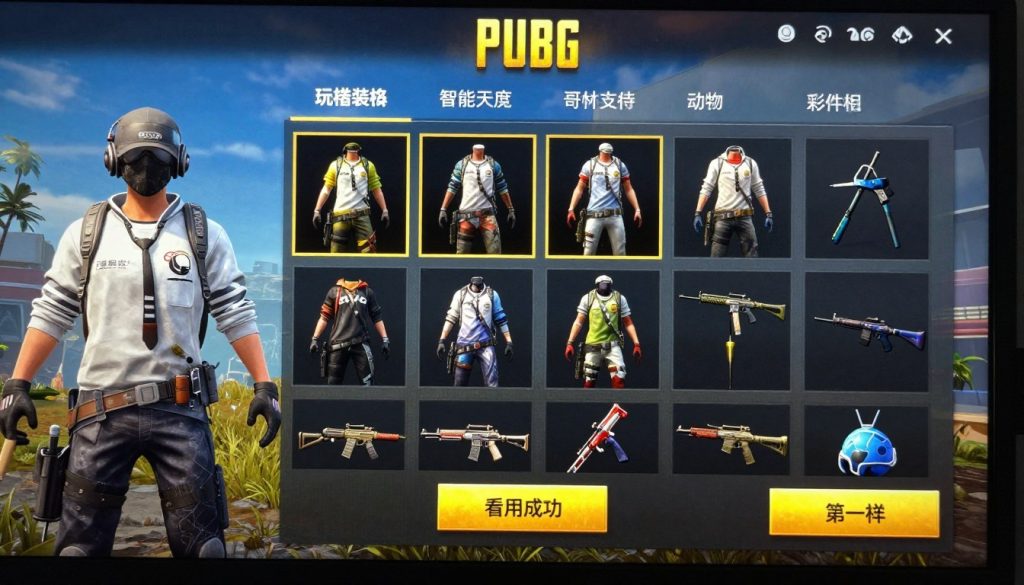
PUBG’s monetization focuses on cosmetic items that don’t affect gameplay
PUBG’s technical performance has been a contentious topic throughout its existence. Early versions were plagued by optimization issues, server instability, and bugs. While significant improvements have been made, performance can still vary considerably based on platform and hardware specifications. PC players with high-end systems generally enjoy the most stable experience, while console versions have historically struggled with consistent frame rates and texture loading.
The game transitioned to a free-to-play model in 2022, removing the initial purchase barrier. Monetization now revolves around cosmetic items through the “Survivor Pass” (PUBG’s version of a battle pass) and direct purchases of outfits, weapon skins, and emotes. Importantly, these items are purely cosmetic and offer no gameplay advantages, maintaining competitive integrity.
A “PUBG Plus” membership option provides additional features like custom matches and ranked mode access, but core gameplay remains available to all players. This approach strikes a reasonable balance between monetization and accessibility.
Pros and Cons
What We Like
- Intense, high-stakes gameplay that creates genuine tension
- Realistic gunplay with satisfying weapon mechanics
- Diverse maps offering different tactical experiences
- Excellent audio design that rewards careful listening
- Free-to-play model with fair monetization
- Rewarding learning curve that feels satisfying to master
- Regular updates and content additions
What We Don't Like
- Inconsistent technical performance across platforms
- Steep learning curve for newcomers
- Matches can sometimes feel slow-paced
- Random loot distribution can create frustrating experiences
- Vehicle physics can be unpredictable
- Interface and inventory management feel clunky
- Occasional server stability issues
Conclusion & Verdict
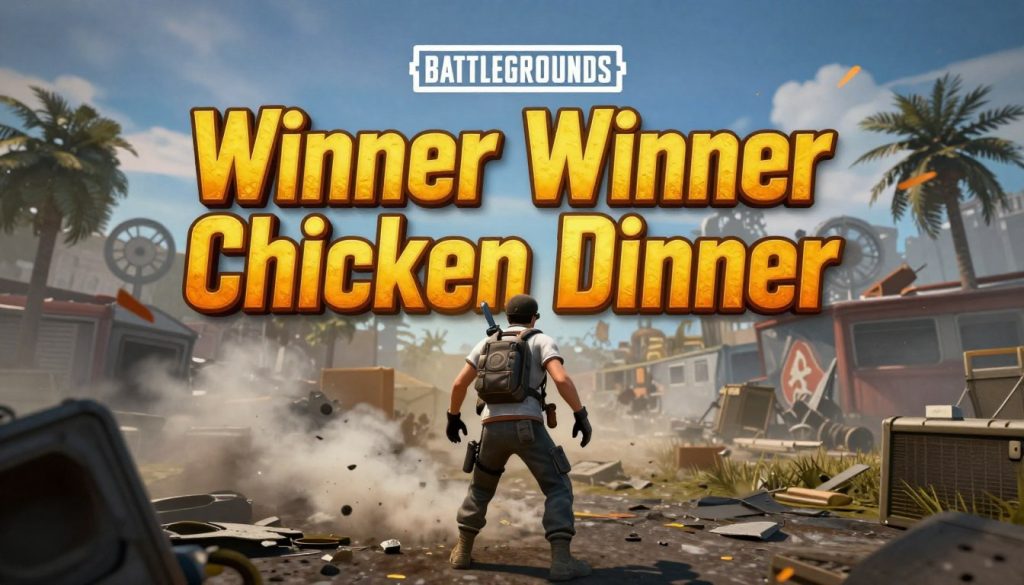
The satisfaction of seeing this screen makes the struggle worthwhile
PUBG: BATTLEGROUNDS remains a definitive battle royale experience that has stood the test of time. While newer entries in the genre may offer more polished visuals or faster-paced action, PUBG’s commitment to tactical, high-stakes gameplay creates a tension and satisfaction that few competitors can match.
The game is best suited for players who appreciate strategic depth and are willing to invest time mastering its systems. The learning curve is steep, but the payoff – those heart-pounding final circles and hard-earned chicken dinners – delivers some of gaming’s most rewarding moments. Conversely, players seeking instant gratification or arcade-style shooting may find PUBG’s deliberate pacing and punishing difficulty frustrating.
With its transition to free-to-play, there’s never been a better time to experience the game that launched the battle royale phenomenon. Despite its technical imperfections, PUBG: BATTLEGROUNDS delivers an intense, strategic multiplayer experience that continues to captivate players worldwide.
Ready to Drop Into the Battlegrounds?
Experience the original battle royale that started it all. PUBG: BATTLEGROUNDS is now free-to-play on PC, PlayStation, Xbox, and mobile platforms.
Frequently Asked Questions
Is PUBG: BATTLEGROUNDS free to play?
Yes, PUBG: BATTLEGROUNDS became free-to-play in January 2022. The game now uses a cosmetic-based monetization model with optional purchases that don’t affect gameplay.
What platforms is PUBG available on?
PUBG: BATTLEGROUNDS is available on PC (Steam, Epic Games Store), PlayStation 4/5, Xbox One/Series X|S, and mobile devices (as PUBG Mobile, which is a separate version of the game).
Does PUBG have cross-platform play?
PUBG supports cross-platform play between PlayStation and Xbox consoles. However, PC players remain in separate matchmaking pools. PUBG Mobile is entirely separate from the main game.
How long does a typical PUBG match last?
A full PUBG match typically lasts between 25-30 minutes on standard maps like Erangel and Miramar. Smaller maps like Sanhok feature faster matches, usually around 20 minutes. Your personal match length depends on how long you survive.