
NetEase Games launched Marvel Rivals on 6 December 2024. It introduced a new twist to the 6v6 hero shooter genre. Players can now destroy the battlefield.
Walls fall down when Hulk punches them. Iron Man’s repulsor blasts send cars flying. Buildings collapse in the middle of fights. This is not just for show; it’s a key part of the game.
Marvel Rivals game stands out with its destructible environments. Each arena is watched over by Galacta, a cosmic entity. Players can use hero abilities to break terrain, remove cover, and create new paths.
This system encourages creative thinking and sharp shooting. It’s not just about aiming well; it’s about thinking outside the box.
The game is available on PC, PlayStation 5, and Xbox Series X|S. It supports full cross-platform play. Over 250,000 Steam reviews show its growing popularity.
Season 2 is coming in April 2025. It will add Emma Frost and Ultron as new heroes. There will also be new maps that use the destruction mechanics.
This guide will show you how to use the map destruction system. It covers tips for beginners and advanced strategies. The days of fixed maps are behind us.
The Evolution of Environmental Destruction in Hero Shooters
Heroshooters have changed a lot in the last 20 years. What was once fixed and unchanging now features reactive terrain that players can change during the game. Knowing how to destroy maps is key to understanding the big difference between today’s games and those from the early 2000s.
From Static Maps to Dynamic Battlefields
Old hero shooters had fixed environments. Cover was always there, walls didn’t fall, and strategies focused on character skills. Now, games have broken surfaces, falling structures, and changing terrain. This makes teams need to think creatively and adapt quickly.
Pioneer Games That Shaped Destructible Environments
Some games were the first to show how to destroy environments:
- Red Faction (2001) — introduced real-time geo-modification technology
- Battlefield: Bad Company 2 (2010) — let players level entire buildings
- Rainbow Six Siege (2015) — made wall breaching a core tactical pillar
| Game | Release Year | Destruction Scope | Genre Impact |
|---|---|---|---|
| Red Faction | 2001 | Terrain deformation | Proved real-time destruction was possible |
| Battlefield: Bad Company 2 | 2010 | Full building collapse | Set the standard for large-scale environmental damage |
| Rainbow Six Siege | 2015 | Walls, floors, ceilings | Made map destruction mechanics central to competitive play |
Why Map Interaction Became Essential for Modern Shooters
Static environments limit what players can do. When the terrain changes with gunfire and explosions, every game is unique. Players who learn about map destruction can outsmart their opponents. Marvel Rivals combines hero powers with destructible maps, changing team combat forever.
Marvel Rivals Map Destruction Guide: Core Mechanics and Features
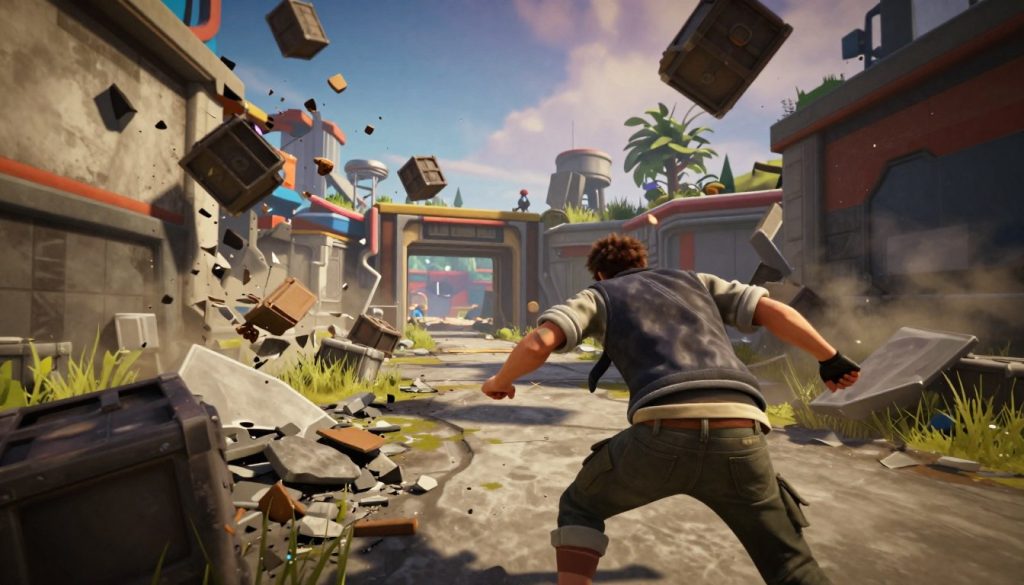
Marvel Rivals adds a new level of excitement to hero shooters with its destructible environments. Players can change the battlefield in real time across 12 distinct maps. This includes everything from Dracula’s night over New York City to Asgard’s golden halls.
It’s not just about looks. Every wall, vehicle, and building can become a strategic tool. This makes each map a dynamic, ever-changing battlefield.
Understanding Breakable Objects and Terrain Damage
The game features destructible walls, cars, columns, and building facades. Heroes can destroy these with standard attacks or special abilities. The damage depends on the attack’s type and strength.
A light ability might just crack a surface. But a heavy ultimate can destroy entire sections of cover. This makes each attack count.
Environmental Hazards and Their Strategic Impact
Each map has unique hazards that add to the destruction. Collapsing structures can block paths or crush enemies. Explosive objects in places like Tokyo 2099 can cause chain reactions.
Smart players use these hazards to control areas without using up their abilities. It’s all about strategy and timing.
How Destructible Cover Changes Combat Flow
Destructible cover changes how battles are fought. A safe spot can become exposed after taking damage. This means teams must stay on the move and adapt quickly.
| Destructible Element | Damage Required | Tactical Use |
|---|---|---|
| Thin Walls | Low | Create new sightlines quickly |
| Vehicles | Medium | Remove enemy cover at choke points |
| Building Sections | High | Open entirely new flanking routes |
| Structural Columns | Medium | Collapse overhead platforms onto enemies |
Learning to use these features is key to winning in Marvel Rivals. The next section will dive into team strategies.
Revolutionary Gameplay: How Destruction Transforms Team Strategy
Map interaction Marvel Rivals changes how teams play. The game has a 6v6 format without role locks. This means teams can mix heroes like Vanguards, Duelists, and Strategists freely.
This freedom lets teams create strategies that use environmental destruction. They can adapt their plans on the fly.
The Dynamic Hero Synergy system is key. It allows heroes to team up and destroy the environment. A good team can clear cover and open new paths with one move.
Any good guide will tell you these synergies are essential. They are the core of winning in team play.
Matches never play out the same way twice. The environment shifts beneath your feet, and your team must adapt or fall behind.
Players say matches are more fluid than in other games. The environment changes a lot, forcing teams to move often. A wall that worked last time might not work next time.
- Destroy enemy cover to deny entrenched positions during payload pushes
- Create new sightlines for long-range Duelists mid-fight
- Collapse terrain to block flanking routes and funnel opponents
- Use synergy abilities to reshape objectives before a team fight begins
This level of interaction makes every round a puzzle. Teams that adapt quickly have an advantage. The environment is now a key part of every battle.
Character Abilities and Environmental Interaction in Marvel Rivals
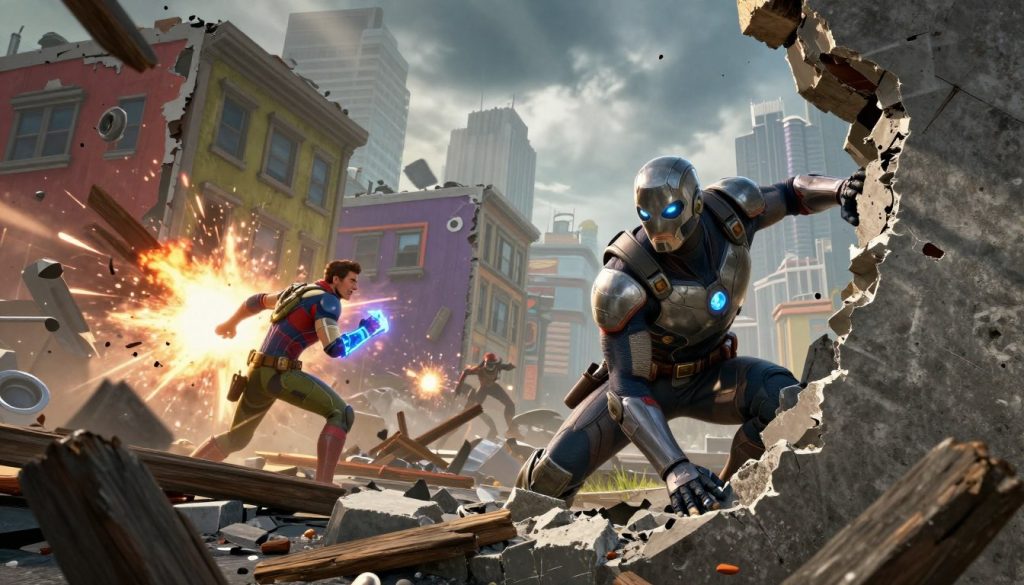
Marvel Rivals has 37+ heroes, each with special powers. These powers work differently with the game’s destruction system. This guide explains which heroes do best when the map starts falling apart.
Heroes That Excel at Map Destruction
Not all heroes can destroy the map in the same way. Hulk can smash through floors and walls easily. This reveals hidden enemies quickly.
Iron Man’s Unibeam can blast through solid walls. This creates new paths in the middle of battles. Scarlet Witch’s hex blasts can change the map in unpredictable ways. This makes her a surprise in any fight.
| Hero | Destruction Ability | Effectiveness |
|---|---|---|
| Hulk | Ground Slam / Melee Smash | High – destroys large terrain sections |
| Iron Man | Unibeam | High – penetrates walls and cover |
| Thor | Mjolnir Lightning Strike | High – wide area destruction |
| Magneto | Metal Manipulation | Medium – reshapes metallic structures |
| Scarlet Witch | Hex Blasts | Medium – unpredictable warping |
Synergising Team-Ups with Destructible Environments
Using Team-Up abilities with destructible cover can be very powerful. Hulk and Wolverine’s Fastball Special is a great example. It combines raw power with direct damage.
Doctor Strange’s portals can open up new paths. These paths let teammates attack from unexpected angles. This is thanks to the game’s destructible elements.
Ultimate Abilities That Reshape the Battlefield
Some ultimates can change the battlefield completely. Thor’s lightning storms can clear out overhead cover. Magneto can tear apart metal structures over wide areas.
Knowing when to use these ultimates is key. It’s a skill that helps with the game’s destructible cover tactics. This is explored in the next section.
Tactical Advantages: Mastering Destructible Cover Tactics
Winning fights in Marvel Rivals is more than just aiming well. It’s about knowing when to destroy objects in the environment. Destroying cover at the right time can turn the tide of battle. But doing it too early can be a waste.
One key tactic is to force enemies out of their strongholds. A well-timed ability can break down a tank’s cover. Characters like Black Widow can then pick off enemies who were once hidden.
In Convergence mode, the goal is clear: clear out defensive spots before the payload phase starts. This disrupts the defenders’ plans and creates chaos.
The third-person camera offers a wider view than usual. It helps players spot destructible areas and plan their moves. They can look around corners without being seen.
- Time cover destruction to coincide with ultimate abilities for maximum team fight impact
- Use the third-person camera to scout breakable terrain before committing to a push
- Coordinate with teammates to collapse multiple cover points at once
| Tactic | Best Timing | Ideal Role | Expected Outcome |
|---|---|---|---|
| Breaking enemy cover | During a team push | Vanguard | Enemies forced into the open |
| Creating new sightlines | Before engaging | Duelist | Off-angle picks on exposed targets |
| Destroying defensive setups | Pre-payload in Convergence | Duelist or Vanguard | Defenders lose anchor positions |
| Syncing destruction with ultimates | Team fight initiation | Any role | Maximised combo damage and disruption |
Comparing Marvel Rivals' Destruction System to Genre Competitors
Marvel Rivals is different from other games because it lets players destroy maps. Most hero shooters have fixed maps that don’t change. But Marvel Rivals takes inspiration from games like Battlefield and Rainbow Six Siege.
Marvel Rivals vs Overwatch: Environmental Design Philosophy
Overwatch 2 has maps that don’t change much. Players use abilities to interact with the environment. But Marvel Rivals changes everything. Walls fall, floors break, and cover shatters as you play.
Overwatch director Aaron Keller even called Marvel Rivals a “forcing function”. This shows how it’s pushing the genre to be more innovative.
How Marvel Rivals Surpasses Traditional Hero Shooters
Games like Paladins and Valorant keep their maps the same. Players learn about the maps before playing. But Marvel Rivals is different. The map changes as you play, making each game unpredictable.
This unpredictability adds a new level of strategy to the game. It’s something you don’t see often in hero shooters.
The Technical Achievement of Real-Time Map Changes
Creating real-time destruction is a big technical challenge. The game needs a lot of storage and a good graphics card. It’s all about handling the changes in the environment during fast action.
| Feature | Marvel Rivals | Overwatch 2 | Rainbow Six Siege |
|---|---|---|---|
| Destructible Environments | Full terrain and cover destruction | Minimal breakable props | Walls and floors destructible |
| Genre | Hero shooter | Hero shooter | Tactical shooter |
| Recommended GPU | RTX 2060 / RX 5700-XT | GTX 1060 / RX 6400 | GTX 970 / RX 5500-XT |
| Storage Required | 70GB | 50GB | 85GB |
| Map Destruction Mechanics Depth | High | Low | High |
Marvel Rivals combines hero abilities with map destruction. This makes it stand out in the market. Now, other games are trying to catch up.
Advanced Destruction Strategy Guide for Competitive Play
Ranked matches need a deep understanding of using the environment as a weapon. This guide explains the key techniques that set apart casual players from competitive ones. To excel at higher ranks, you need to work together, know the map well, and time your actions perfectly.
Creating New Sightlines Through Tactical Demolition
Smart players destroy specific walls to reveal new angles. On the New York map, breaking through certain barriers gives Duelists a direct line of sight to key spots. This makes the opposing team rethink their strategy.
- Find thin walls near objectives that can be knocked down fast.
- Work with snipers or long-range heroes before you attack.
- Use marvel rivals terrain damage to expose enemies who stay in one place.
Denying Enemy Positions with Environmental Manipulation
At Diamond rank and above, teams plan their environmental destruction with ultimate abilities. Timing a platform or floor collapse right before an ultimate is used can change the game. This level of planning turns the map into a powerful weapon.
Map-Specific Tips for Ranked Matches
Each map has unique destruction opportunities. Knowing these is key to any serious strategy guide.
| Map | Key Destruction Opportunity | Best Heroes | Tactical Benefit |
|---|---|---|---|
| New York | Breakable interior walls near Point B | Hulk, Iron Man | Opens long-range sightlines for Duelists |
| Tokyo 2099 | Vertical floor panels on upper platforms | Thor, Spider-Man | Creates drop routes for aggressive flanking |
| Asgard | Mythical stone pillars near choke points | Hulk, Magneto | Removes cover to deny defensive setups |
Using marvel rivals terrain damage with map awareness gives competitive teams an edge in ranked matches.
Community Reception and Impact on the Genre
Marvel Rivals made a big splash when it launched. It quickly rose through the Steam charts, drawing in millions of players in just a few weeks. Early reviews on Steam were very positive, with many gamers enjoying the new take on hero shooters.
The system of breakable objects was a major highlight. It sparked lots of discussion on forums and social media.
Player feedback is mixed but mostly positive. About 54% of the 486 user scores are positive. Fans love the new map interaction mechanics, saying they bring a much-needed depth to the genre.
They feel this environmental depth was missing from other games. The ability to change the battlefield during matches makes each game unique. This keeps players eager to play more.
The destruction system alone makes this worth playing. No two fights ever feel the same when walls crumble around you.
But, there are some issues that players don’t like:
- Matchmaking can be inconsistent, upsetting ranked players
- Frame drops are a problem, affecting older hardware like PS4 consoles
- Optimisation issues mean the visual impact of breakable objects is less on lower-end systems
NetEase has a clear plan to improve the game. Starting from Season 3, they will release new heroes every month. They also plan to update maps regularly, keeping the focus on map interaction.
These updates show NetEase’s commitment to making the game better over time. They aim to improve both performance and gameplay.
| Aspect | Positive Feedback | Common Criticism |
|---|---|---|
| Destruction Mechanics | Praised as genre-defining | Causes frame drops on older hardware |
| Matchmaking | Quick queue times at launch | Unbalanced skill pairings |
| Content Updates | Monthly hero releases from Season 3 | Some players want faster map additions |
The game’s impact on the tactical shooter genre is clear. Other studios are now looking at how environmental destruction can make games more strategic.
Conclusion
Marvel Rivals has changed the game for tactical shooters. It’s not just about breaking windows or walls. The battlefield changes and crumbles as 37+ Marvel heroes fight on beautifully made maps.
Any guide on environmental hazards will highlight the depth it adds. This makes every match unique and exciting.
The game is free to play, with all heroes available from the start. This is a big plus compared to games like Overwatch 2. NetEase and Marvel Games have made destructible cover tactics as important as choosing heroes and timing ultimates.
Terrain manipulation is now a key part of every battle. This makes the game stand out in the genre.
Despite some technical issues and matchmaking problems, the game’s core innovation is impressive. For UK players looking for a hero shooter that values creativity and map awareness, Marvel Rivals offers a unique and evolving experience.